Bambu Lab H3C Official Launch: 9-Head Tool Changer Reinvents Multi-Material Printing

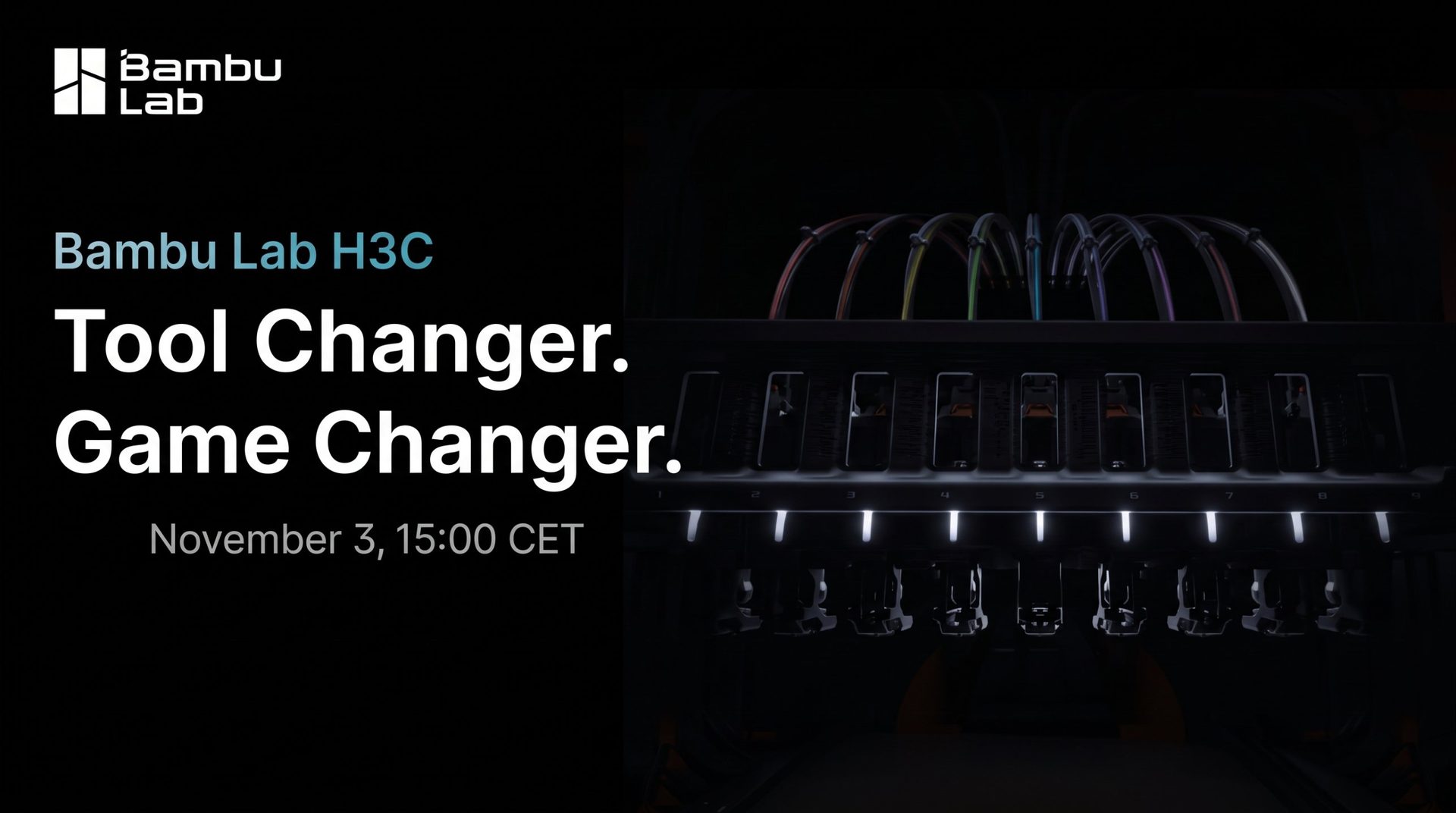
It's the announcement the entire 3D printing world has been waiting for: Bambu Lab officially unveiled its Bambu Lab H3C on November 3, 2026. After years of single-nozzle multicolor printing with the AMS, the manufacturer is taking the next leap forward with a 9-head tool changer printer.
Say goodbye to lengthy purge sequences and material compromises: the H3C is a versatile machine built for demanding makers and prototype shops alike. It's been available for purchase since its official launch.
1. Quick Spec Sheet
| Feature | Bambu Lab H3C |
|---|---|
| Build Volume | 330 × 320 × 325 mm, fully enclosed printer |
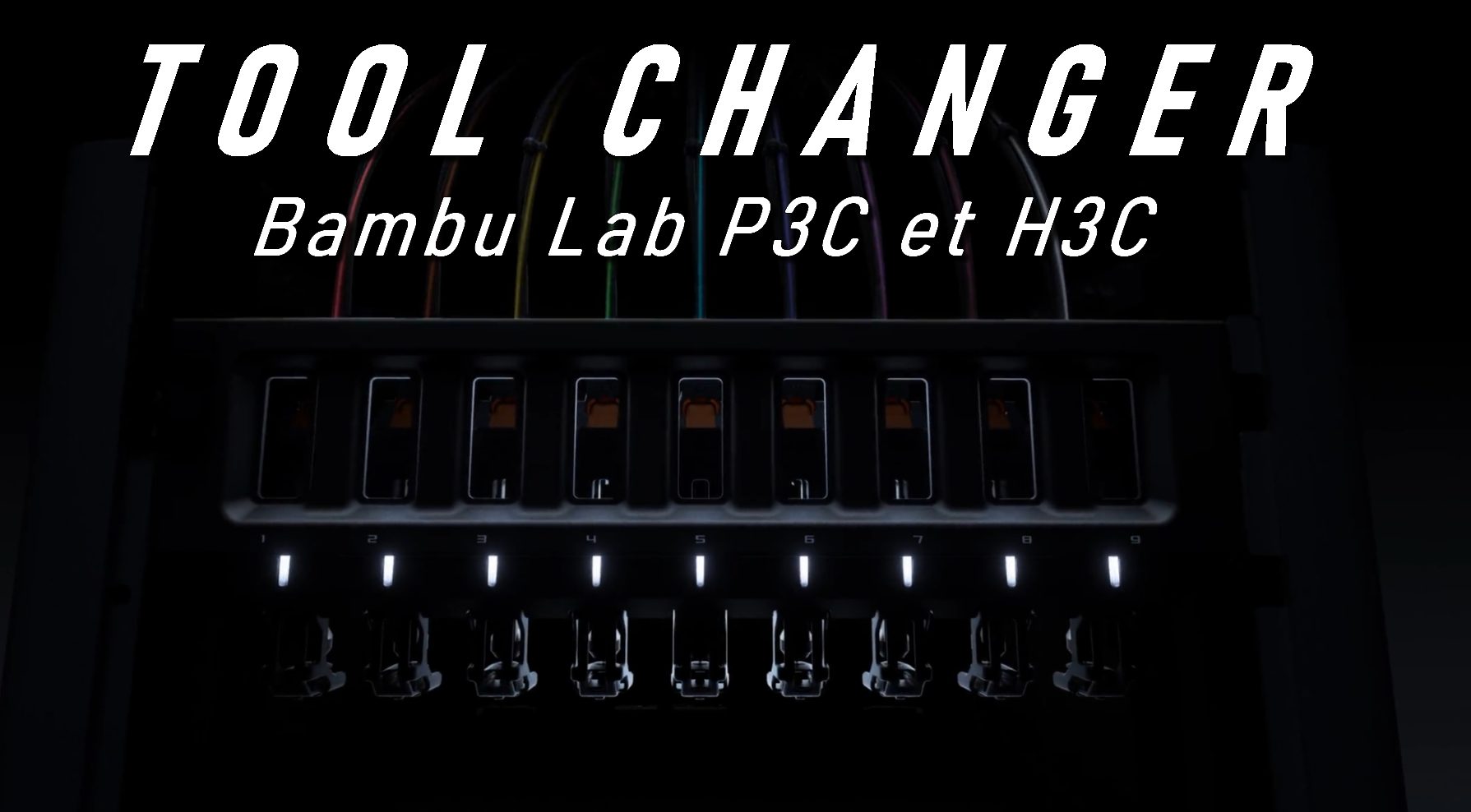
| Tool Changer | Swaptek system, 9 independent print heads ("PrintTools") |
| Head Change | Approx. 3.4 s to swap heads, approx. 6 s to swap materials (per Bambu Lab) |
| Nozzles | Hardened steel, 0.2 to 0.8 mm; one dedicated head for 2.85 mm flexible filament |
| Max Temps | Nozzle 350 °C, build plate 120 °C |
| Chamber | Actively heated to 65 °C |
| Spools | New AMS 3H: 9 spools, dry 2 spools simultaneously up to 85 °C |
| Speed | Up to 1,400 mm/s, acceleration 25,000 mm/s² |
| Filtration | HEPA H11 and activated carbon filter |
| Price | $2,499 USD (H3C + AMS 3H bundle), €2,499 in France |
Additional bundles are available: with filament assortment (PLA and TPU) at $2,579, or with Bambu Station at $2,789 to $3,039.
Bambu Lab H3C in action:

2. The Heart of the Machine: 9 Independent Heads
The H3C's strength goes beyond sheer head count. With a standard AMS, filament must retract, be cut, and the new color must purge through the nozzle at every change. Here, each head has its own filament, heating block, and motor.
- Virtually zero purge waste: filament never leaves its head. Bambu Lab claims roughly 0.04 g of plastic lost per swap, versus several grams with a single nozzle. A real breakthrough compared to the classic purge tower and even the Vortek system on the H2C, which remains in production.
- Lightning-fast swaps: the active head is deposited on its front dock and the next one is picked up in a single motion.
- Smart pre-heating: Bambu Studio software heats the next head just before it's needed, eliminating wait time and oozing.
3. The Surprise: 2.85 mm Returns for Ultra-Flexible TPU
While the mainstream went all-in on 1.75 mm, the H3C includes a dedicated head for 2.85 mm filament. The goal: print highly flexible materials like Bambu Lab's new TPU 75A, as bendy as a shoe sole.
Thicker filament bends less in the extruder: paired with the FlexFeed extruder and direct drive, typical flexible filament jams are drastically reduced, and Bambu Lab reports throughput five times higher for these materials. Perfect for soft robotics, seals, and compliant parts.
4. Built for Engineering Materials
With its 65 °C heated chamber and hardened steel nozzles rated to 350 °C, the H3C goes well beyond PLA and PETG:
- Fiber-reinforced filaments (PA-CF, PET-CF, PPS-CF…) print without premature nozzle wear.
- Soluble supports: printing BVOH or PVA under an ABS or ASA part becomes much simpler, with each head at its own temperature—no risk of cooking the support in the main nozzle.
- Multiple nozzle sizes in one print: for example, a 0.8 mm nozzle to quickly fill the core and a 0.2 mm nozzle for fine surface details.
5. The New AMS 3H: 9 Spools and Built-In Drying
To feed the machine, Bambu Lab launches the AMS 3H at the same time. It holds 9 spools in sealed bays, with automatic detection of Bambu Lab spools via RFID chip. Two bays can dry filament up to 85 °C, perfect for prepping nylon or technical materials before printing. Mid-print drying is only available for certain materials. Stack older AMS units to reach up to 24 colors.
The Verdict: New Benchmark or Tool for Advanced Makers?
At $2,499 in a bundle, the H3C targets professionals, small fabrication shops, and power users tired of single-nozzle multicolor limitations. With its large build volume, speed, and genuine 9 independent heads, Bambu Lab has raised the bar once again. The question remains: will the upcoming P3C, spotted with 7 slots, eventually bring this tool-changer technology to a wider audience?