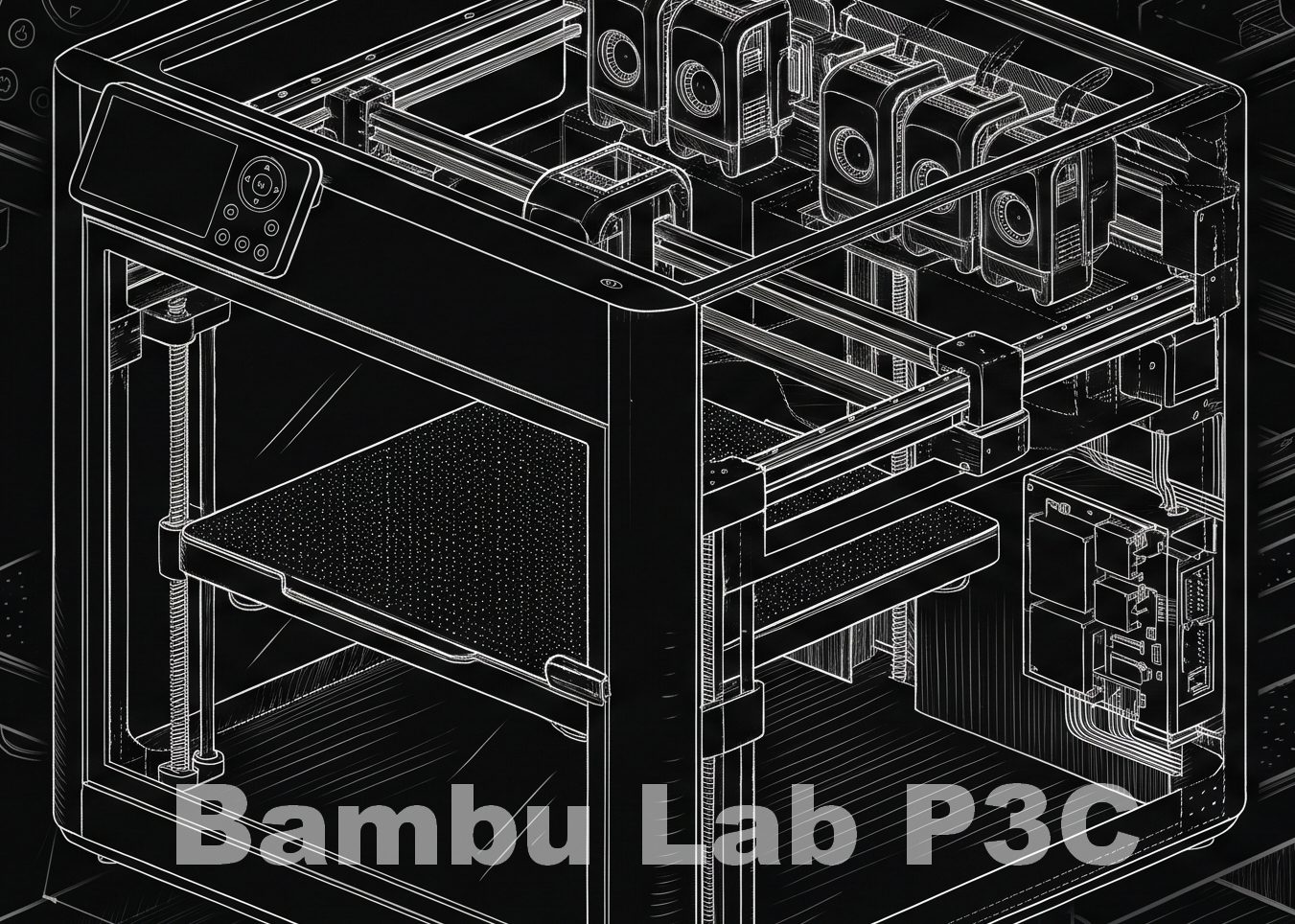
Bambu Lab's Ecosystem on Fire: AMS 3H / 3P Leaked and S1 3D Scanner Officially Announced
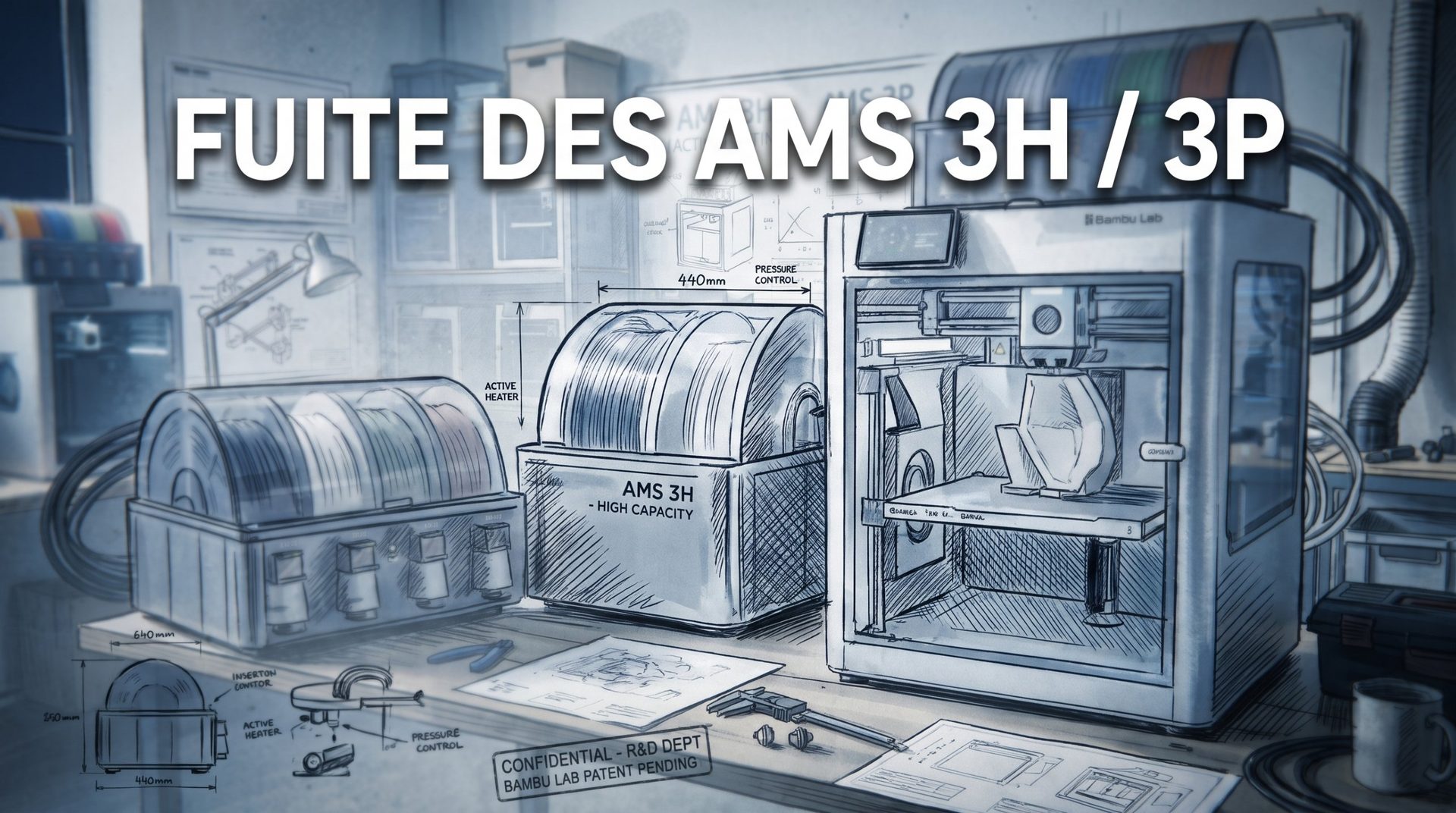
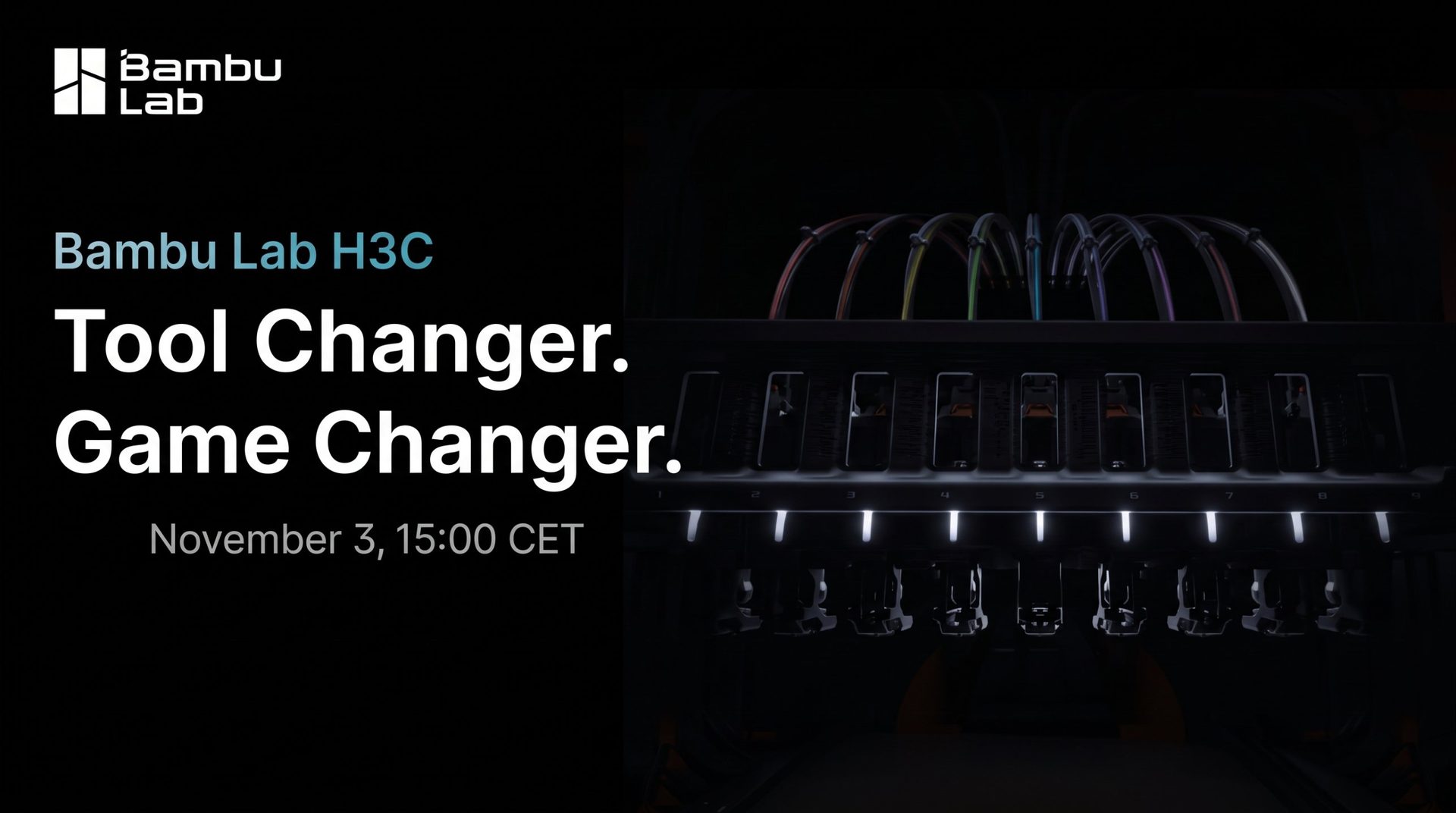
While all eyes are fixed on the upcoming Bambu Lab H3C and its Tool Changer, the FCC (Federal Communications Commission) certification records have just unveiled the manufacturer's broader ambitions. Bambu Lab isn't preparing just a new printer: the brand is about to lock in a complete creative ecosystem by overhauling its filament management systems (AMS 3H / 3P) and launching its first handheld 3D scanner, the Bambu Lab S1.

1. Bambu Lab S1 3D Scanner: Closing the "Scan-to-Print" Loop
This is likely the major surprise in these filings: Bambu Lab is taking the leap into reverse engineering and physical digitization. Already backed by its official tagline "Easy in Hand. Pro in Every Scan," the S1 presents itself as a portable 3D scanner, announced by the brand for November 2026.
- Connectivity and Mobility: Certified with approximately 60 W power and 5 GHz Wi-Fi, it appears designed for smooth capture, with wireless scan transfer to your computer.
- Software is the Real Challenge: Today, the main bottleneck for consumer 3D scanning isn't sensors—it's mesh processing software, often unstable, bare-bones, or locked behind costly subscriptions. If Bambu Lab integrates point cloud processing and mesh repair directly into Bambu Studio, the experience could become seamless: scan a broken mechanical part and send it to the build plate in just a few clicks.
- Industrial Partnership: Bambu Lab's parent company reportedly signed an agreement with SCANTECH, a Chinese optical scanning specialist, in January 2026 to develop consumer scanners. While nothing officially confirms the S1 is the result, it would position itself against Creality Raptor or Shining3D's entry-level solutions.
2. New AMS 3H and AMS 3P: What Are These Two Variants?
The famous multi-spool AMS unit, which made the X1 and P1 successful, appears split in regulatory filings under two distinct names: AMS 3H and AMS 3P. Bambu Lab hasn't clarified anything yet, but this split suggests several upgrades:
- Range Differentiation: The "H" suffix naturally aligns with the new premium H3 / H3C series, while "P" targets the more compact, affordable P3 / P3C machines.
- Active Drying Integration: The "H" could also stand for Heating chamber, a highly anticipated feature for users of technical filaments (PA-CF, TPU, ASA, PC), who want real filament drying instead of desiccant packets alone.
- Multi-Head Architecture Support: With machines capable of managing up to nine tool heads, filament distribution and retraction management must be rethought to feed a tool rack without friction or jamming.
3. Apple's Strategy Applied to 3D Hardware
With its laser modules, the H3C tool-changer series, new AMS units, and the S1 scanner, Bambu Lab is cementing a closed-loop model:
Capture (S1 scanner) → Preparation (Bambu Studio) → Fabrication (H3C / P3C) → Models (MakerWorld)
By controlling every step of the chain, the manufacturer makes its ecosystem indispensable for workshops and makers, while strengthening independence against legal upheaval and open-architecture competition.
Expected Timeline
- Reveal: The H3C presentation is scheduled for November 3, 2026, and the S1 scanner for November. Further announcements and demos are expected shortly after, especially around the Formnext show.
- Availability: First pre-orders and shipments planned for late 2026, with no official confirmation at this stage.
Article based on FCC certifications and early announcements: final pricing and specs remain to be confirmed by Bambu Lab.