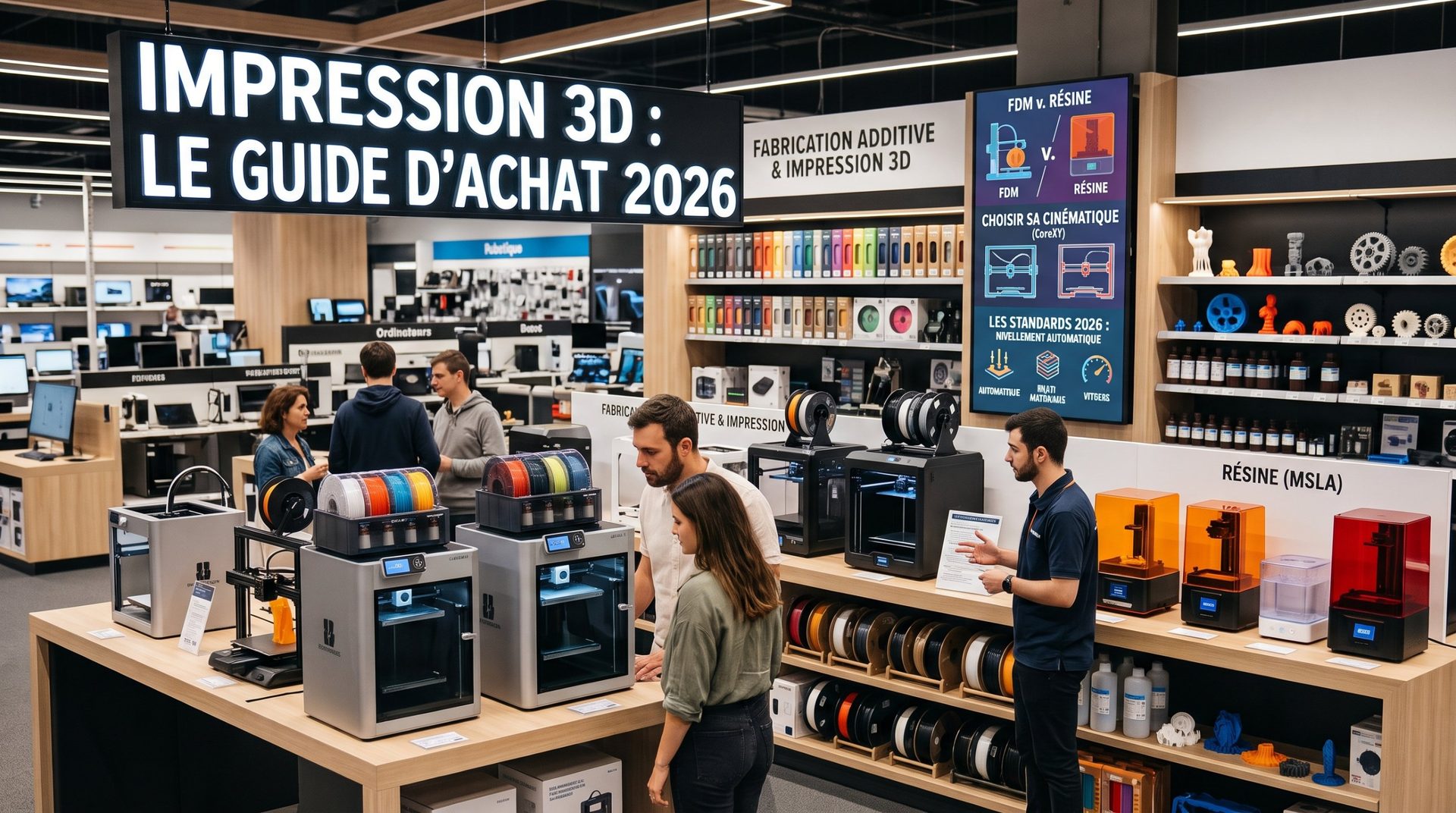
Is Bambu Lab the Undisputed Leader in 3D Printing?
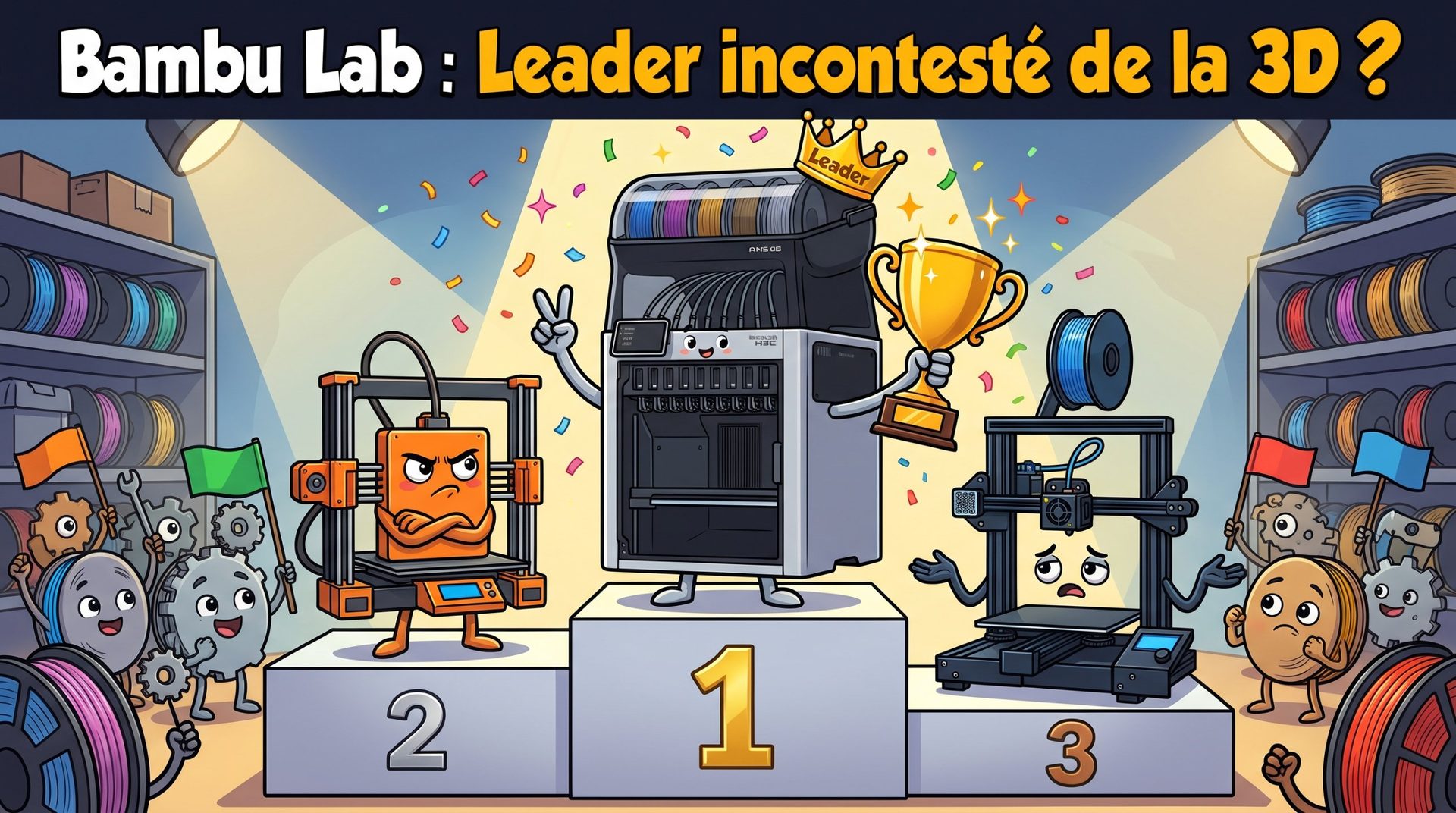
In barely four years, the consumer 3D printing landscape has undergone a shift without equal since the expiration of the major FDM printing patents in the late 2000s, which had launched the RepRap movement. Where printing on your workbench once meant hours of manual tweaking, belt tensioning, and Marlin firmware tinkering, Bambu Lab has imposed a new standard: machines that print fast and flawlessly right out of the box, with an unprecedented success rate for the mainstream user.
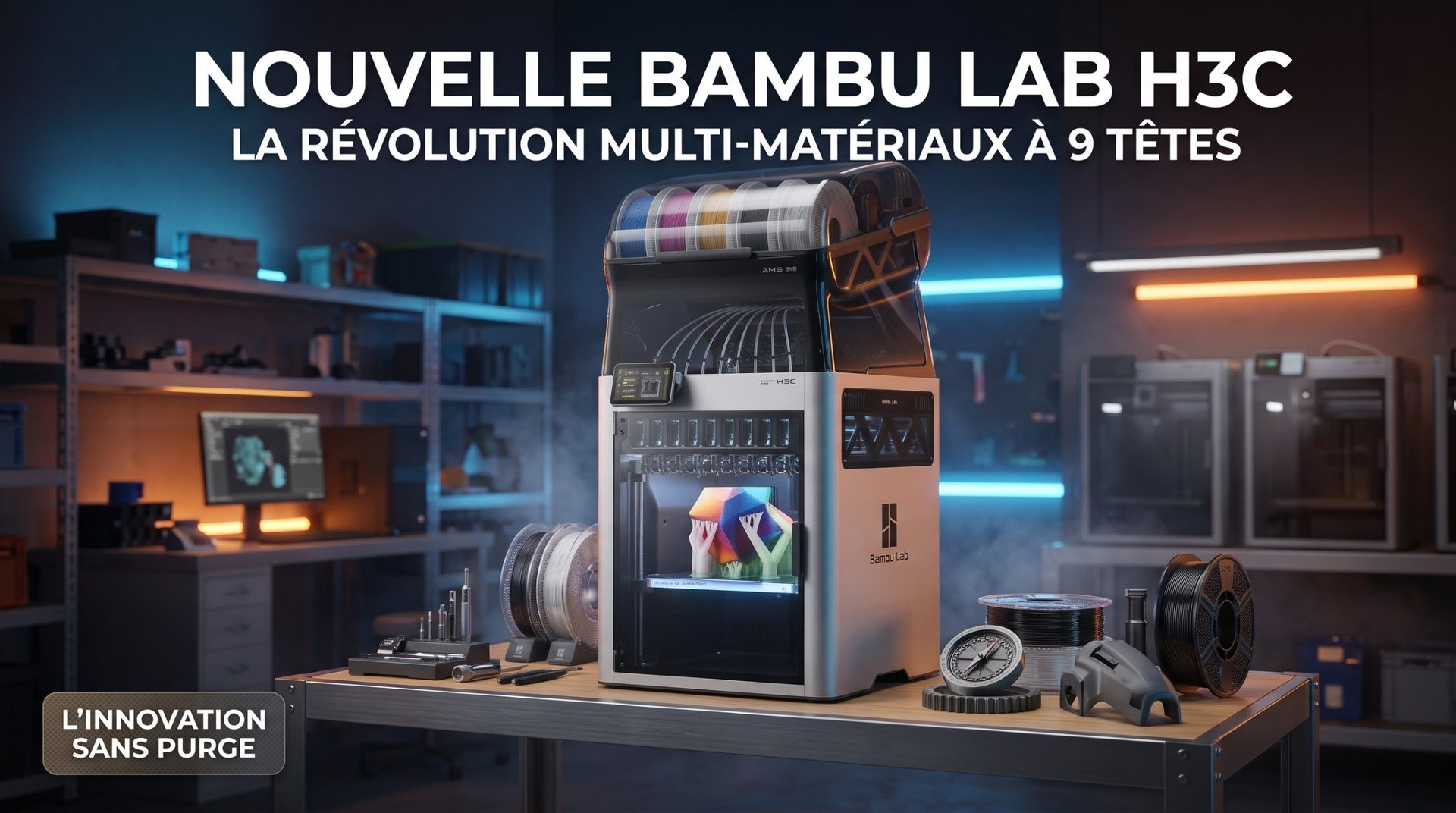
With its latest announcements (the move to tool changers to eliminate purging, with the Bambu Lab H3C, expansion of its lineup, and the forthcoming arrival of its first 3D scanner), the maker is cementing obvious commercial dominance. But is this leader status absolute, and more importantly, is it risk-free for makers?
1. A Dominance Built on Simplicity and Integration
Bambu Lab didn't conquer the market by reinventing CoreXY mechanics, but by applying the recipe of consumer electronics: mastering hardware, firmware, and software all at once.
- The printer, slicer, app trio: Bambu Studio and the mobile app communicate seamlessly with the machine. Vibration compensation, flow adjustment, and bed leveling happen automatically, with no user intervention required.
- Multi-color for everyone: despite its purges, the AMS has made multi-filament printing accessible to users who would have shied away from the complexity of MMU modules or dual-head machines.
- Rock-bottom prices: thanks to massive production volumes and custom-engineered parts, the brand delivers performance once reserved for semi-professional machines costing thousands of dollars.
In both sales and visibility among newcomers, Bambu Lab today commands without question the top spot in the consumer market.
2. How the Competition Fights Back
Facing this juggernaut, legacy players and other makers have had to rethink their approach. For a complete overview of manufacturers, check out our page on 3D printer brands.
| Player | Strategy | Edge vs. Bambu Lab | Weakness |
|---|---|---|---|
| Prusa Research | Open source, robustness, long-term repairability | Reliability, privacy respect, renowned customer support | Higher prices for equivalent features |
| Creality, Qidi, Anycubic | Fast-follow and price war on quick CoreXY machines (K series, Plus4…) | Low prices, firmware often Klipper-based, affordable spare parts | Uneven software polish, variable quality control |
| Voron, Rat Rig (open-source kits) | Total modularity and customization | No software lock-in, complete machine control | Aimed at tinkerers, very long assembly time |
3. The Leader's Paradox: Cracks in the Bambu Lab Model
While Bambu Lab leads the charge, its dominant position raises growing concerns, especially among experienced makers and professionals.
The Golden Cage
Like Apple in mobile phones, Bambu Lab locks down its ecosystem. Firmware hardening, with stricter control of third-party software since early 2025, and the cloud's role create dependency: if servers go down or the company changes policy, an entire workshop could be hamstrung. The lawsuit lost to Stratasys is a reminder that the brand operates in a tense legal environment (see Bambu Lab Ordered to Pay $27 Million).
Repairability and Proprietary Parts
On a Prusa or Klipper-based machine, a motor, thermistor, or control board can often be swapped for a standard part bought anywhere. Bambu Lab printers rely more heavily on proprietary parts and boards: if stock runs out or a generation is discontinued, the machine's lifespan becomes less certain.
Privacy
For design studios and companies working on confidential prototypes, routing files through remote servers remains a significant barrier, even though a local network (LAN) mode exists.
The Verdict: A Usage Leader, Not the Right Choice for Everyone
Bambu Lab is without question the leader in mass adoption and user-centric innovation. By pushing the market toward self-calibrating, fast, and now multi-head machines without purging, the brand has forced the entire industry to level up. For the majority of users (weekend makers, small merchandise shops, rapid prototyping agencies), its machines deliver the best balance between results and time invested.
This leadership doesn't erase its rivals—it redraws the lines. Prusa remains the go-to choice for those wanting a repairable, transparent, open-source machine, while the Klipper and Voron ecosystem keeps the edge in cutting-edge experimentation and technical independence. To choose based on your profile, follow our 2026 buying guide.
What about you? Does Bambu Lab's "plug-and-play" simplicity outweigh the risk of a closed ecosystem, or would you rather have the freedom of open source? Share your thoughts in the comments!