Bambu Lab P3C and H3C: Ending Multicolor Waste with Tool Changers?
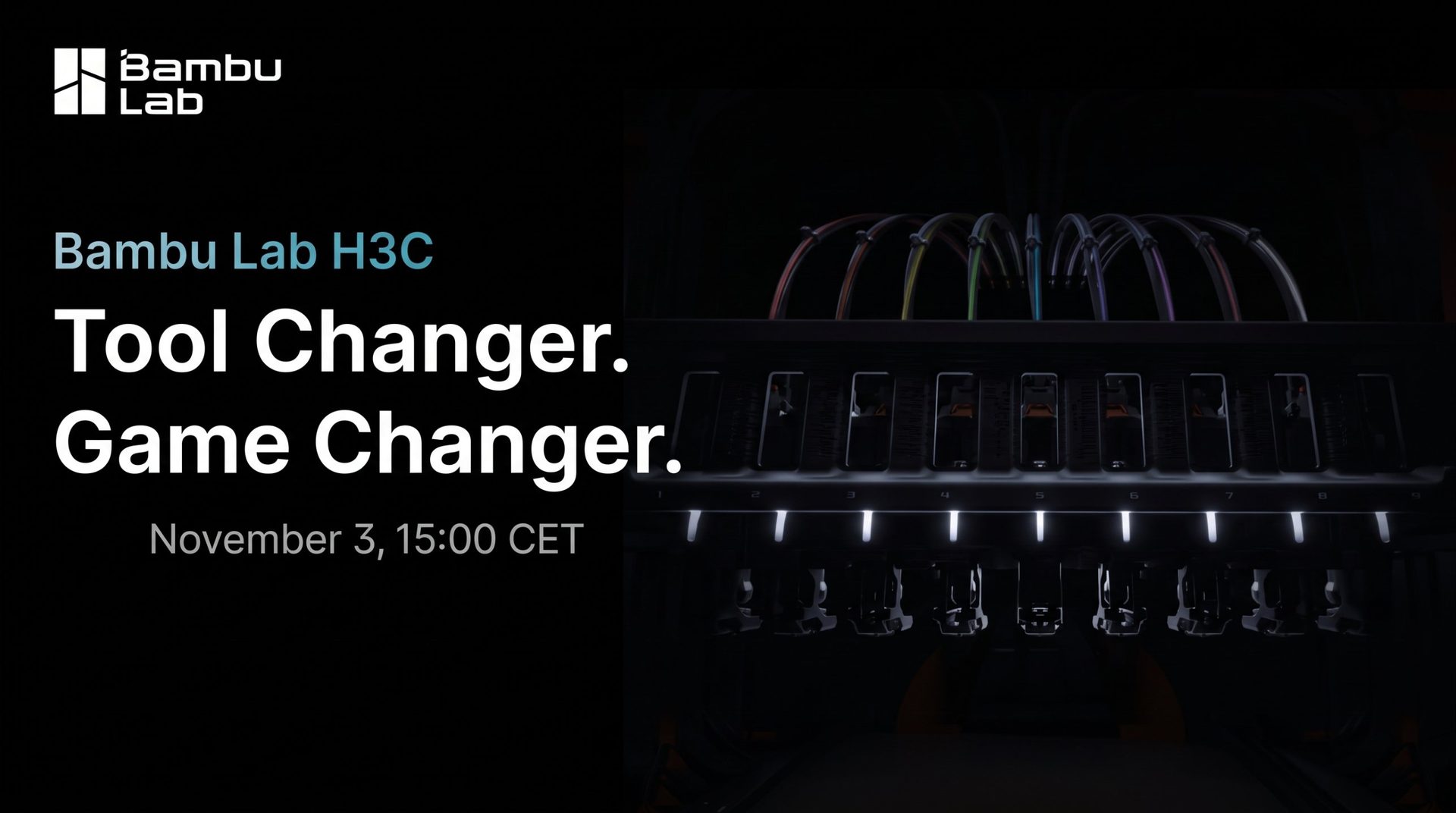
Update November 3, 2026: the Bambu Lab H3C is official! 9 heads, 2.85 mm head for TPU, heated chamber up to 65 °C and priced at €2,499 in a bundle. All specs in our article Bambu Lab H3C official.
Multicolor and multi-material printing has experienced unprecedented growth thanks to AMS systems (Bambu Lab's automatic filament loader). Yet one flaw frustrates every user: the infamous purge tower and the small piles of plastic discarded with every filament change in a single nozzle.
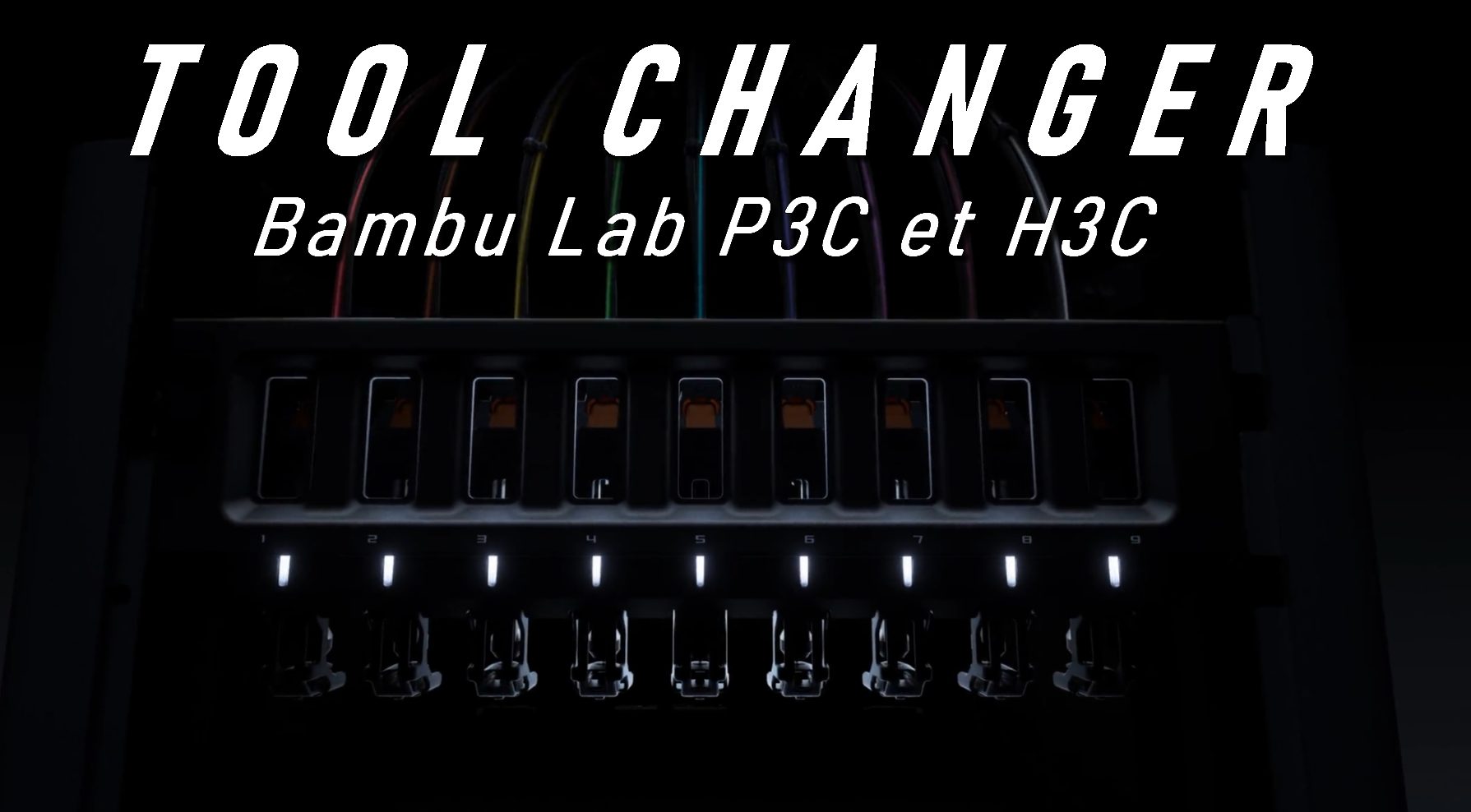
Rumors circulating about the upcoming Bambu Lab H3C and Bambu Lab P3C announce a major shift: the arrival of a true tool changer from the industry's most popular manufacturer.
1. Why the single nozzle has its limits
With an AMS, every color change follows the same steps:
- the current filament retracts;
- it's cut, then the new color is loaded;
- the nozzle is purged: plastic goes to waste (the infamous "poops") and a sacrificial tower is printed next to the part.
On a figurine with hundreds of color changes, the purged plastic can weigh more than the part itself, and print time increases significantly. Bambu Lab already reduced this problem with the Vortek system on the H2C, which changes nozzles. The tool changer takes it further.
2. P3C and H3C: what we really know
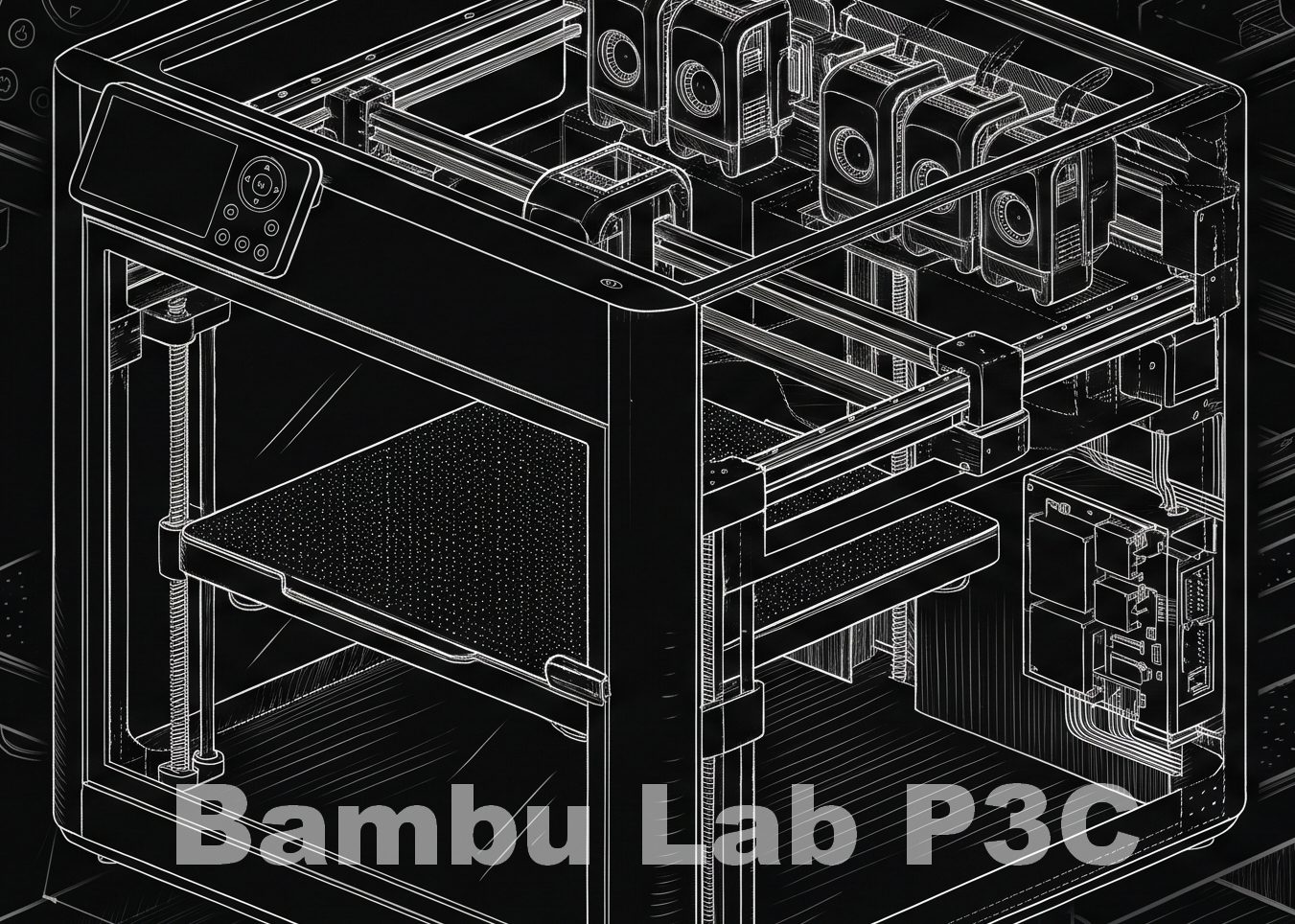
At the time of writing, Bambu Lab has officially confirmed only the H3C, presented on November 3. The P3C is known only from its certification documents.
| Bambu Lab P3C | Bambu Lab H3C | |
|---|---|---|
| Status | Found in certifications (USA, Japan), not yet announced | Official since November 3, 2026 |
| Number of tools | 7 slots visible in photos | 9 tools |
| Printer | Enclosed, glass door | Enclosed, premium |
| Heated chamber | Unknown | Yes, up to 65 °C |
| Build volume, price, availability | Unknown | 330 × 320 × 325 mm, €2,499 in bundle, available now |
We'll update this article as soon as official specs are released.
How does a tool changer work?
The principle is the same across all manufacturers:
- each print head (or nozzle, depending on the model) waits on its holder, loaded with its own filament;
- when a color or material change is needed, the current head is placed back on its holder;
- the carriage grabs the next head and resumes printing right away.
Since two materials never pass through the same nozzle, there's almost no need to purge: only a small priming line is sometimes necessary while the new head reaches temperature.
3. The real revolution: combining incompatible materials
Beyond plastic savings, a tool changer opens possibilities difficult to achieve with an AMS:
- Perfect soluble supports: print supports in BVOH or PVA without contaminating the PLA or PETG nozzle.
- Parts that are both rigid and flexible: a rigid enclosure with TPU seals, without running flexible filament through long tubes.
- Multiple nozzle sizes: if the tools accept different nozzles, imagine a 0.8 mm nozzle to quickly fill interiors and a 0.2 mm nozzle for fine details. We'll see what the P3C and H3C allow.
A new standard for makers?
If specs pan out, the H3C, then perhaps a more affordable P3C, would shift consumer 3D printing from mostly "decorative" multicolor to true multi-material fabrication: functional parts with less waste and less machine time. See you November 3 for the first answers.