3D Printing and Precision

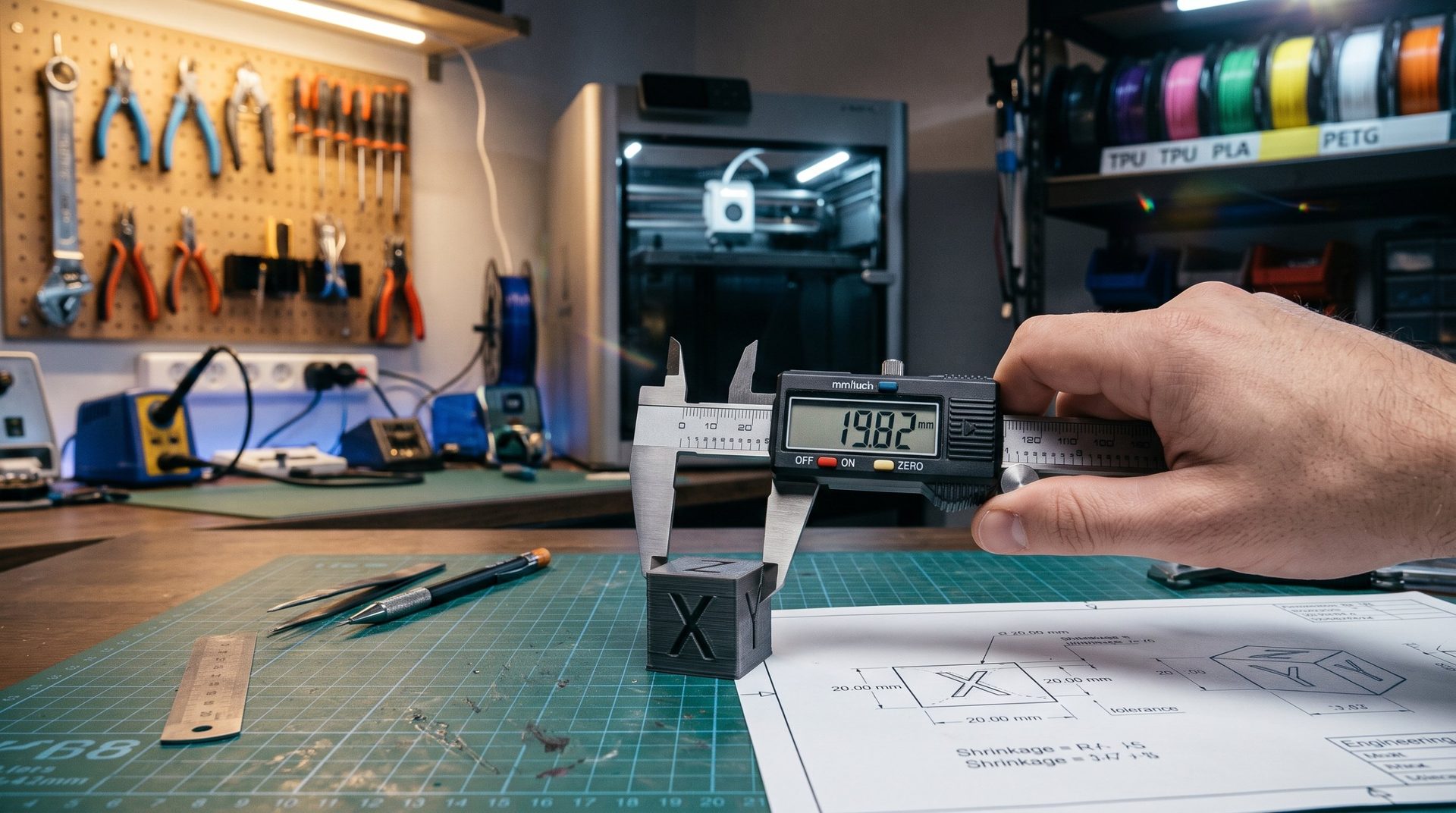
(Image Source and 3D File: G-Man Projects via MakerWorld)

What Is Precision in 3D Printing?
Precision in 3D printing is not a single concept but encompasses several key aspects:
-
Resolution:
- Vertical Resolution (Layer Height): This is the thickness of each layer deposited by the printer. A finer layer height (for example, 0.05 mm instead of 0.2 mm) improves vertical resolution, reducing the stair-stepping effect on curves and slopes, and increasing visible detail. The downside is significantly longer print times.
- XY Resolution (Horizontal): This refers to the smallest feature or detail the printer can reproduce in the horizontal plane (X and Y). For FDM printers, it's related to nozzle diameter; for resin printers (SLA/DLP), it depends on laser spot size or screen pixel size.
-
Dimensional Accuracy:
- This is a printed part's ability to faithfully match the dimensions specified in the digital 3D model (CAD file). A part with high dimensional accuracy will measure very close to what it's supposed to measure. This is crucial for assemblies where parts must fit together perfectly.
-
Repeatability:
- Repeatability measures consistency of results. A printer is considered repeatable if it produces parts with the same dimensions and quality from one print to the next, even if those dimensions aren't exactly what the CAD model specifies (in which case it would be precise but not necessarily accurate).
-
Surface Finish:
- While not a direct measure of dimensional precision, surface finish (smoothness and visual appearance) is closely tied to resolution and overall print quality, influencing the perception of precision.


Key Factors Influencing Precision
Several elements interact to determine the level of precision achievable:
-
3D Printing Technology:
- Resin Printing (SLA, DLP, LCD): These technologies are generally considered the most precise. They use light (laser or projector) to solidify photosensitive liquid resins, enabling very fine details, smooth surfaces, and excellent dimensional accuracy due to low material shrinkage.
- FDM (Fused Deposition Modeling): More accessible, FDM is less precise. Nozzle dimensions, layer lines, and thermal constraints (plastic shrinkage and warping) can affect precision. Post-print adjustments are often needed for tight tolerances.
- SLS (Selective Laser Sintering): Offers good dimensional accuracy and robust parts without supports. Surface finish is powdery, which can affect perceived detail.
- Material Jetting: Similar to an inkjet printer, this technology jets photopolymer droplets that are instantly cured by UV, offering very high precision and smooth finish.
-
3D Printer Quality:
- Frame Rigidity: A solid, stable frame reduces vibration and unwanted movement during printing.
- Mechanical Components: The quality of stepper motors, guide rails, belts, and lead screws is essential for precise movement of the print head and build plate.
- Calibration: Regular and accurate calibration (bed leveling, extruder calibration, belt tension adjustment) is fundamental to maintaining precision over time.
-
Printing Materials:
- Shrinkage and Warping: All thermoplastics shrink somewhat as they cool, which can affect dimensional accuracy. Some materials (like ABS) are more prone to warping than others (like PLA or PETG).
- Dimensional Stability: A material's ability to maintain its shape and dimensions under stress or at varying temperatures.
-
Print Settings (Slicer):
- Layer Height: The main driver of Z-axis resolution.
- Print Speed: Slower speeds allow better material deposition and better layer adhesion.
- Temperatures: Optimal nozzle and bed temperatures for the material.
- Cooling: Controlled cooling is critical to prevent deformation.
-
Post-Processing:
- While performed after printing, post-processing (sanding, filling, polishing) can improve surface finish and, indirectly, the perception of precision, but it can also alter dimensions if done poorly.
3D printing has come a long way since its early days, evolving from simple "proof of concept" to a genuine manufacturing tool. Precision has become the cornerstone of this evolution, enabling additive manufacturing to integrate into critical applications where reliability and dimensional compliance are non-negotiable. As research continues to improve materials and machines, 3D printing promises to push the boundaries of what's achievable with ever-increasing fidelity.