3D Printing: Understand and Master the Health Risks

While 3D printing is an incredibly powerful and accessible technology, it's not without risk. By heating and extruding plastic, FDM (Fused Deposition Modeling) printers can emit substances that, without proper precautions, may pose health hazards. It's essential for every user to understand these risks and know how to protect themselves.
Identified risks: particles and chemical compounds
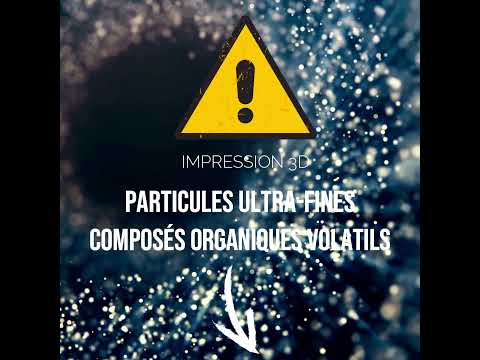
The main health danger comes from emissions generated by filament melting. Two types of substances are particularly closely monitored:
- Ultrafine Particles (UFP): These microscopic particles are created when plastic melts. They're small enough to be inhaled and penetrate deep into the lungs, which can cause respiratory irritation or long-term problems, especially with prolonged exposure. The amount of UFP emitted varies considerably from one filament to another.
- Volatile Organic Compounds (VOCs): When heated, filaments can also release chemical vapors. While PLA (polylactic acid) is generally considered one of the safest filaments, others like ABS and ASA release potentially harmful VOCs, some of which are classified as irritants or even carcinogenic (such as styrene, found in ABS).
The higher the printing temperature, the greater the emission of these substances.
Emission levels by filament type
This table helps you visualize emission levels for the most common filaments:

Solutions for safe printing
Fortunately, these risks are easily manageable by adopting simple but effective practices.
- 1. Ventilation, the golden rule: Never print in a confined, unventilated space. The simplest solution is to place your printer in a well-ventilated room and keep a window open to allow emissions to escape.
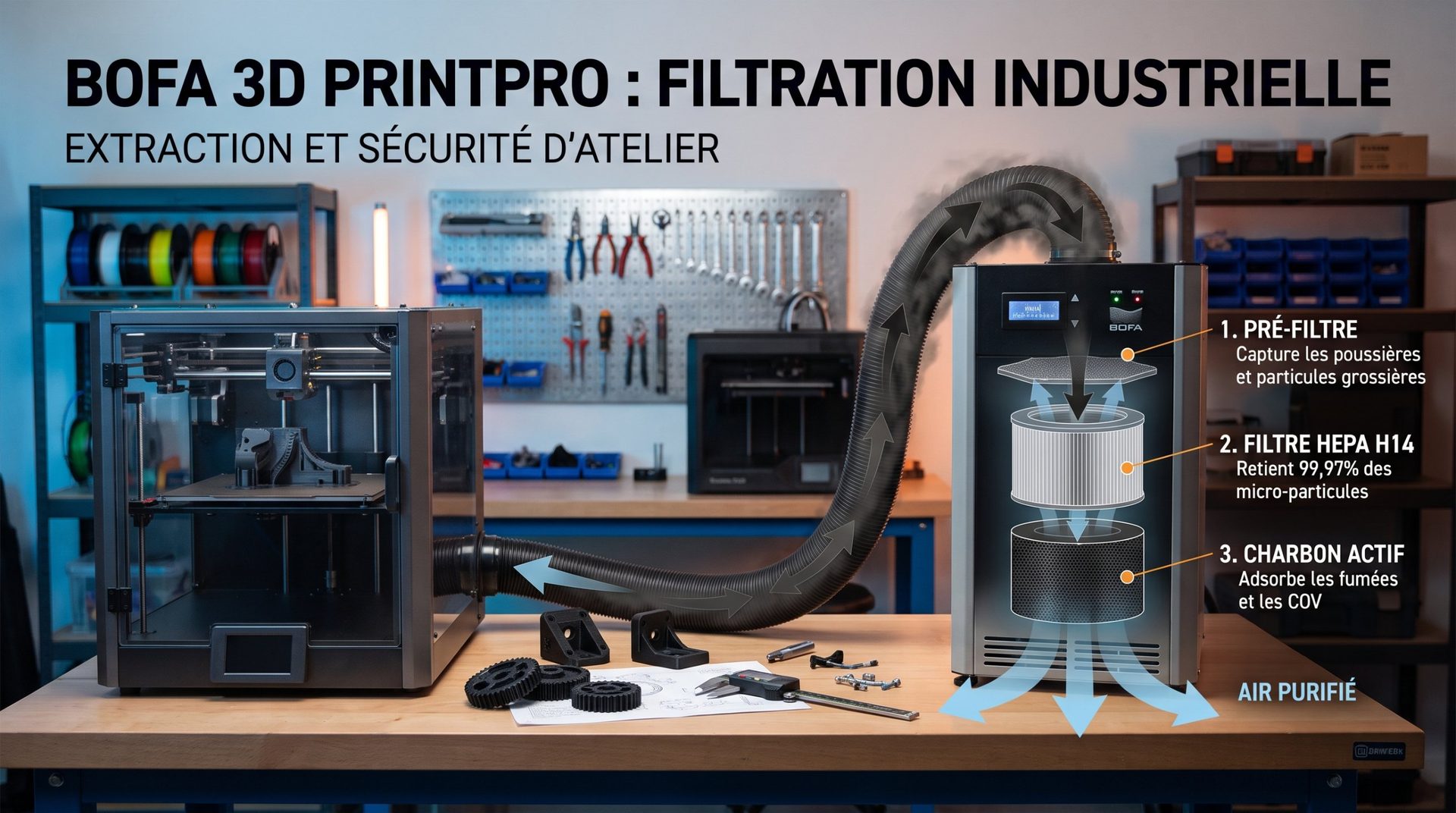
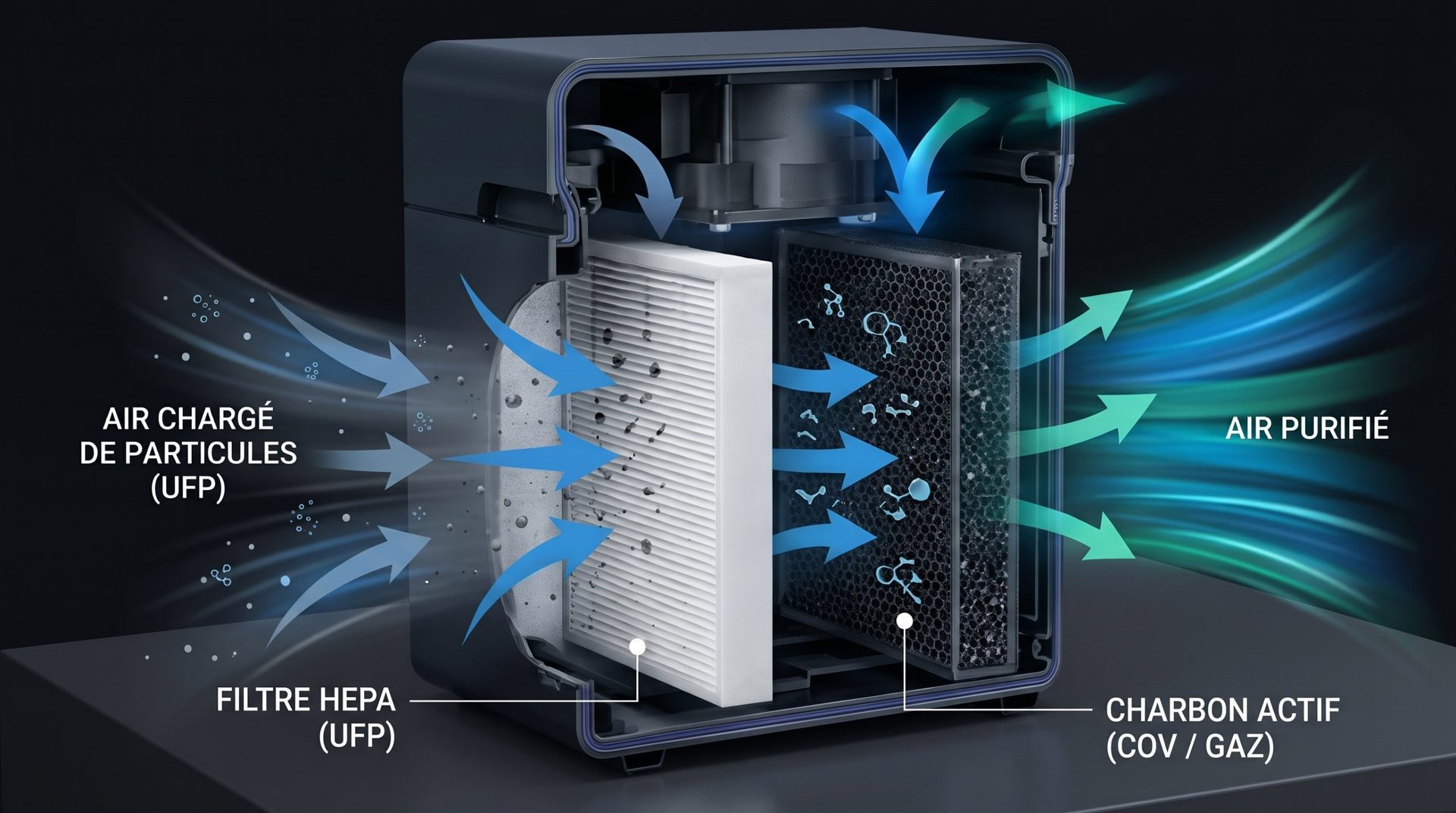
- 2. Use an enclosure with filtration: This is the best solution for regular use or printing risky filaments like ABS or ASA. A closed chamber significantly reduces emission spread into the room. For maximum protection, choose an enclosure equipped with HEPA and activated charcoal filters. The HEPA filter captures fine particles, while activated charcoal neutralizes VOCs.
- 3. Choose the right filament: For projects that don't require specific mechanical properties or weather resistance, PLA remains the safest choice. It has a mild odor and emits far fewer harmful substances than other filaments.
- 4. Safe distance: If your printer isn't in an enclosure, avoid staying nearby during long print sessions, especially in the first few minutes when emissions are highest.
In conclusion, 3D printing can be practiced safely. By being aware of the risks and investing in good ventilation or a filtration system, you can focus on your passion without compromising your health.
Disclaimer: The information and data contained in this article are provided for informational purposes. They aim to raise awareness about best practices. Current studies on the long-term effects of these emissions do not allow us to know the potential health risks.