3D Printing and Artificial Intelligence: The Marriage Revolutionizing Additive Manufacturing
Updated November 18, 2026
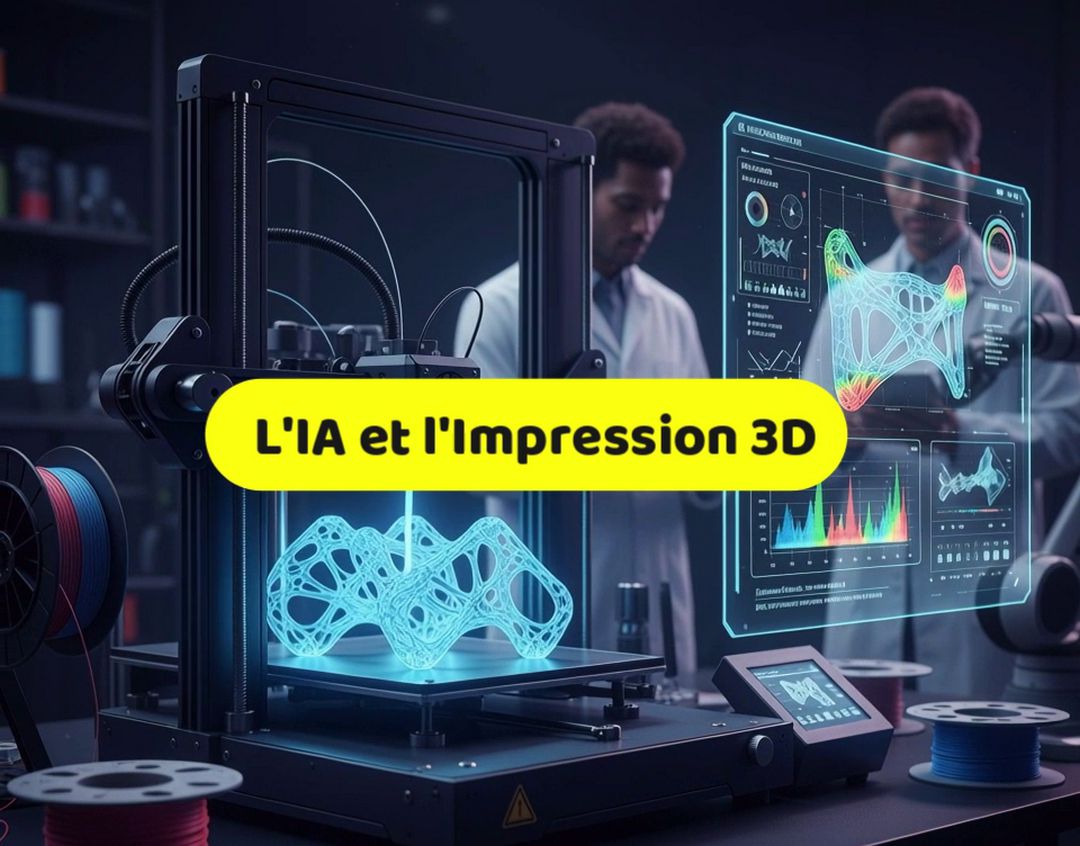
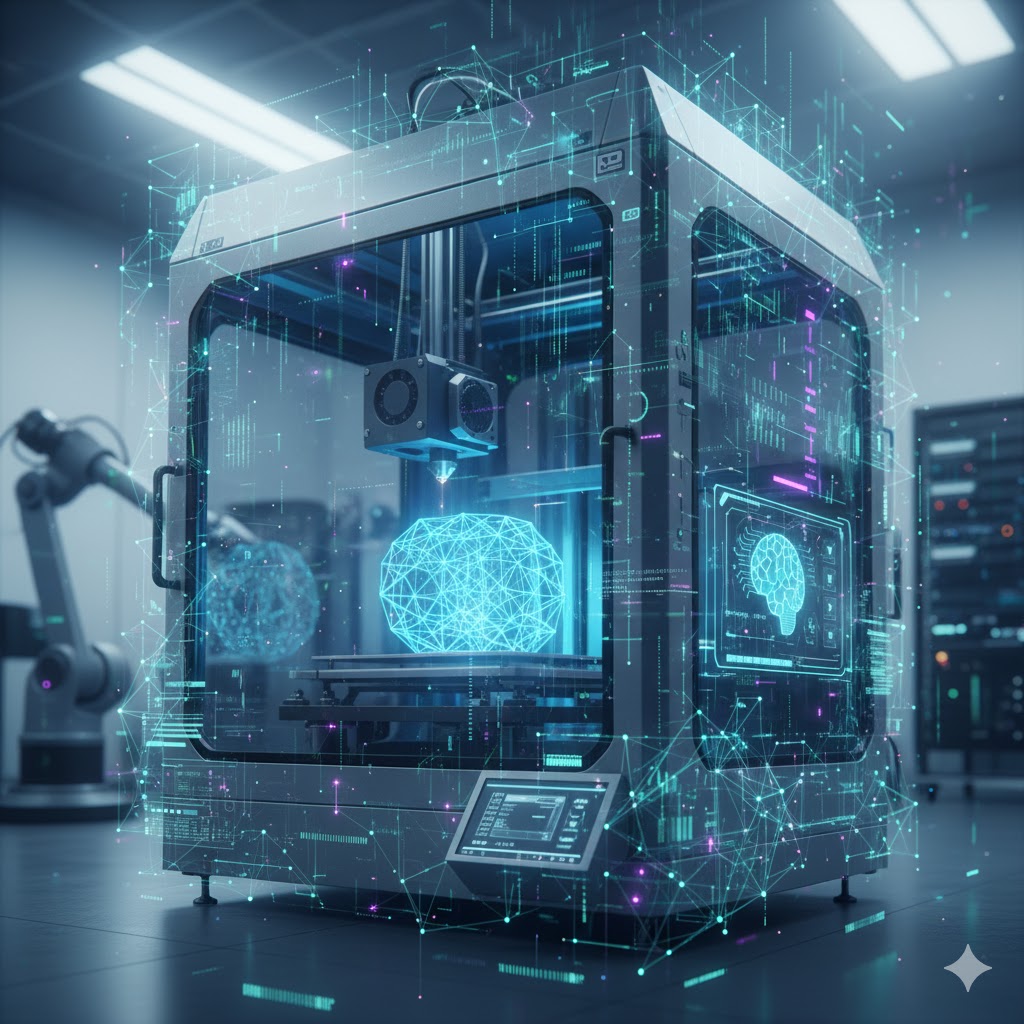
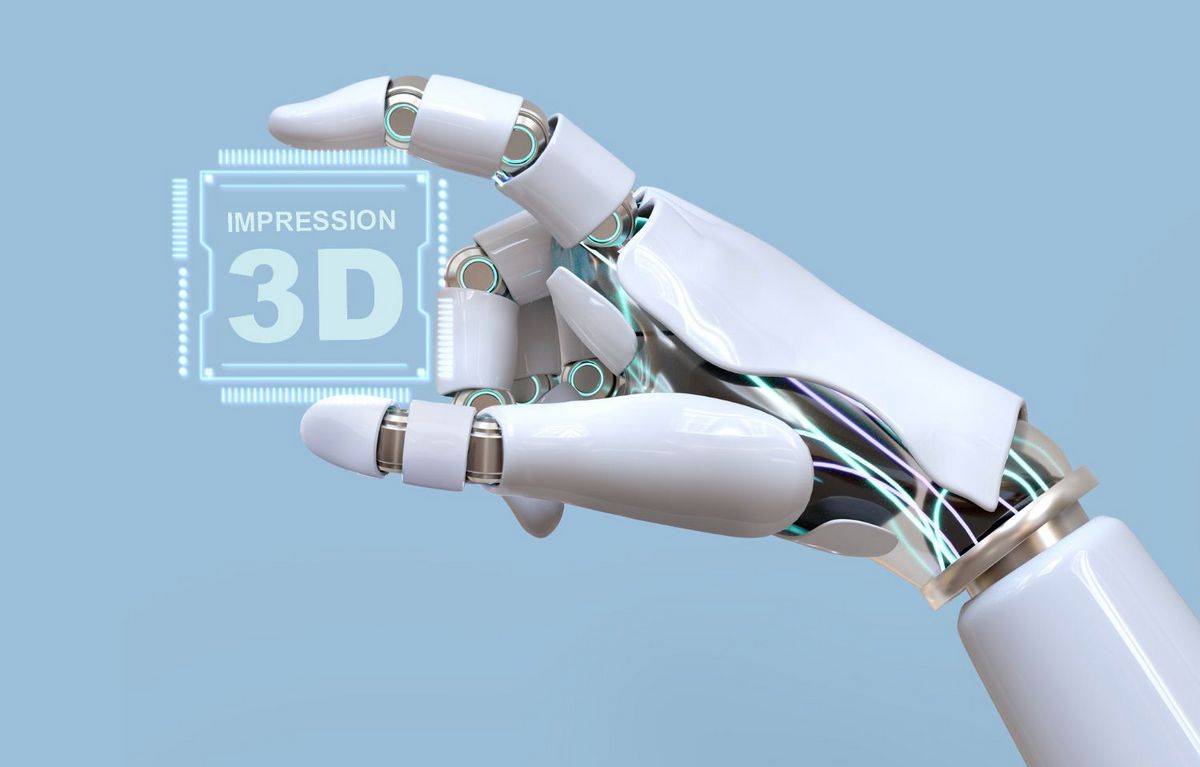
3D printing, or additive manufacturing, has already transformed the way we design and produce objects, from prototypes to spare parts. Meanwhile, artificial intelligence (AI) has become a tool capable of analyzing, learning, and optimizing complex processes. When these two technologies meet, they open the door to smarter, faster, and more reliable manufacturing.
Why AI and 3D Printing Are Such a Perfect Match
Despite its advances, 3D printing still faces challenges: optimizing complex shapes, tuning parameters to prevent failures, controlling quality, and maintaining machines. AI provides answers for:
- Managing complexity: it explores a vast number of shape variations (topology optimization, lattices) that would be impossible to design by hand.
- Optimizing processes: it draws on past print data to suggest better settings and reduce waste.
- Making mass personalization possible: producing unique objects in series becomes more realistic through automated design and manufacturing.
- Exploiting data: modern printers generate huge amounts of data (sensors, cameras); AI is the ideal tool to analyze it.
AI at Every Stage of 3D Printing
AI isn't limited to a single phase: it spans the entire lifecycle of a printed part.
-
Design and design optimization (generative design and topology optimization):
- How: based on constraints (strength, weight, load), algorithms generate hundreds of possible geometries, often organic or lattice-based, that save material while maintaining strength.
- Benefits: time savings for designers, lighter and more efficient parts.
- Examples: Autodesk Fusion and nTop (formerly nTopology) offer generative design features.
-
AI modeling (text, image, CAD):
- How: generators like Tripo AI or Meshy create a 3D model from a description or photo, and Text-to-CAD tools produce simple technical parts from a written request.
- Benefits: create your own models without mastering full CAD. Dimensions and strength still need verification for mechanical parts.
-
Optimization of print parameters (smart slicing):
- How: recent slicers and printers automatically calibrate flow, vibrations, and pressure compensation, and suggest settings tailored to the material and geometry (nozzle and bed temperature, speed, layer height, infill).
- Benefits: fewer failures, better surface quality, less time and material wasted.
- Examples: ready-to-use profiles, automatic calibrations at startup; industrial solutions even adjust parameters in real time.
-
Quality control and real-time defect detection:
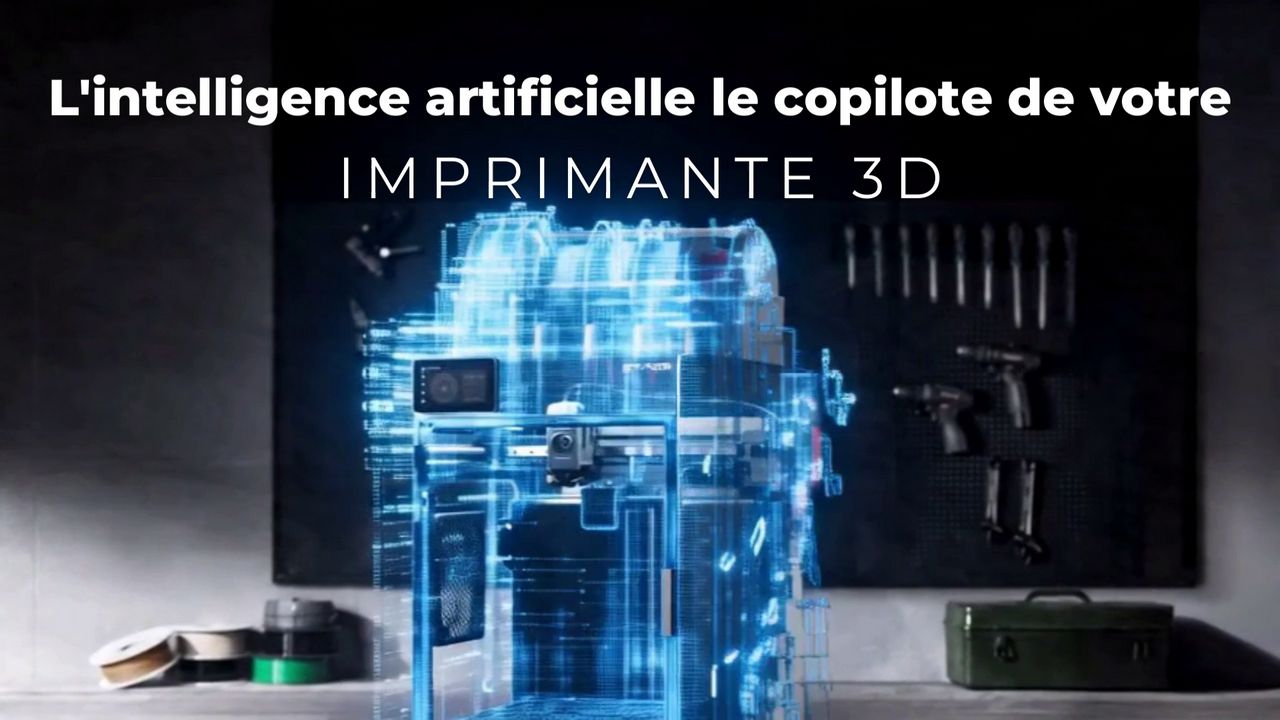
- How: cameras and sensors (Lidar, force sensors, and other industrial-grade ones like thermal imaging) monitor the print. Machine learning algorithms spot anomalies (part detachment, under-extrusion, warping, layer shifts, "spaghetti") and alert the user or pause the print. What these systems are worth in everyday use: embedded AI, marketing gimmick or real safety?
- Benefits: less waste, fewer reprints, more reliability and repeatability.
-
Predictive maintenance of machines:
- How: by analyzing printer data (vibrations, motor temperatures, heating cycles), AI helps anticipate component wear before failure. This is mainly used in industry and print farms.
- Benefits: fewer unexpected downtime, longer machine life, better planned maintenance.
-
Materials and new filaments:
- How: AI helps researchers and manufacturers characterize new materials, predict their printing behavior, and suggest formulations with specific properties (more strength, more flexibility).
- Benefits: faster innovation and better resource utilization.
The convergence of AI and 3D printing is one of tomorrow's industry drivers: more autonomous workshops, mass personalization, more efficient parts, and less waste thanks to better material use. AI doesn't replace human expertise, but it makes 3D printing more reliable and more accessible.
The full breakdown, step by step: AI at every stage of 3D printing.