
3D Printed Rubik's Cube: A Technical and Creative Challenge

The Rubik's Cube is not just the world's most famous puzzle; it's also a masterpiece of mechanical engineering. For 3D printing enthusiasts, reproducing it is often considered one of the major technical challenges, as it demands extreme precision, mastery of tolerances, and attention to detail that few projects require.
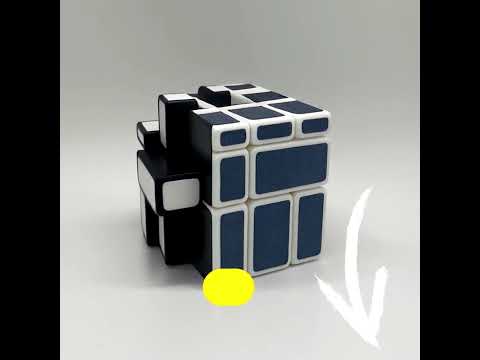
(Image Source and 3D File: CZJ Studio via MakerWorld)
Why Take On a Rubik's Cube Printing Project?
This project goes far beyond printing a simple decorative piece. It's both a skill test and a creative opportunity.
- Testing your machine: A functional Rubik's Cube is the ultimate benchmark for your printer's accuracy. The pieces must fit together without forcing, yet without excessive play, so the cube rotates smoothly.
- Total customization: You can choose specific colors, print size variations (miniatures or giants), or even experiment with different materials for the faces.
- Mechanical learning: Printing the cube piece by piece lets you concretely understand the complex central mechanism that allows each face to rotate independently.
The Technical Challenges of FDM Printing
Success hinges on managing two key factors: tolerance and assembly.
1. Tolerance and Fit
The biggest pitfall is pieces fusing or rubbing too tightly.
- The critical gap: For pieces to rotate freely, there must be a small space (clearance) between them. If STL files are designed for 0.1 mm tolerance, you must ensure your printer respects it.
- Slicer adjustment: In your slicing software, you may need to adjust the horizontal compensation or hole horizontal expansion to guarantee holes remain slightly larger than pegs and adjacent surfaces don't touch.
2. Materials and post-processing
Material choice affects the cube's performance and durability.
- Material: PLA is often the best choice for its rigidity and ease of printing. It offers good dimensional stability, crucial for tolerances.
- Finishing: To achieve that smooth rotation feel of a quality Rubik's Cube, post-processing is essential. This involves light sanding of contact surfaces to remove imperfections, followed by lubrication (with silicone oil or PTFE-based lubricant).
Where to Find Plans and Advice
It's strongly discouraged to model a functional Rubik's Cube from scratch, as designing the central mechanism is extremely complex.
The best resources are 3D file-sharing platforms:
- MakerWorld, Thingiverse, Printables...: Search for "functional Rubik's Cube" or "3x3 puzzle". The best models are often those tested by thousands of users and include precise instructions on recommended tolerances. Read our article: "Where to Find Free 3D STL Files for 3D Printing? Top Platforms"
Successfully printing and assembling a Rubik's Cube is an immense satisfaction for any maker, proving excellent mastery of your tool and rewarded patience.


