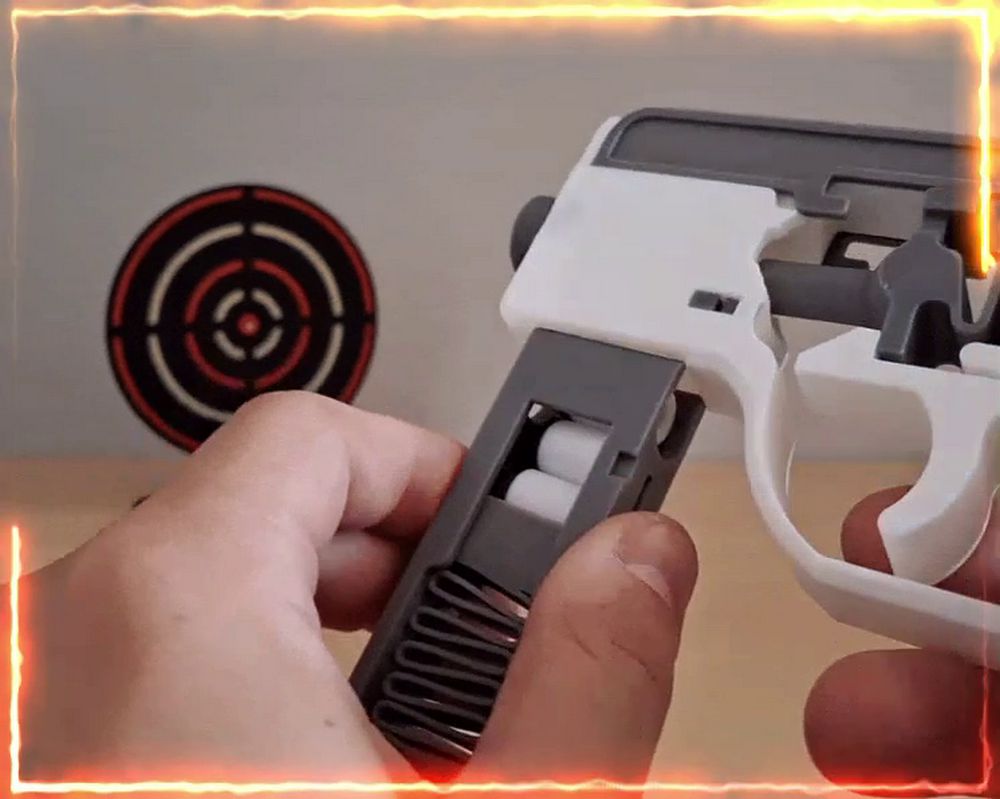
3D Printed Guns: Between Technological Innovation and Societal Challenges
3D printing, celebrated for its revolutionary potential in fields ranging from medicine to aerospace to art, is a double-edged technology. Beyond its beneficial applications, it has also opened a particularly controversial Pandora's box: weapon manufacturing. This intersection raises complex questions around legality, safety, and ethics, placing society face-to-face with an unprecedented technological challenge.
What is a 3D Printed Gun?
A 3D printed gun is, by definition, a firearm whose components, in whole or in part, are manufactured using a three-dimensional printer. They are often referred to as "Ghost Guns" because, not being manufactured industrially, they typically have no serial number and are therefore untraceable by law enforcement.
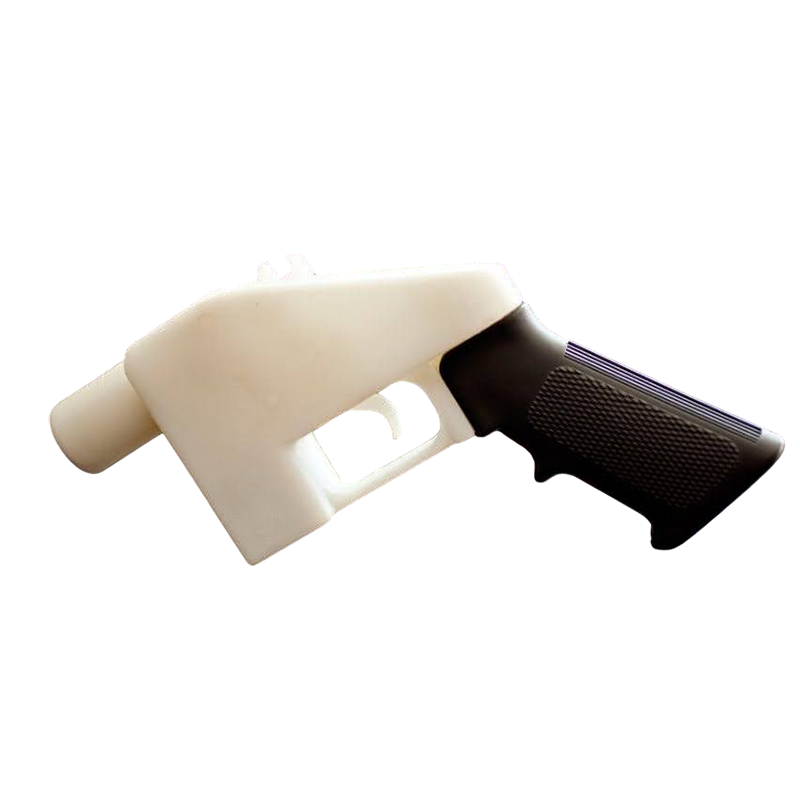
Historically, the concept gained notoriety with Defense Distributed's "Liberator" project in 2013, a single-shot plastic pistol whose plans were posted online and widely shared.
The main types are:
- Polymer Guns: The majority of 3D printed firearms are manufactured from plastic filaments (PLA, ABS, Nylon). These are often rudimentary pistols or lower receivers (the part containing the firing mechanism) designed to be assembled with standard metal components (barrel, springs, etc.). Their reliability and durability are limited, presenting high risk to the user.
- Metal Guns: Less accessible to the general public, certain metal 3D printing technologies (such as direct metal laser sintering - DMLS) allow fabrication of durable metal parts. These technologies are extremely expensive and complex, and are primarily used by professional or military entities for prototypes or very specific components, rather than for complete weapon manufacturing by individuals.
The Technology Behind the Controversy
The popularity of 3D printed guns is intrinsically linked to the growing accessibility of domestic 3D printers and the ease of sharing digital files:
- FDM (Fused Deposition Modeling) Printers: These machines, relatively affordable (from hundreds to thousands of euros), can print parts from plastic spools. This is the most commonly used technology for polymer guns, though it presents limitations in mechanical strength compared to traditional manufacturing methods.
- Materials: Filaments like ABS, Nylon, PA6-CF (carbon fiber reinforced Nylon), and PETG are often chosen for their strength, but even the most robust polymers cannot always withstand the pressures generated by cartridge detonation.
- STL File Distribution: Digital models (STL files) for printing these weapons are widely available online, often via sharing platforms or decentralized networks. This distribution makes their control extremely difficult.
Implications and Societal Challenges
The existence of 3D printed guns poses major challenges to legislators and law enforcement worldwide:
- Legal and Regulatory Questions: Most firearms legislation is based on industrial manufacturing and traceability by serial number. Ghost Guns circumvent these regulations, making their possession and origin difficult to track. Many countries and states are attempting to adapt their laws to criminalize the manufacturing, possession, or distribution of 3D printed gun plans.
- Public Safety Risks: The proliferation of unregistered and untraceable weapons represents a threat. They may fall into the hands of persons prohibited from carrying arms, or be used in criminal activities without leaving traces.
- Dangers to the User: Plastic 3D printed guns are inherently dangerous for the user. The low resistance of polymer to firing pressure can result in ruptures, explosions, or serious injuries.
- Detection: Guns manufactured primarily from plastic can be difficult to detect by conventional metal scanners and detectors, posing an additional challenge for security in public places and transportation.
- Ethical Debate: The subject reignites the debate over freedom of expression (the right to share digital files) versus public safety, and the responsibility of online platforms.
Authorities' Response and the Future
Facing these challenges, global authorities are adopting various strategies:
- Legislation: Many countries are strengthening their laws to include 3D printing weapon manufacturing within firearms regulation frameworks, criminalizing unauthorized production of these devices.
- Detection Technology: Research is underway to develop new detection methods capable of identifying non-metal components.
- Awareness: Campaigns are being conducted to inform the public about the dangers of manufacturing and using 3D printed weapons.
- International Cooperation: The global nature of the internet requires international cooperation to regulate file distribution and combat trafficking.
3D printing is a transformative technology with immense positive potential. However, its application to weapon manufacturing highlights the need for a delicate balance between innovation, technological freedom, and public safety protection. The debate is far from over, and the evolution of legislation and technology will continue to shape the future of this complex issue.
Important reminder: It is strictly forbidden to 3D print a firearm, and any such attempt presents extreme dangers to the user and others.