XXL 3D Printing: The Revolution of KUKA Robotic Arms

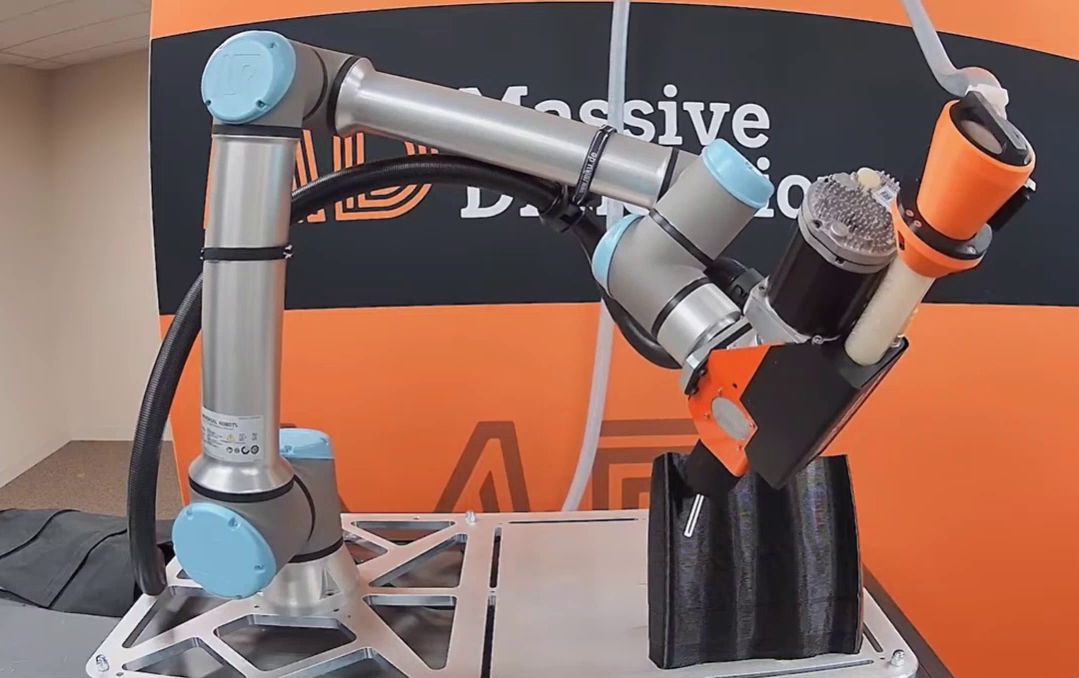
3D printing via robotic arm, and particularly with KUKA robots, represents the current frontier of XXL additive manufacturing. Unlike conventional 3D printers that move along 3 axes (X, Y, Z) inside a closed cube, the robotic arm offers complete freedom of movement.
Here's a detailed article on this revolutionary technology.

✅ What is a KUKA "3D Printer"?
It's not a single monolithic machine, but the integration of a print head (extruder) onto an articulated industrial robotic arm. KUKA, the global leader in robotics, offers arms capable of moving along 6 axes (or more), transforming the robot into a giant, ultra-flexible 3D printer.
The key components:
-
The Arm (e.g., KR QUANTEC or KR IONTEC): The carrier that provides reach and precision.
-
The Effector: The head mounted at the end of the arm. This can be a plastic extruder (pellets or filaments), concrete, or even a laser head for metal.
-
The Software (KUKA.CNC / CAM Slicer): Converts a 3D file (CAD) into complex robotic trajectories.
✅ Advantages over conventional 3D printing
| Feature | Conventional 3D Printer (Cartesian) | KUKA Robotic Arm |
| Build Volume | Limited by the machine's frame. | Potentially unlimited (if the robot is on a rail). |
| Number of Axes | 3 axes (linear). | 6 axes or more (articulated). |
| Print Supports | Often necessary for overhangs. | Minimized through head tilting. |
| Speed / Throughput | Moderate. | Very high (using industrial pellets). |
✅ Major applications
Construction and Architecture
Companies like BESIX use KUKA arms to print columns, walls, or urban furniture elements in concrete. The robot deposits layers of mortar with millimeter precision, enabling organic shapes impossible to form with traditional formwork.
Visual Communication Design
Deluxesign is a company specializing in premium solutions for architecture, interior design, and visual communication. Through 3D printing, Deluxesign creates seamless surfaces with fluid textures, imitating natural forms impossible to achieve through traditional sculpture methods. The company develops innovative elements such as suspended false ceilings and 3D-printed sunshades, combining futuristic aesthetics with thermal or acoustic functionality.
Aerospace and Marine Industry
Through partnerships with players like Caracol, KUKA arms produce large-format composite parts (boat hulls, aeronautical tooling components). The use of plastic pellets (more affordable than filament) makes production of multi-meter parts economically viable.
Metal 3D Printing (WAAM)
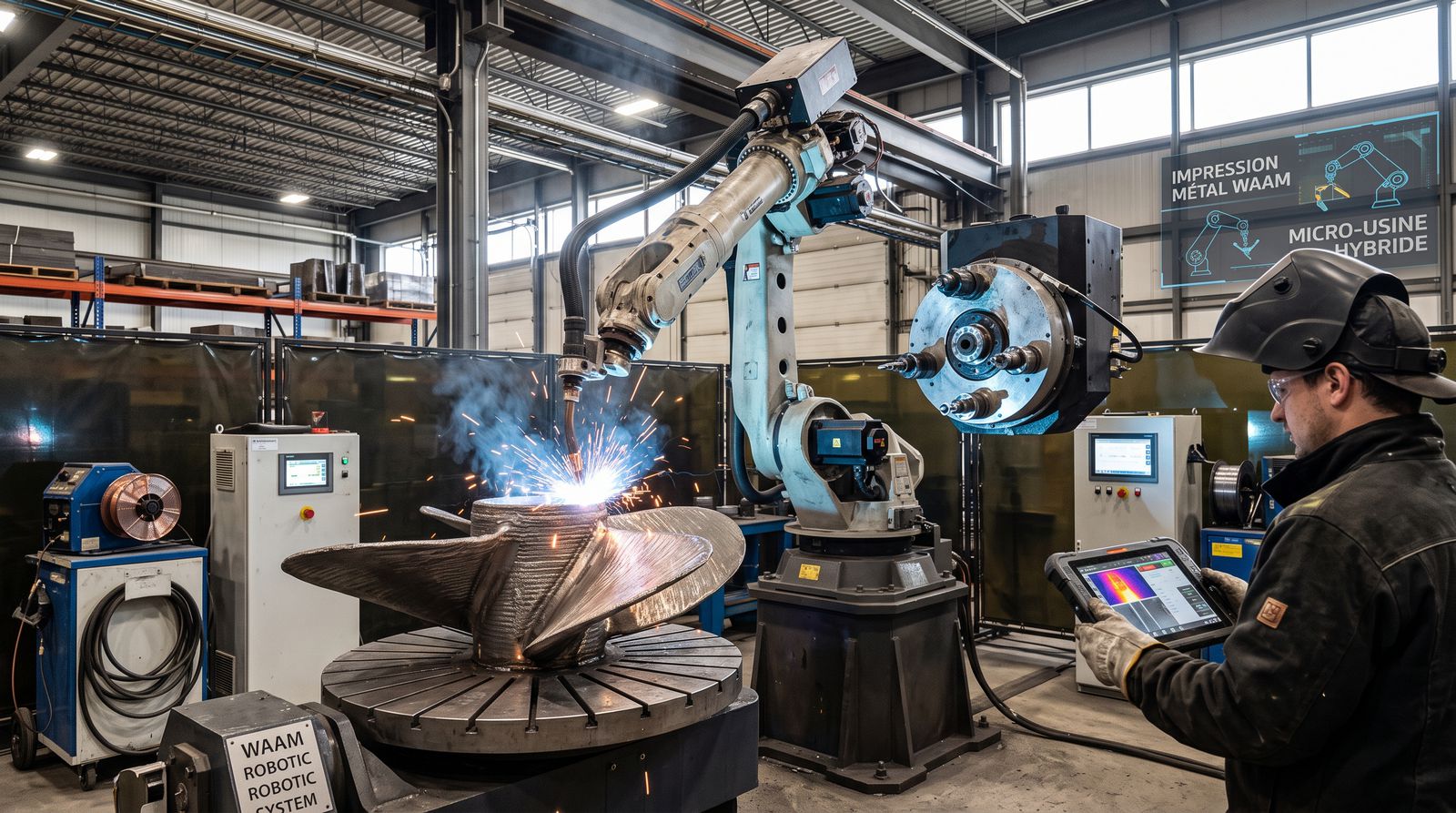
The robotic arm can be equipped with a welding torch. By melting a metal wire layer by layer (Wire Arc Additive Manufacturing process), you can manufacture boat propellers or structural steel or titanium parts with zero material waste.
✅ Why choose KUKA for 3D printing?
-
XXL Reach: Some models can achieve over 3 meters of radius. Mounted on a rail, the robot can print structures 10 to 20 meters long.
-
Non-planar Printing: Unlike conventional printers that print flat layers, the robot can print on curved surfaces or tilt its head to reinforce a part according to mechanical stress angles.
-
Robustness: Designed for automotive assembly lines, these robots can operate 24/7 in harsh industrial environments.
3D printing on KUKA arms is no longer a lab prototype, but a mature production solution. It enables moving from "small plastic part" to "architectural or industrial structure" with complete design flexibility.