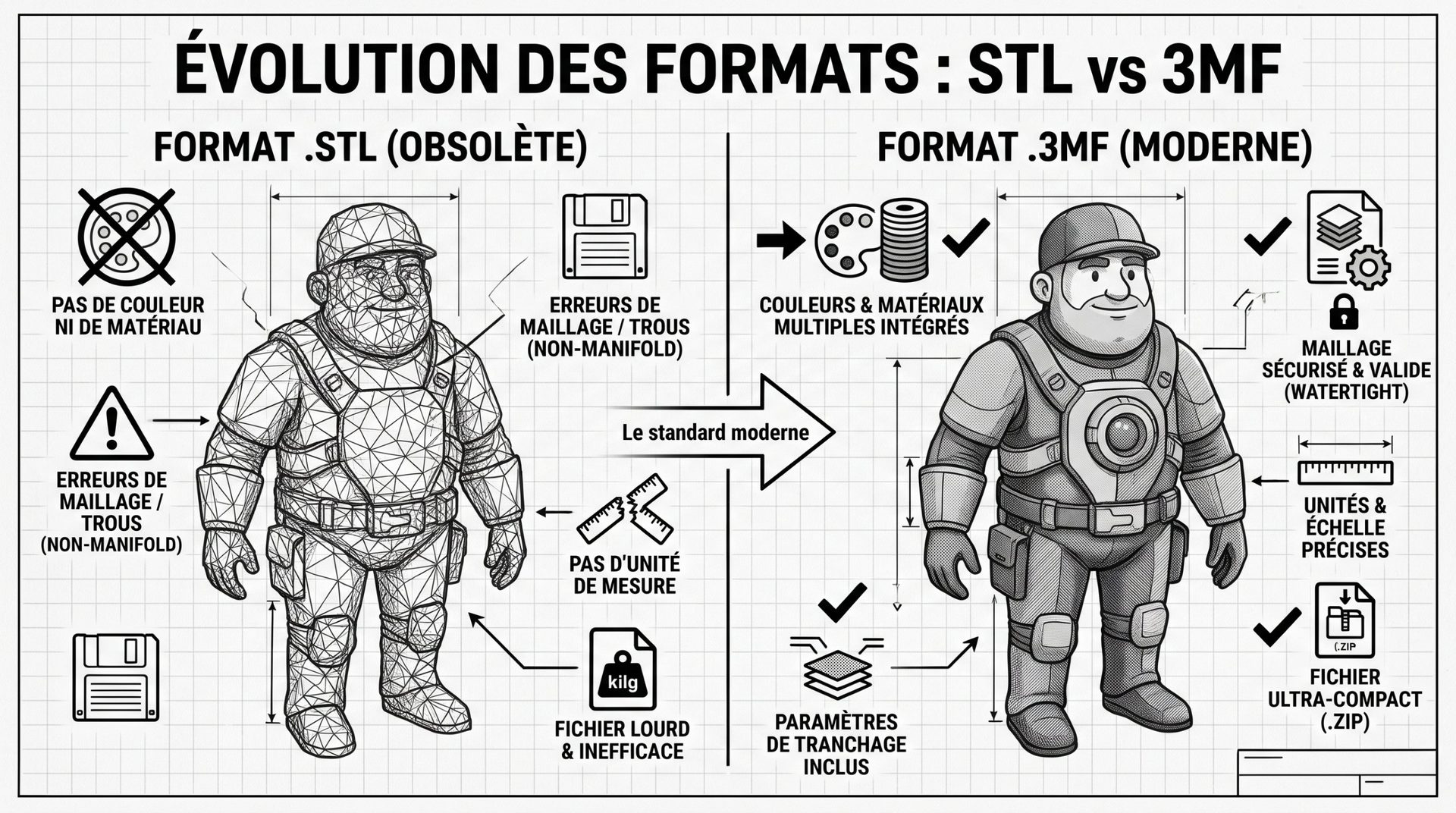
3D Printing: The End of STL Format as STEP Gains Power
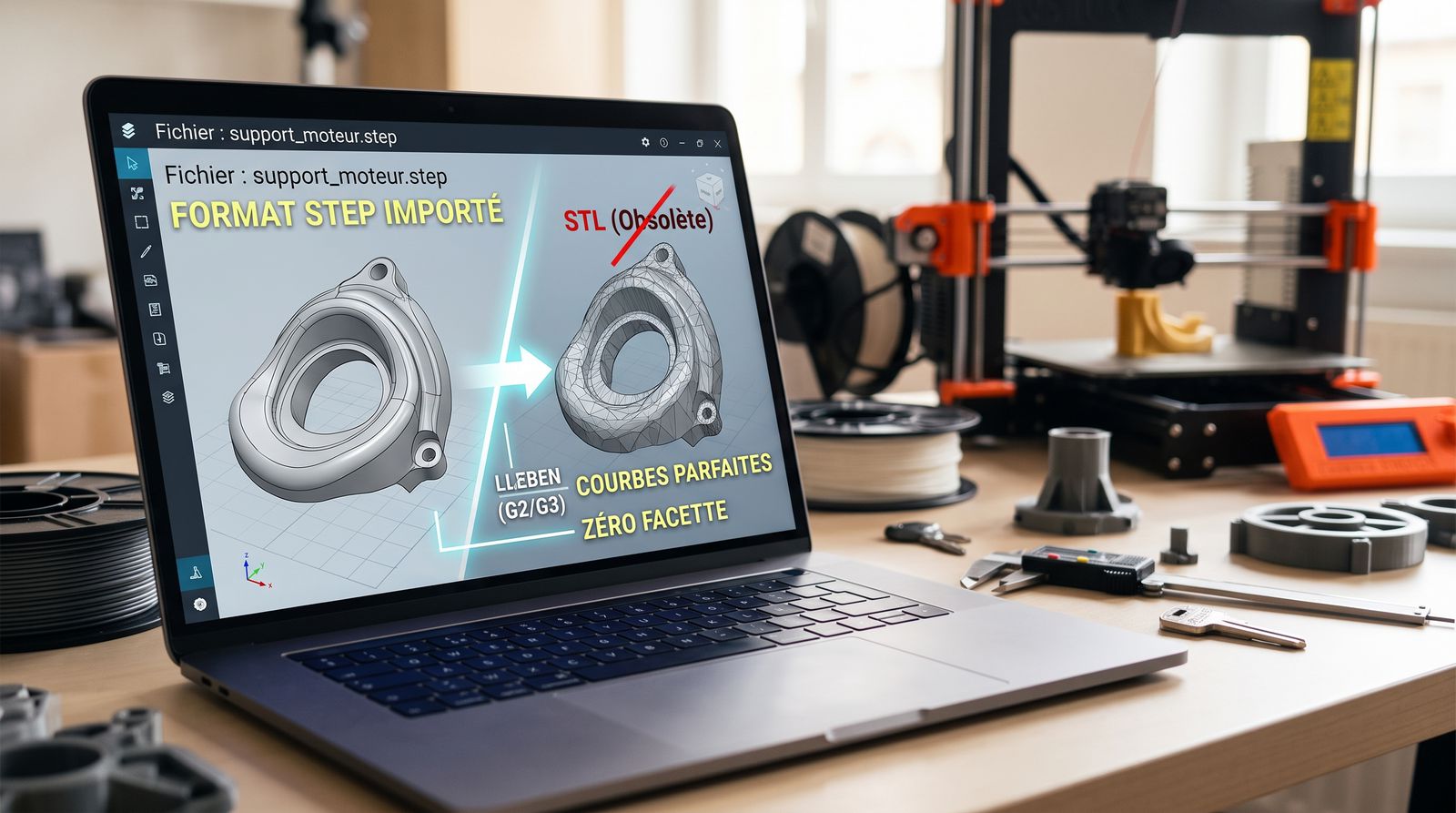
It's a quiet but major evolution in the workflow of makers and design offices. The leading open-source slicing software have just integrated full native support for CAD files in STEP (.stp) format, progressively sounding the death knell for the thirty-year-old STL format.
✅ What's actually changing:
-
Perfectly smooth surfaces: Unlike STL, which slices parts into thousands of flat triangles (polygons), the STEP format preserves the geometric equations of curves. Result: no more visible facets on cylinders and spheres—the slicer generates continuous circular arc toolpaths (G2/G3).
-
Files ten times lighter: A complex assembly that weighed hundreds of megabytes in high-resolution STL now takes up just a few megabytes in STEP.
-
Perfect assembly tolerances: Functional clearances (screw holes, bearing fits) are respected to the hundredth of a millimeter without distortion from tessellation.