Should You Keep 3D Printing During Heat Waves?
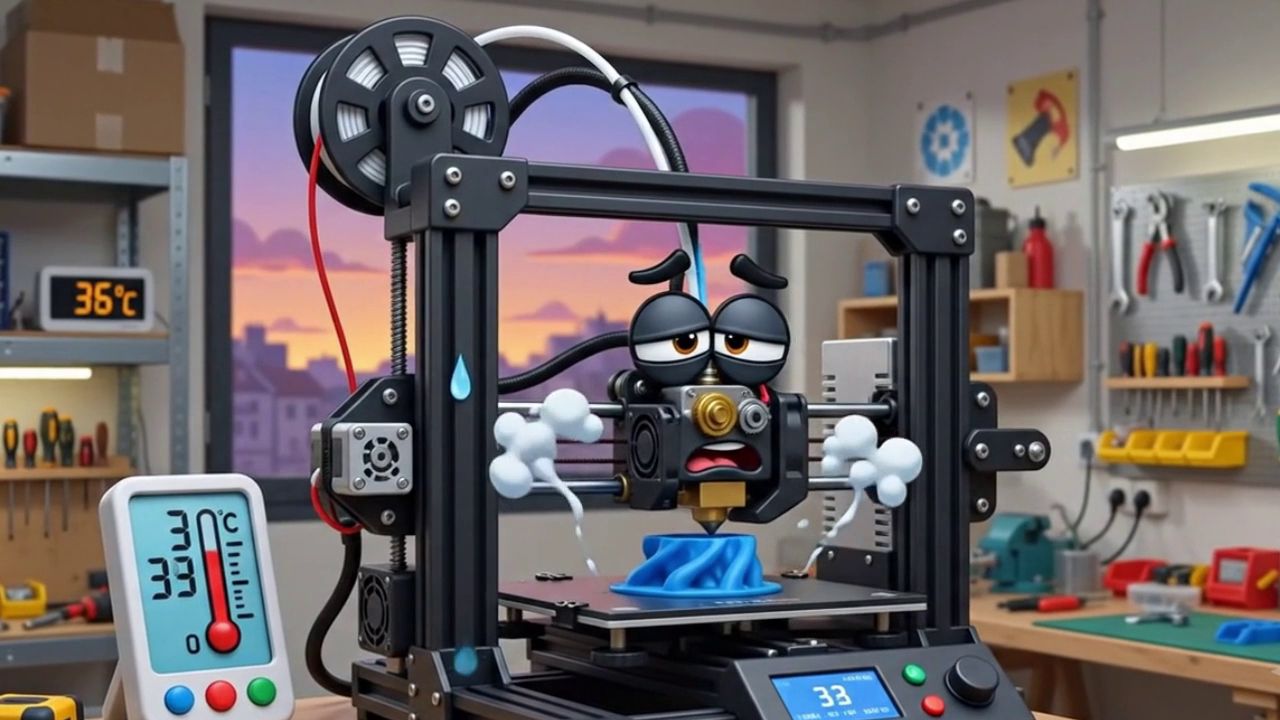
When room temperature exceeds 30°C, the physics of 3D printing (especially filament behavior) changes dramatically. Here are the key points you need to know if you're planning to run prints in these kinds of temperatures.
✅ Why Heat Waves Are the Enemy of 3D Printing
Cooling is essential in FDM printing (fused deposition modeling), particularly for PLA. But when it's 35°C in your room, your printer's fans are blowing hot air onto hot plastic.
-
Explosive heat creep: This is the number one problem in summer. The cooling fan on the heat sink can't keep up. The filament softens before it even reaches the nozzle, swells up, and creates a clog. You'll hear the extruder "click" repeatedly (tick-tick-tick).
-
Failed overhangs and bridges: Molten plastic takes much longer to solidify. Result: layers sag, details blur, and stringing (those wispy strings) multiplies.
-
Electronics overheating: The motherboard, power supply, and stepper motors heat up dramatically. Motors can become hot to the touch and start skipping steps (layer shifts).
✅ Solutions for Printing Through the Heat
If this article offered survival tips for your printer, it probably listed these tricks:
-
Open everything up: If your printer is in an enclosed chamber (a tent or acrylic enclosure), open the doors and remove the lid. You need to vent heat as much as possible.
-
Print at night: It's basic, but launching prints (especially PLA ones) between 11 PM and 7 AM, when room temperature drops, saves tons of prints.
-
Lower your temperatures: Since the ambient air is already hot, you can often drop your nozzle temperature by 5°C and your bed temperature by 5 to 10°C. For example, a bed heated to 60°C in winter might only need 50°C during peak summer for PLA.
-
Slow down your print speed: Printing slower gives the cooling fans more time to do their job on each layer.
✅ Do You Still Print in This Heat? How Do You Handle It?