Raft, Brim or Skirt: Understanding the Basics of 3D Printing Adhesion
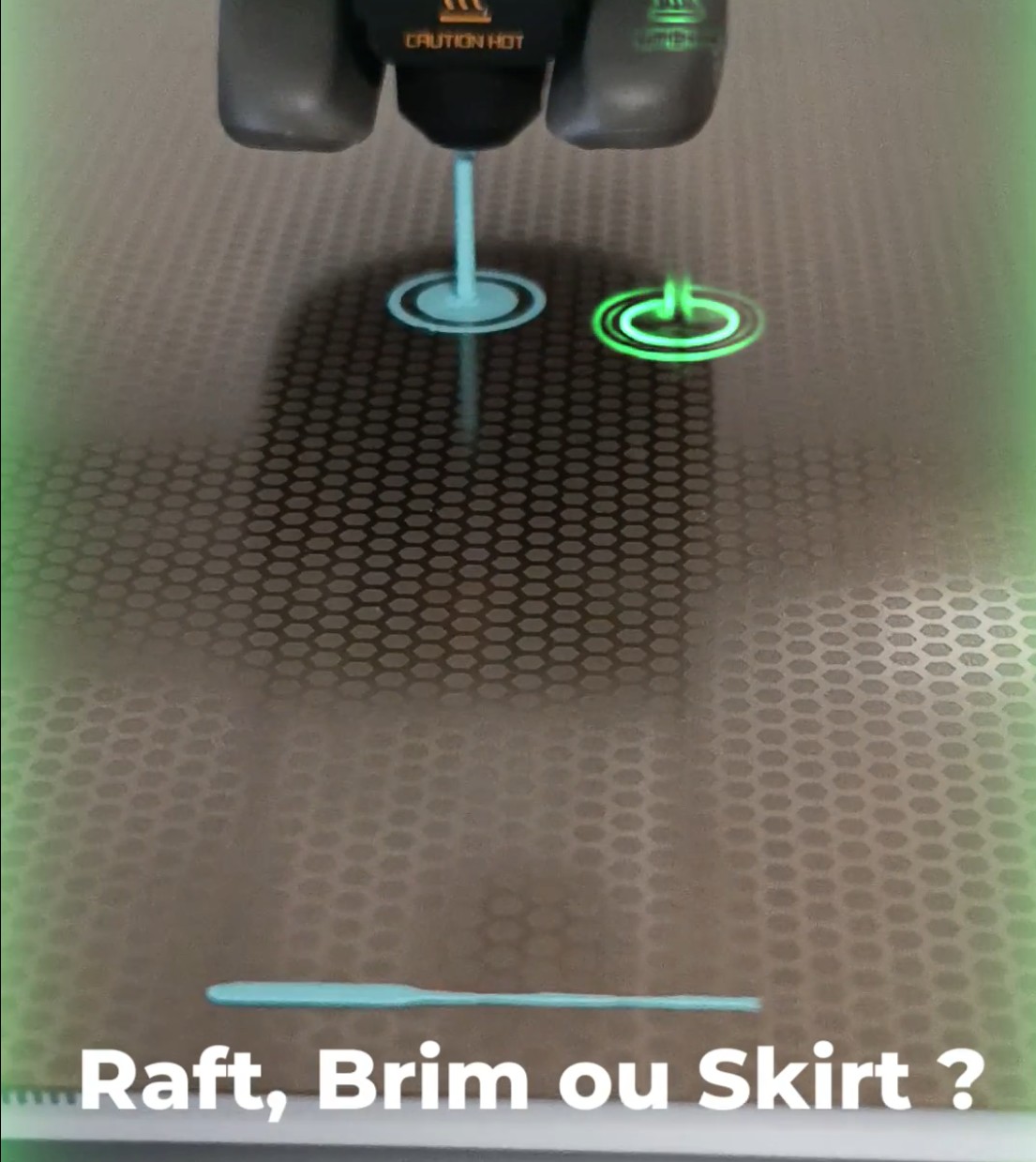
Successful 3D printing starts with a perfect first layer. It's the foundation of your part. To ensure this first layer adheres properly to the build plate, slicing software offers you three main options: Raft, Brim, and Skirt. While they may seem similar, each has a specific role and addresses a particular need.

The Skirt: Priming Without Contact
The skirt is the simplest option. It's one or more lines of filament printed around the object, but without touching it.
- Its role: The skirt serves as a "priming" function. It allows you to purge the nozzle, ensuring that filament flows correctly and consistently before the print actually begins. This prevents the first layers of your part from lacking material or being marred by residue.
- Advantages: Very quick, uses minimal filament, and leaves no trace on the final part.
- Disadvantages: It offers no help with part adhesion to the build plate.
The Brim: Enhanced Adhesion
The brim is a border of multiple filament lines printed directly around the first layer of your part, adhering to it.
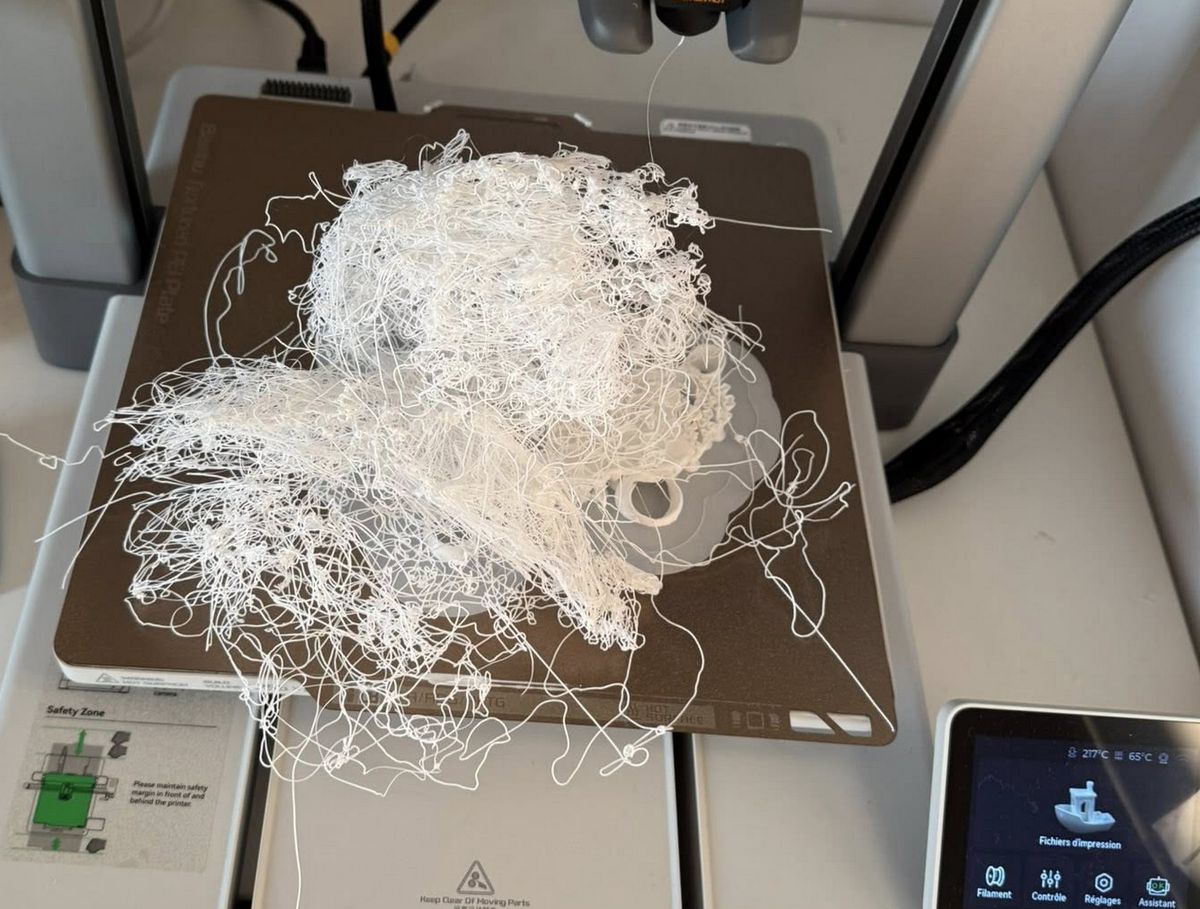
- Its role: Its primary objective is to increase the surface area of contact between the part and the build plate. This is especially useful for models with a thin base or sharp corners. By increasing this surface area, the brim distributes contraction forces and helps prevent corners from lifting off the plate—a phenomenon called "warping".
- Advantages: Very effective at preventing separation, uses minimal material, and is generally easy to remove by hand or with a cutting tool.
- Disadvantages: It leaves a small mark on the base of the part that may require slight sanding or finishing work.
The Raft: A Solid Base for Complex Prints
The raft is a solid base entirely printed under the part. The printer builds this base first, then prints your model on top of it.
- Its role: The raft is the most radical solution for adhesion problems. It creates a perfectly flat and stable printing surface on which the part is built. It's essential for very delicate parts, for filaments prone to warping like ABS, or for build plates that aren't perfectly flat.
- Advantages: Offers the best possible adhesion, almost completely eliminates warping risk, and allows printing on any surface, even damaged ones.
- Disadvantages: Uses significant time and filament, can be difficult to remove, and often leaves a rough surface on the underside of the part requiring more finishing.
Summary Table: When to Choose Which?
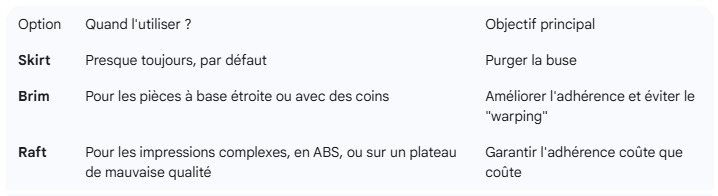
In conclusion, while the skirt is a good starting reflex, the brim is your ally for most prints. The raft, meanwhile, is your last line of defense for the most challenging parts. The right choice will always depend on your model's specifics and your printer's characteristics.