
PEEK and ULTEM: High-Performance Polymers at the Top of 3D Printing

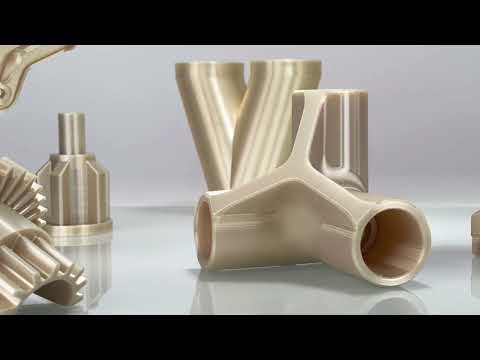
In the world of additive manufacturing, PEEK and ULTEM (PEI family) are considered the "super-polymers". These are advanced thermoplastic materials that push the limits of strength, heat resistance, and performance, making them essential in the most demanding sectors such as aerospace, medical, and competitive automotive.
Physical Properties: Why They're Unique
These two materials are not interchangeable, but share the characteristic of being high-performance polymers (HPP).

Critical Applications in Additive Manufacturing
3D printing PEEK and ULTEM enables the creation of specific parts for hostile environments:
-
Aerospace and Automotive: Fabrication of lightweight components for aircraft interiors, electronic enclosures, or engine parts under the hood. Their fire resistance and low smoke emission are regulatory requirements.
-
Medical: 3D PEEK printing is often used for dental and surgical implants or prosthetics because PEEK is biocompatible and radiolucent (it does not interfere with X-rays or CT scans).
-
Industry (Petrochemistry): Pump parts, connectors, or seals that must resist chemical corrosion and high temperatures.
Technical Requirements for 3D Printing
Printing these polymers is not possible on standard desktop 3D printers. It requires extreme thermal conditions to ensure final strength and prevent warping:
-
Nozzle Temperature (PEEK): Must reach 400 °C to 450 °C (compared to 200 °C for PLA).
-
Chamber Temperature: The printer must have a heated chamber (internal machine temperature) capable of maintaining constant, elevated heat (often 120 °C to 250 °C) to control cooling and prevent shrinkage and warping.
-
Annealing: After printing, PEEK parts often undergo an annealing process (post-print heat treatment) to improve their mechanical strength and final crystallinity.
PEEK and ULTEM are not materials for decorative prototyping; they are intended for the production of critical end-use parts. Their printing symbolizes the transition of 3D printing from the laboratory to industrial production, delivering solutions that were previously only possible with metal.


