Multicolor 3D Printing

Updated November 16, 2026
Yes, absolutely! 3D printing is no longer limited to making monochrome objects. Thanks to technological advances, it's now entirely possible to create parts with multiple colors—or even different materials—in a single print. This capability opens up a vast range of aesthetic and functional possibilities for designers, engineers, and makers.
The technologies behind multicolor printing

Several technical approaches make it possible to integrate multiple colors or materials:
- Filament changers (single nozzle):
- How it works: A single nozzle prints, but a unit automatically loads and unloads filaments. The current filament retracts, gets cut, the new color is loaded, and the nozzle is purged.
- Main systems:
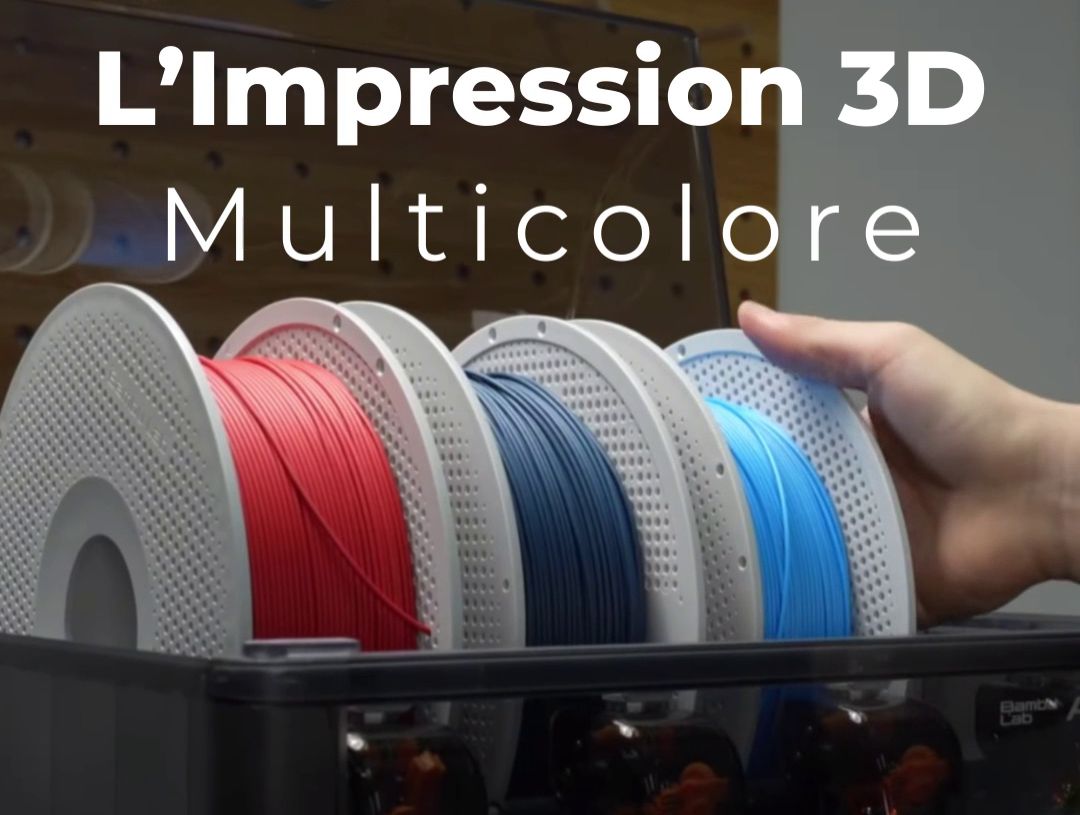
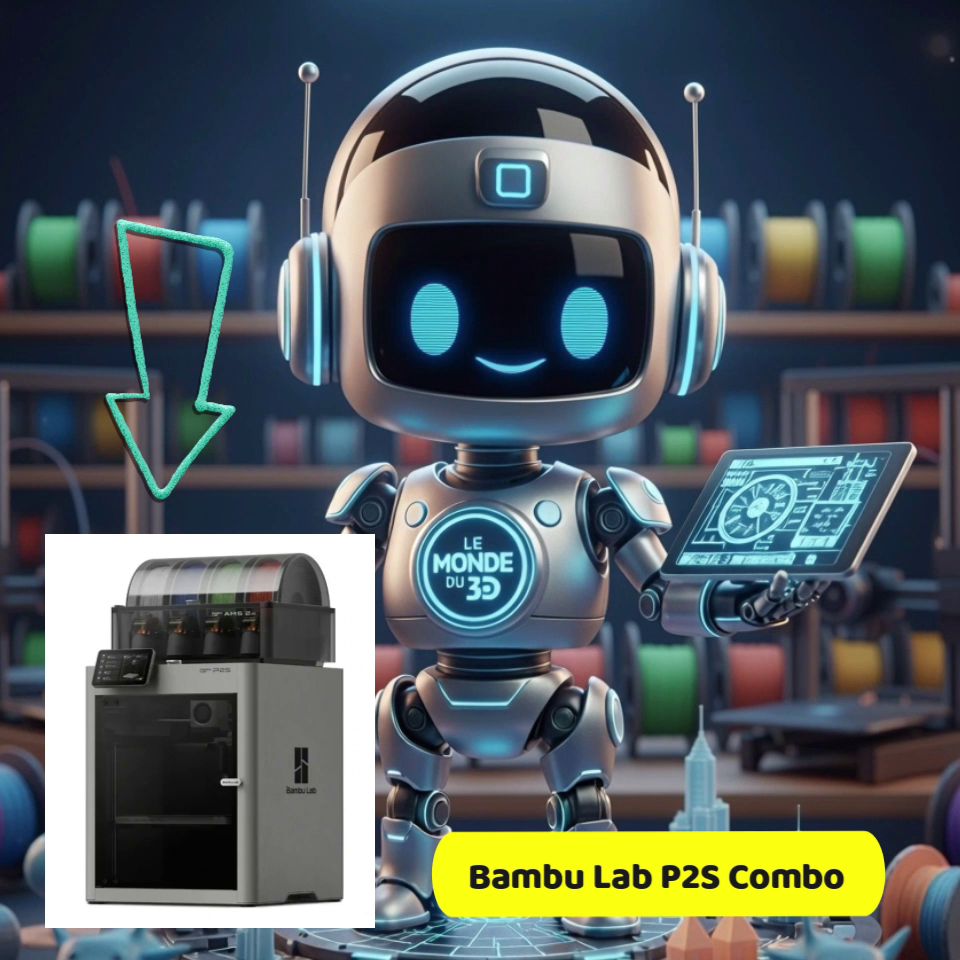
- Bambu Lab AMS: 4 spools per unit, up to 16 colors by combining multiple AMS units. The second generation (AMS 2 Pro) also dries filament, and the AMS HT, with one spool, is designed for technical materials.
- Creality CFS: 4 spools per module, up to 16 colors with 4 CFS units.
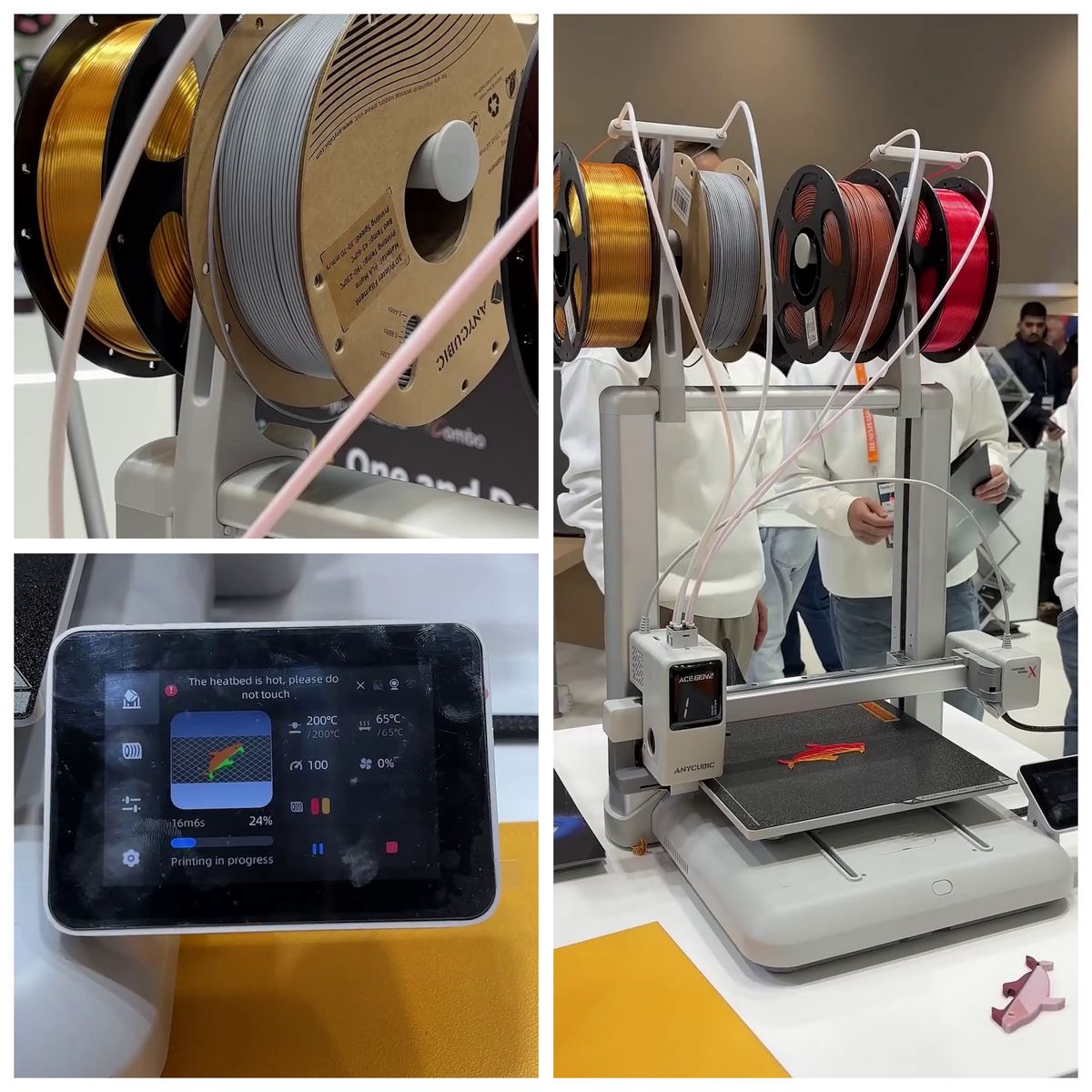
- Anycubic ACE Pro: 4 spools per module, up to 8 colors with 2 modules; the ACE 2 on the Kobra X promises to greatly reduce purging.
- Prusa MMU3: The 5-filament multi-material module for Prusa printers (MK4S, CORE One).
- Advantages: The print head stays light and fast, the system is compact and affordable.
- Disadvantages: Each color change wastes filament (the "poops") and often requires a purge tower. On a highly colorful figurine, purge waste can outweigh the actual part, and print time increases.
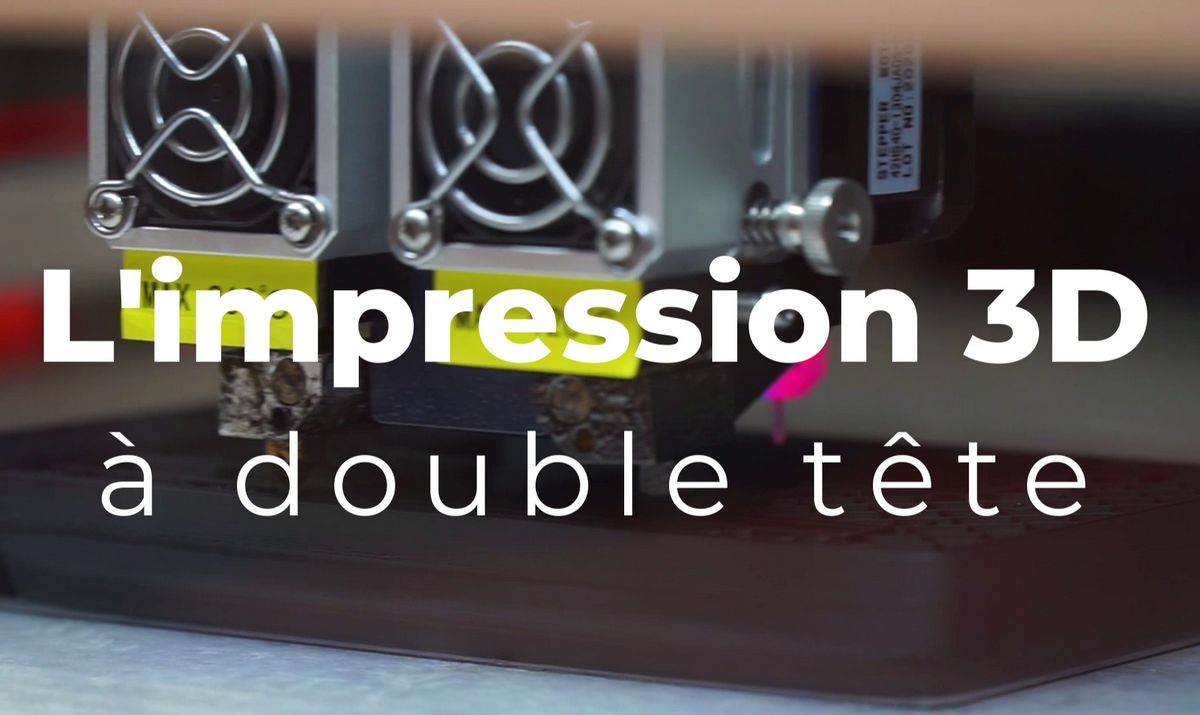
- Tool changers and multi-head printers:
- How it works: Each color has its own print head and its own nozzle. The printer picks the right head at the right time, without emptying the nozzle: almost zero purge waste.
- Main machines: The Prusa XL (up to 5 heads) and its INDX tool changer announced for the CORE One, the Snapmaker U1 (4 heads, changing in seconds), the Bambu Lab H3C (up to 9 heads, see our article), or multi-head machines like the Co Print Quadro.
- Advantages: Very little waste, fast color changes, and easier mixing of different materials (PLA and TPU, for example).
- Disadvantages: More expensive and complex machines, and risk of nozzle drool while idle.
- Hybrid solutions: Some machines combine both approaches, like the two nozzles on the Bambu Lab H2D or the Vortek system on the H2C, which automatically swaps nozzles, each fed by an AMS.
- Manual filament change (for beginners):
- How it works: For color changes at a specific height (embossed text, for example), you program a pause in the slicer, manually swap filaments, then printing resumes.
- Advantages: No special equipment needed.
- Disadvantages: One color per layer only, and you must be present for each change.
To compare models released this year, check out our overview of the new multicolor 3D printers of 2026.
The benefits of multicolor printing
- Polished aesthetics: Printed objects become visually more attractive, truer to original designs and illustrations. No more monochrome objects to paint after printing!
- Added functionality: It's possible to combine materials with different properties in one part. For example, print a rigid section in PLA and a flexible hinge in TPU, or integrate conductive elements.
- Identification and organization: For technical parts or prototypes, different colors can serve as visual coding to identify components, functions, or assembly points.
- Less post-processing: By printing directly in the desired color, the need to paint, tint, or apply stickers is greatly reduced, saving time and effort.
- Unlimited creativity: Designers can now create models with gradients, integrated logos, complex patterns, and colorful details that were previously impossible to achieve in a single 3D printed part.
Challenges to know about
Despite these benefits, multicolor printing presents some challenges:
- Cost: Multi-material printers or systems are generally more expensive than basic monochrome printers.
- More complex slicing: Setting up color changes and managing purges requires better mastery of slicing software.
- Filament waste: Purges between color changes on single-nozzle systems can waste a lot of filament. Tool changers greatly reduce this problem.
- Print time: Each color/material change adds time to the printing process, increasing total fabrication time.
- Material compatibility: Not all materials bond well together, and some require very different printing temperatures, which can complicate multi-material prints (but not multicolor prints if the material is the same).
Multicolor 3D printing is a significant advance that pushes the boundaries of what's possible. While it adds complexity and cost, the visual and functional results it enables often justify this investment, turning digital 3D models into tangible, multifunctional works of art.