Multicolor 3D Printing at Bambu Lab
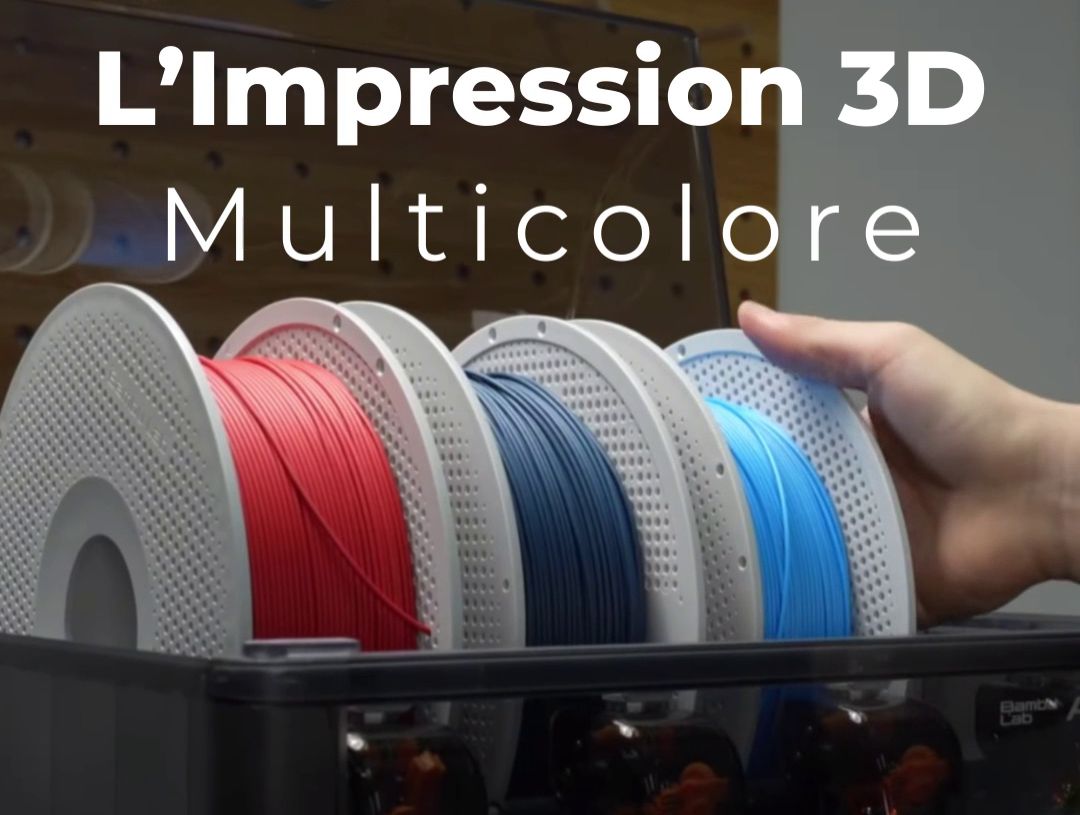
Bambu Lab has transformed 3D printing from a tinkerer's hobby into a high-precision creative solution. The brand's strength lies in its AMS (Automatic Material System), which mixes colors without any human intervention.

✅ How does the color magic work?
All Bambu Lab machines use single nozzle technology (except specific options on the H series). To change color:
-
The machine cuts the filament.
-
The AMS retracts it.
-
The AMS pushes the new color forward.
-
The head purges residue in a dedicated area (purge tower or waste ejection) to guarantee clean colors without messy color bleeding.
✅ The heart of the system: AMS (Automatic Material System)
The AMS is the unit that manages your filament spools. It doesn't just store filament—it protects it from moisture and automatically feeds it into the printer.
-
Capacity per unit: 4 spool slots.
-
Modularity: On the P and X series, you can connect up to 4 AMS units via a Hub, allowing you to print with 16 different colors or materials on a single part.
-
Smart management: If a spool runs empty, the AMS can automatically switch to another identical spool to finish the print.
✅ Models and their multicolor capabilities
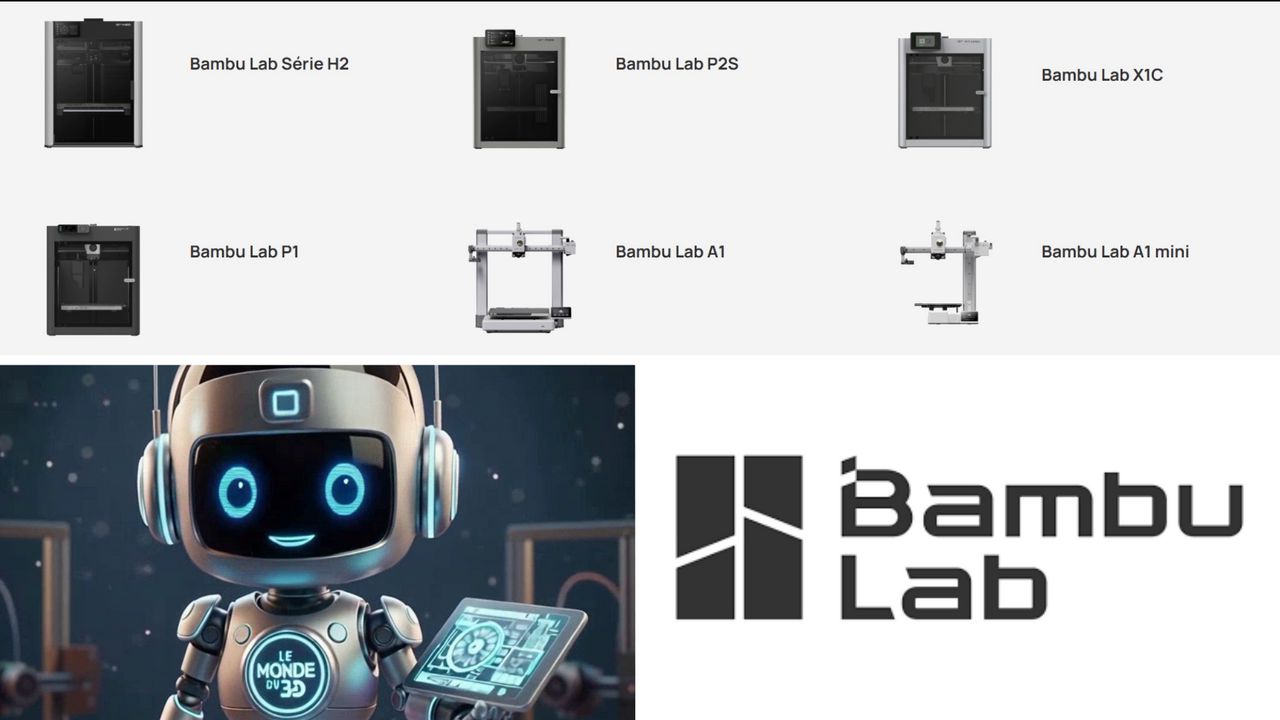
A1 Series (Accessible "Bed Slinger")
-
Models: A1 (Standard), A1 Mini.
-
Colors: Limited to 4 colors (via AMS Lite).
-
Specifics: It uses the AMS Lite, a simpler, more open system. Note that unlike the X and P series, you cannot connect multiple AMS Lite units to a single A1. You're strictly limited to 4 colors.
-
Advantage: Color changes are faster and generate slightly less purge waste.
P1 Series (Best Performance-to-Price Ratio)
-
Models: P1P (Open), P1S (Enclosed).
-
Colors: Up to 16 colors.
-
Strengths: It has the same speed as the X series but with a simpler screen. The P1S is the best-selling model for multicolor printing because it's sold as a "Combo" (printer + AMS) at a very competitive price.
X1 Series (High-End / Light Industrial)
-
Models: X1-Carbon, X1E (Enterprise).
-
Colors: Up to 16 colors.
-
Strengths: It's the most robust. It features a LiDAR that scans the first layer to verify color is properly deposited. Its enclosed chamber allows printing technical colored materials (ABS, ASA, Polycarbonate).
Bambu Lab H2: The Large-Format Revolution (H-Series)
Long-awaited, the H series (for "Huge" or "High-Volume") is Bambu Lab's answer for users wanting to print very large color parts.
-
Model: Bambu Lab H2.
-
Build volume: Approximately 350 x 350 x 350 mm (versus 256 mm for X and P series), enabling you to print helmets, cosplay pieces, or industrial prototypes in a single piece.
-
"Pro" Multicolor Management:
-
The H2 introduces the AMS Pro (or AMS-H), capable of handling wider, heavier spools (up to 2kg).
-
Possibility of mounting up to 24 colors on certain models in this range thanks to extended software management.
-
-
Multi-Nozzle Technology (Rumor/Option): Unlike single nozzle models, the H series experiments on certain versions with a tool-changer system to drastically reduce purge time and plastic waste.
-
Target: Professionals, industrials, and makers needing volume.
P2 Series: The Evolution of the "Performance" Line
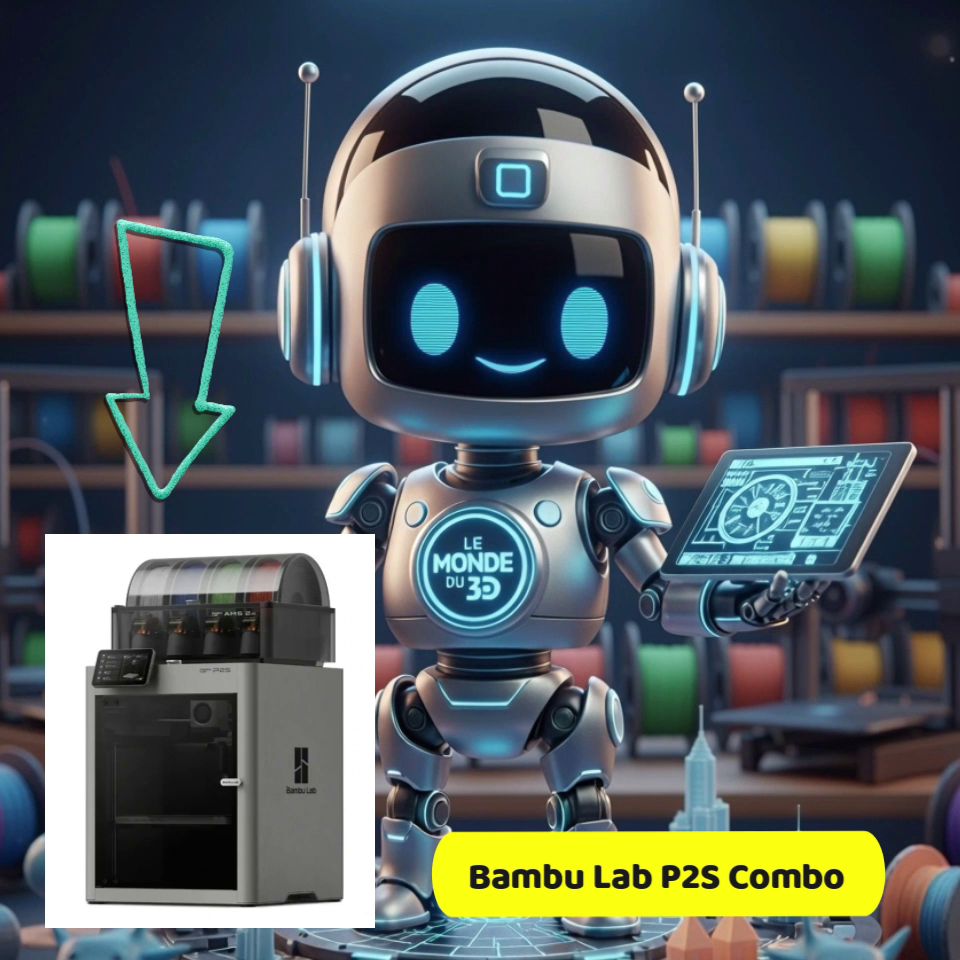
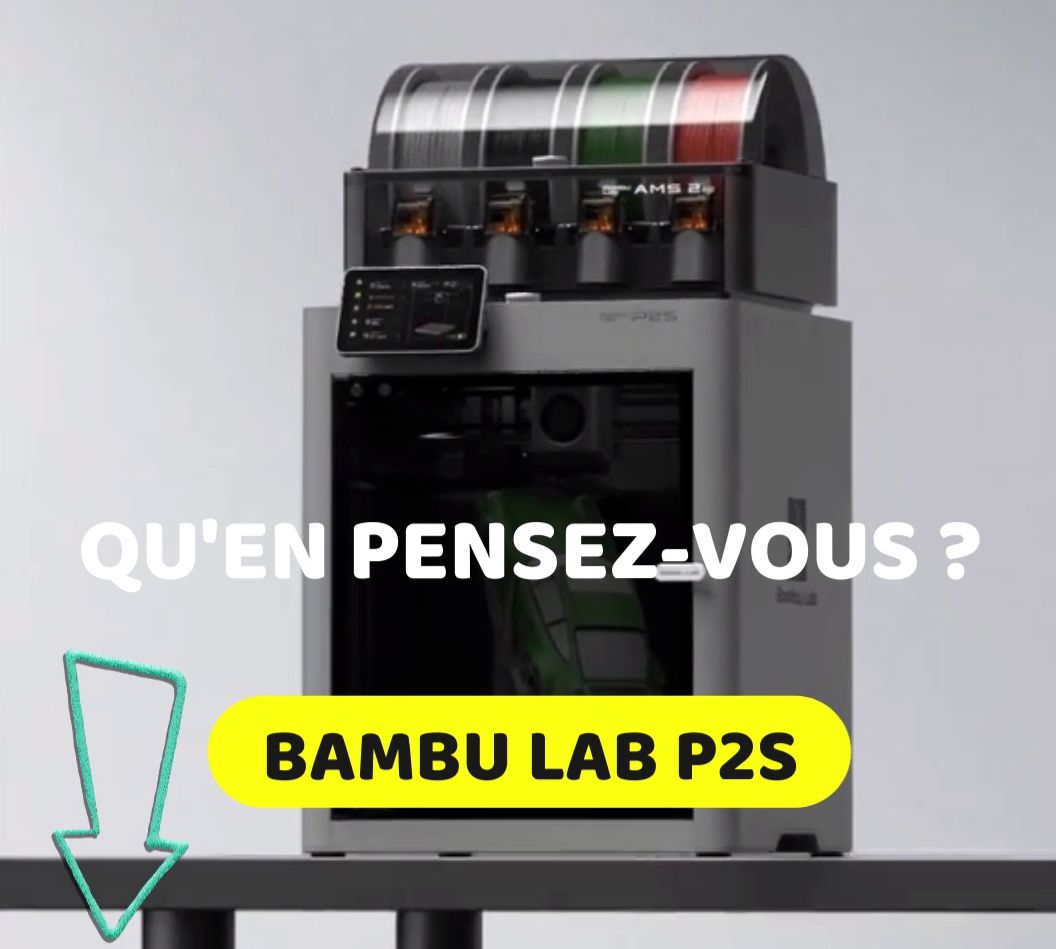
The Bambu Lab P2S succeeds the celebrated P1S by fixing its rare flaws and boosting its capabilities.
-
Model: P2S (and P2S Combo with AMS).
-
Color capacity: Still up to 16 colors (via 4 AMS units).
-
Major improvements:
-
Cutting-edge electronics: More powerful processor for even finer flow control, reducing surface defects.
-
New Print Head: A faster heating system (new-generation all-metal hotend) allowing even faster printing without quality loss.
-
Sound dampening: Significant reduction in fan and motor noise, making the P2S nearly silent.
-
-
Target: Enthusiasts and semi-pros who want the speed of the X series without the cost of LiDAR and a giant touchscreen.
✅ Comparison table
| Model | Max Colors | Build Volume | Ideal Use |
| A1 Mini | 4 | 180 x 180 x 180 mm | Beginners, small objects, tight budget. |
| A1 | 4 | 256 x 256 x 256 mm | Decorative creations, everyday objects, versatility. |
| P1S | 16 | 256 x 256 x 256 mm | Best-seller for multi-material (ABS/ASA). |
| P2S (New 2026) | 16 | 256 x 256 x 256 mm | Optimized performance, quiet and 2026 electronics. |
| X1-Carbon | 16 | 256 x 256 x 256 mm | Experts, technical materials (Carbon), AI with LiDAR. |
| H2 | 24 | 350 x 350 x 350 mm | Large format, Cosplay, Industrial prototyping. |
✅ What you need to know before getting started
-
Filament waste: Each color change generates a small amount of plastic loss. To make it worthwhile, try filling your build plate with multiple objects using the same colors.
-
Time: Printing in 4 or 16 colors takes much longer than monochrome (expect 30% to 100% more time depending on complexity).
-
Software: Everything happens in Bambu Studio. You can "paint" your STL models very simply, like in a coloring app, and the printer handles the rest.
✅ Summary
-
A Series (A1 / A1 Mini): The simplicity choice. They're limited to 4 colors, which is more than enough for 90% of decorative projects.
-
P Series (P1S / P2S): The heart of the market. They go up to 16 colors by connecting multiple units. The P2S is the new benchmark for those seeking a fast, reliable, and quiet machine.
-
H Series (H2): The large-format revolution. Not only does it offer a massive 35cm³ build volume, but it's the only one capable of handling up to 24 colors, ideal for ultra-detailed models or large-scale professional projects.