Isopropyl Alcohol vs Dish Soap: Build Plate Cleaning Showdown
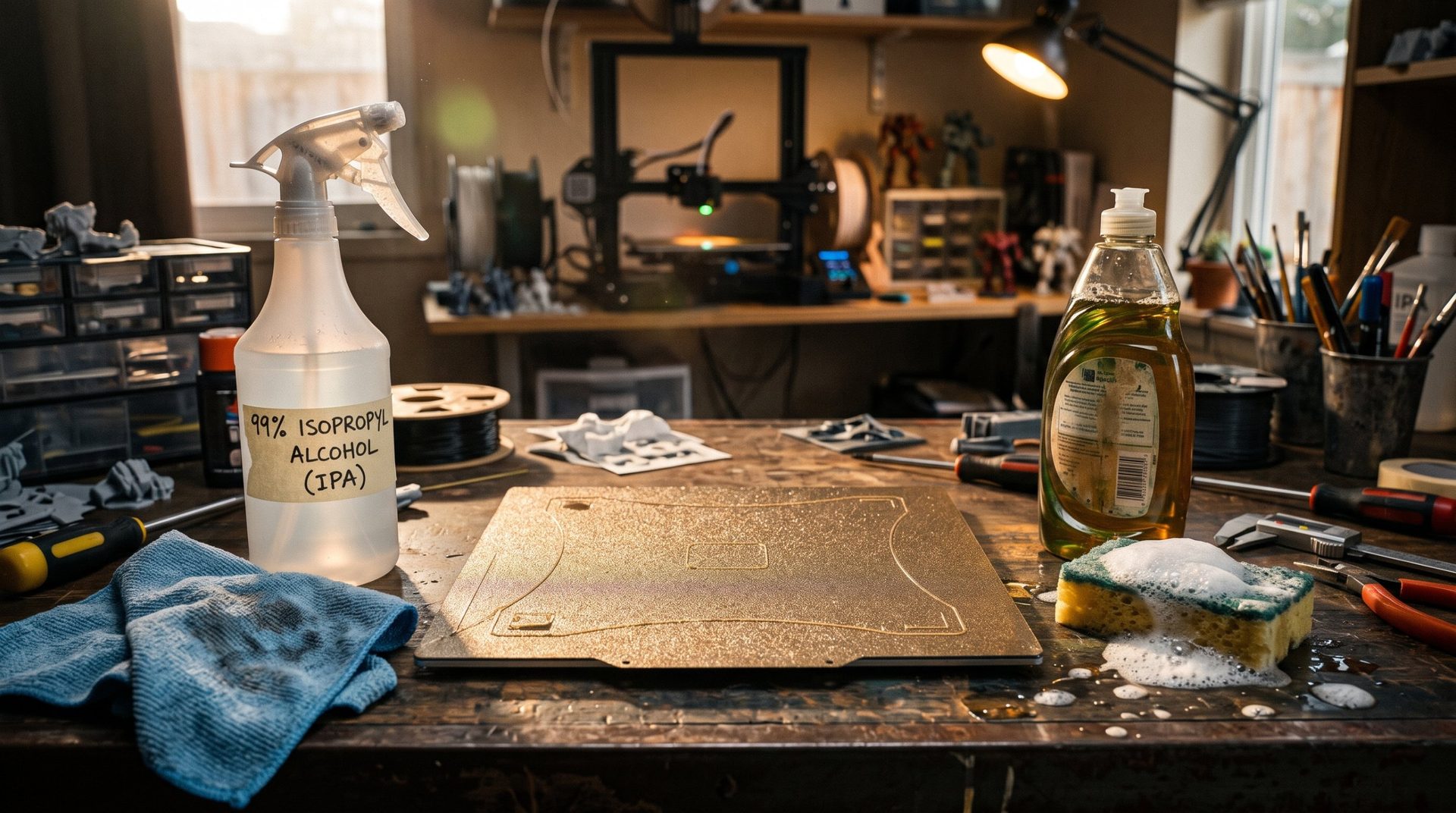
In the 3D printing world, there are quiet technical debates… and then there are the heated forum wars that ignite every time someone posts a photo of a print peeling off the bed. The fiercest one concerns build plate maintenance: should you grab your bottle of isopropyl alcohol (99% IPA) before every print, or remove your PEI sheet to scrub it with hot water and dish soap?
Each camp has its purists, its rituals, and its airtight arguments. Let's break down the chemistry and workshop reality of this showdown.
1. Team IPA: speed and pre-flight ritual
For spray bottle devotees, build plate cleaning is a surgical ritual: a clean microfiber cloth, three sprays of 99% IPA, two passes over the warm sheet, and you're printing. We've actually written a whole article on isopropyl alcohol, the maker's best friend.
Buy isopropyl alcohol at the best price from our partner
Their arguments:
- Zero disassembly: no need to wait for the sheet to cool completely, and no messy kitchen sink.
- Instant evaporation: in seconds, the alcohol disappears without leaving water on the plate.
- Effective on dust: IPA dissolves small residue and lifts dust settled between prints.
The flip side: isopropyl alcohol is a good solvent, but it's not a true degreaser (surfactant). When faced with a fingerprint smeared across the middle of the plate, it tends to dilute the grease and spread it into a thin film across the entire surface instead of removing it—especially if your microfiber cloth isn't perfectly clean.
2. Team dish soap: the deep clean
On the other end of the workshop, sink advocates swear by household chemistry. For them, a build plate that won't grip deserves more than a quick wipe—it needs a real soapy soak in hot water.
Their arguments:
- Surfactant action: dish soap molecules trap grease (fingerprints, oil from the printer's axes) in tiny droplets that rinse away completely.
- A true reset: it's often the miracle cure that resurrects a PEI sheet given up for dead after weeks of adhesion problems. It's also the method recommended by several manufacturers, including Prusa.
- dirt-cheap cost: a bottle of regular dish soap costs almost nothing and lasts months.
The flip side: not all dish soaps are created equal. Those with "gentle on hands" ingredients (glycerin, aloe vera, perfumed oils) leave their own greasy film, disastrous for adhesion. You also need to dry thoroughly: wipe with lint-free paper, never touch the clean surface again, and reinstall the sheet without leaving streaks.
Head-to-head: which method for which job?
| Criteria | Isopropyl Alcohol (99%) | Dish Soap + Hot Water |
|---|---|---|
| Action | Dissolves and disperses | Traps grease and rinses it away |
| Time | 15 seconds, no need to leave your bench | 3–5 minutes (sink and drying) |
| Ideal frequency | Routine maintenance, quick dust-off | Weekly reset or when nothing sticks anymore |
| Common pitfall | Smearing grease with an already-dirty cloth | Using moisturizing soap or leaving wet edges |
Whatever your method, adapt it to your surface: textured plate and smooth PEI don't quite get the same treatment. For example, some manufacturers allow occasional acetone on smooth PEI but advise against it on textured sheets.
Verdict… and call for debate: what's your adhesion ritual?
While chemistry gives dish soap a clear win for removing grease, IPA can't be beaten for daily speed. Many experienced makers follow a hybrid rule: a quick IPA spray between back-to-back prints, and a hot-water wash the moment a corner starts lifting. If peeling persists despite a clean plate, check out our warping solutions guide and tips for improving first-layer adhesion.
So, which team are you on?
- Team IPA before every print, or team sponge and dish soap on Sunday?
- Have you tried other methods (acetone on smooth PEI, glass cleaner…)?
- How long can you go without washing your plate?
🗳️ Isopropyl alcohol or dish soap: how do you clean your build plate?
Click your answer to vote and see the results.
Defend your method in the comments and share your ultimate trick for unstoppable first-layer adhesion!