How to Improve First Layer Adhesion

The first layer is the foundation of every 3D print. If it doesn't stick properly to the build plate, the rest of your print is doomed to fail. This is one of the most common and frustrating problems for both beginners and experts. Fortunately, most adhesion issues can be solved by following a few simple and logical steps.
This guide gives you the keys to guarantee a solid and reliable first layer on every print.

1. Build Plate Leveling: The Foundation
This is the most important factor. A poorly leveled plate means the distance between the nozzle and the build surface varies, preventing the filament from squishing evenly and sticking properly.
- Check the leveling: Use a standard sheet of paper (or a thickness gauge) to check the gap between the nozzle and the build plate. The paper should rub lightly under the nozzle.
- Adjust each corner: Repeat the process at each corner of your plate. Some prefer to do it twice in a row, since adjusting one corner can affect the others.
- Auto-leveling (ABL): If your printer has this feature, use it for maximum accuracy, but always manually verify the first layer to validate the result.
2. Build Plate Cleanliness: The Invisible Enemy
Fingerprints, dust, or residue from previous prints are the sworn enemies of adhesion.
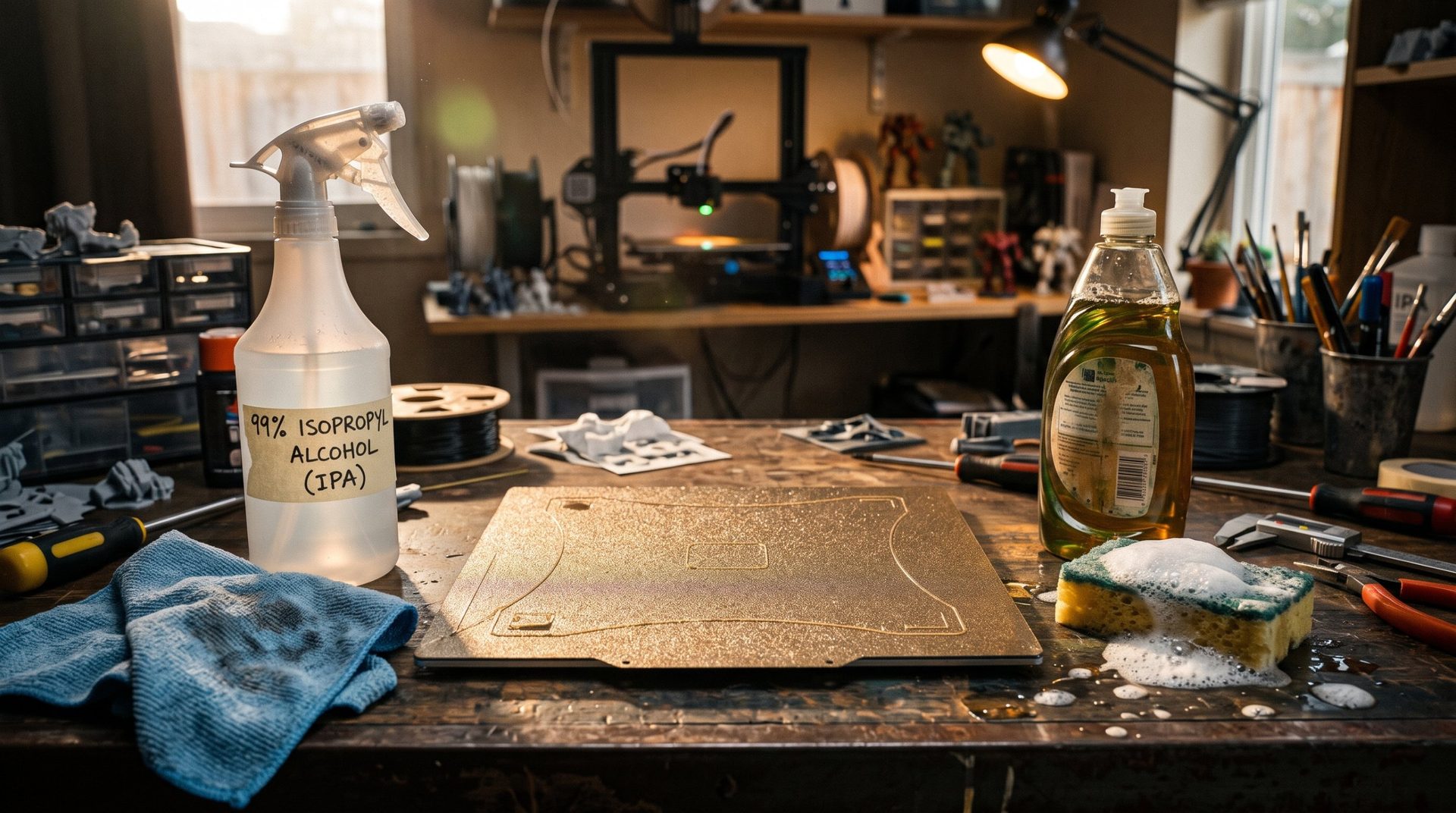
- Daily cleaning: Between each print, clean your build plate with 70% isopropyl alcohol (IPA) or higher. It's quick and very effective.
- Deep cleaning: For more thorough cleaning, wash the plate with warm water and dish soap, then rinse thoroughly and air dry. Avoid touching the surface with your fingers afterward.
3. Slicing Settings: Optimize Your Parameters
Your slicing software lets you adjust key parameters for the first layer.
- Build plate temperature: A slightly higher temperature helps the filament stick. Generally:
- PLA: 60°C.
- PETG: 70–80°C.
- ABS: 100°C or higher (with an enclosed chamber).
- First layer height: Set a first layer height slightly thicker than the rest for better "squish." A height of 0.24 mm to 0.3 mm is a good starting point for a 0.4 mm nozzle.
- First layer speed: Reduce your first layer print speed. A speed of 15 to 25 mm/s gives the filament time to bond properly to the plate.
4. Additional Adhesion Solutions
If the previous steps aren't enough, there are aids to improve adhesion.
- Adhesives:
- Hair spray: A thin coat of fragrance-free spray on a glass plate.
- Glue stick (PVA): Apply a thin layer of multipurpose glue.
- Specialized adhesion sprays and liquids: There are products designed specifically for 3D printing.
- Build surfaces:
- PEI plates: PEI plates (smooth or textured) offer excellent adhesion for many filaments without needing extra adhesives.
- Glass plates: They're perfectly flat and offer a very smooth surface.
A successful first layer isn't a matter of luck—it's a matter of method. By starting with proper plate leveling, ensuring impeccable cleanliness, and adjusting your slicing parameters, you'll build solid foundations for all your creations. If needed, adhesives and build surfaces are valuable extras. With these tips, your adhesion problems will be a thing of the past!