The Future of 3D Printing: Limitless Fabrication
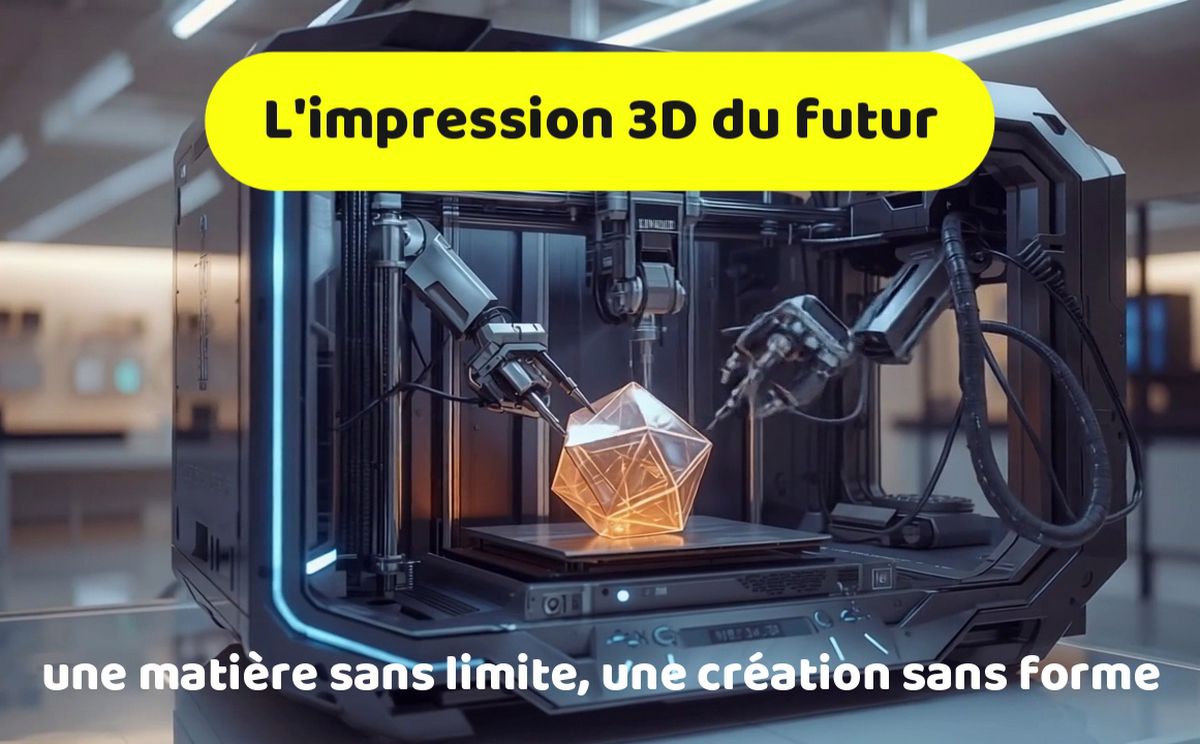
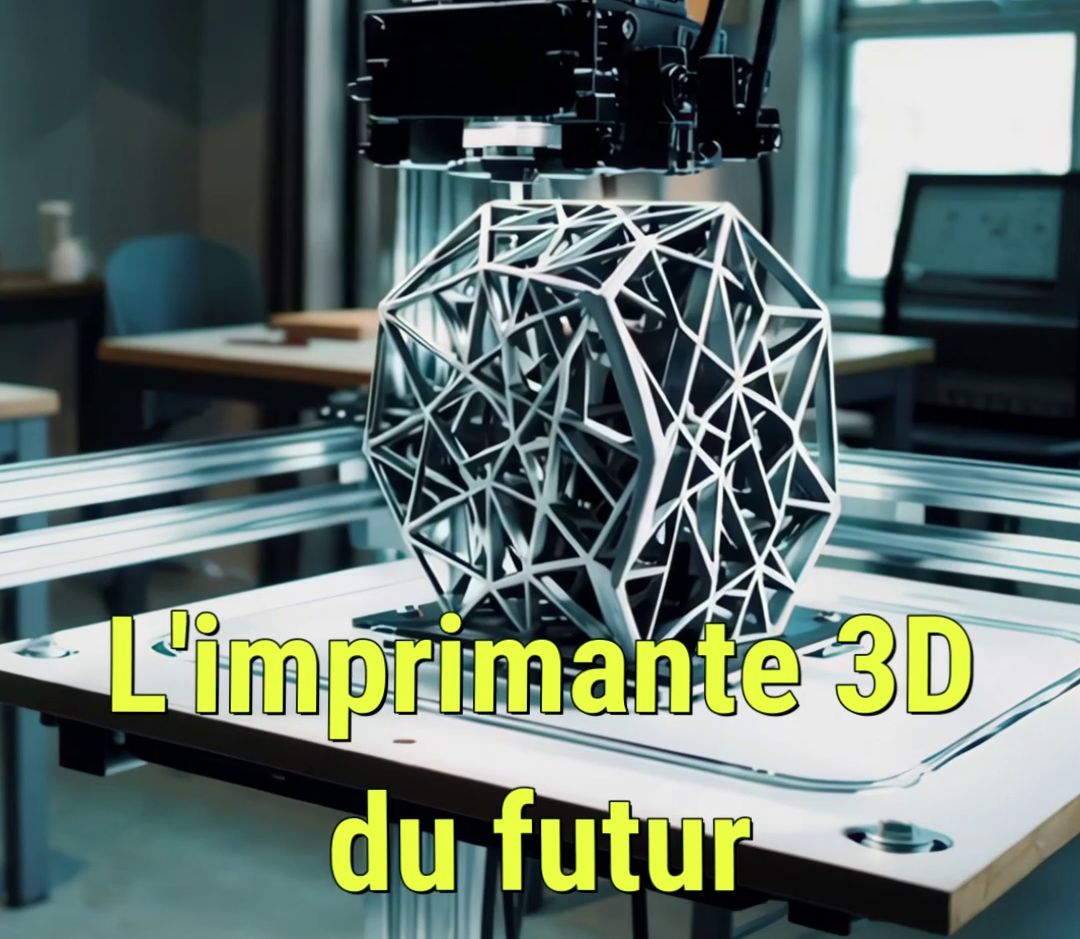
Today, 3D printing is a fascinating technology, but it's still limited by its process, materials, and speed. Tomorrow, it will be more than just a manufacturing tool—it will be a bridge between imagination and reality. Imagine a world where matter itself is a blank canvas, ready to take any form with any properties. That's the future awaiting us.

Beyond Layers: Volumetric Fabrication
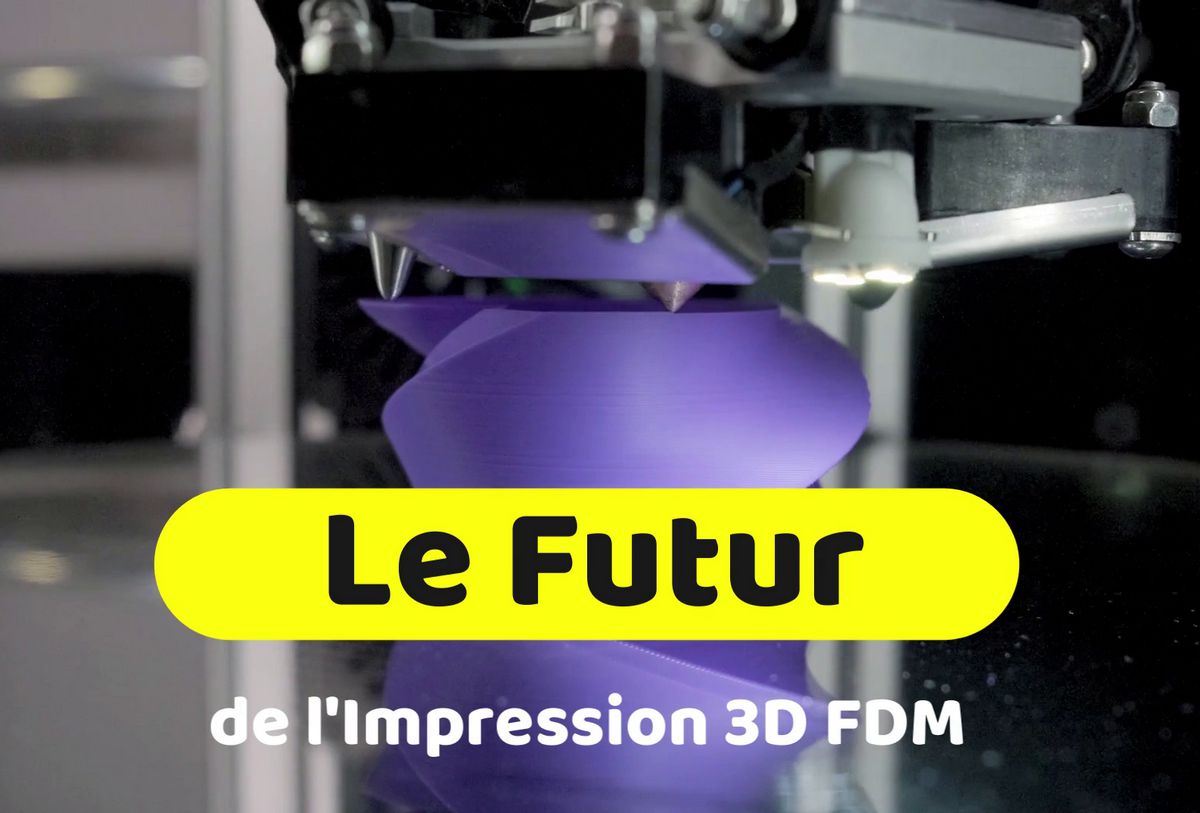
Today's printers build objects layer by layer. It's a slow and visible process that leaves traces on the surface. In the future, this method could be a thing of the past.
The concept of volumetric fabrication is taking shape. Instead of depositing material, a light beam or laser would harden a photosensitive liquid resin from all sides simultaneously. The object would appear in just seconds, like magic, with no visible layer lines, a perfectly smooth surface, and geometries impossible to achieve with current methods.
The Era of Multi-Material and Nanotechnology
Today's printers can use multiple filaments. Tomorrow's will blend matter at the molecular level. Imagine a material that shifts from extreme rigidity to complete flexibility in an imperceptible gradient.
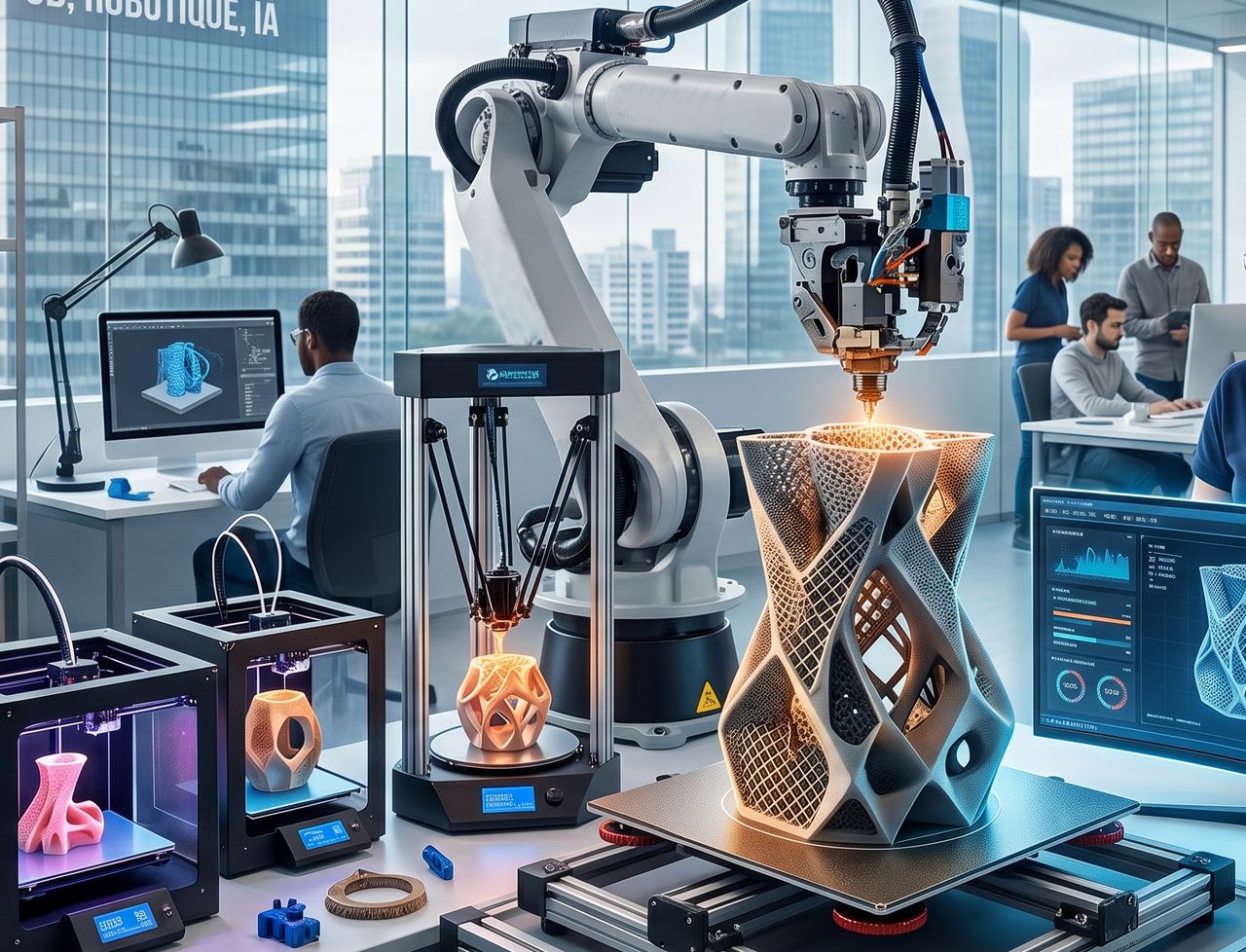
- Materials with Variable Properties: We'll no longer talk about printing in plastic or metal, but creating a ceramic structure with integrated conductive circuits. Objects could be composites with carbon fiber-reinforced zones for strength and silicone zones for grip, all in a single print.
- Intelligent Objects: The real revolution will be integrating nanotechnology. You could print sensors, batteries, or microprocessors directly into an object's structure. A door handle could detect your hand's temperature, or clothing could adjust its texture based on the environment.
Artificial Intelligence Powering Creation
In this future, you won't need to know how to model in 3D. Artificial intelligence will be your co-creator.
You'll only need to describe your idea in words, and AI will handle the rest. "Print me an ultra-lightweight bike with a frame that perfectly adapts to my size and puncture-proof wheels." The AI would design it, optimize the structure, and launch the print, choosing the best-performing materials.
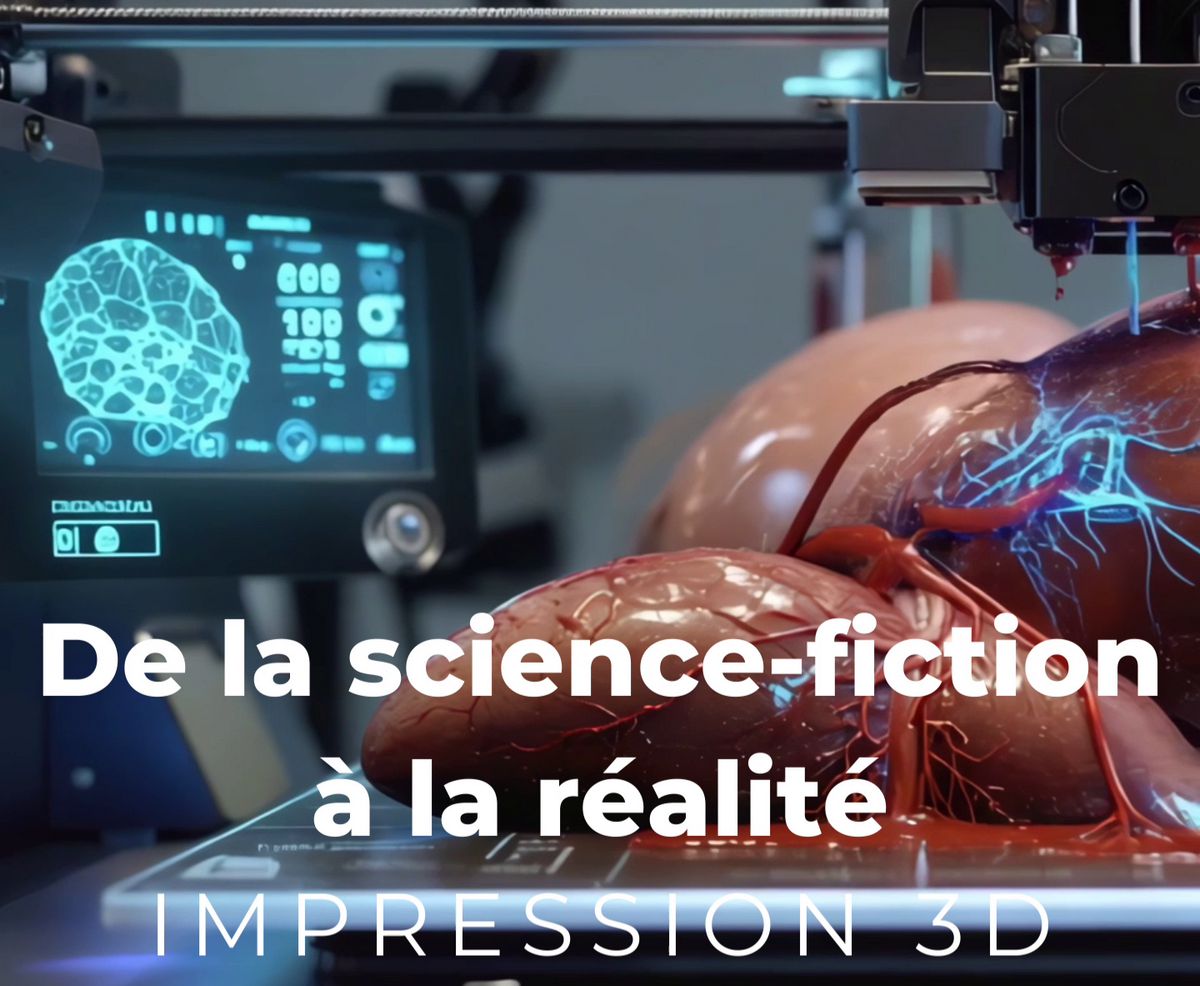
The future of 3D printing is a world where the only limit is imagination, where the gap between thought and creation vanishes. Science fiction is becoming our reality, and we're at the dawn of a revolution that will change how we design, manufacture, and live.