Filament Scraps: How to Smartly Use Your Leftover 3D Printing Filament

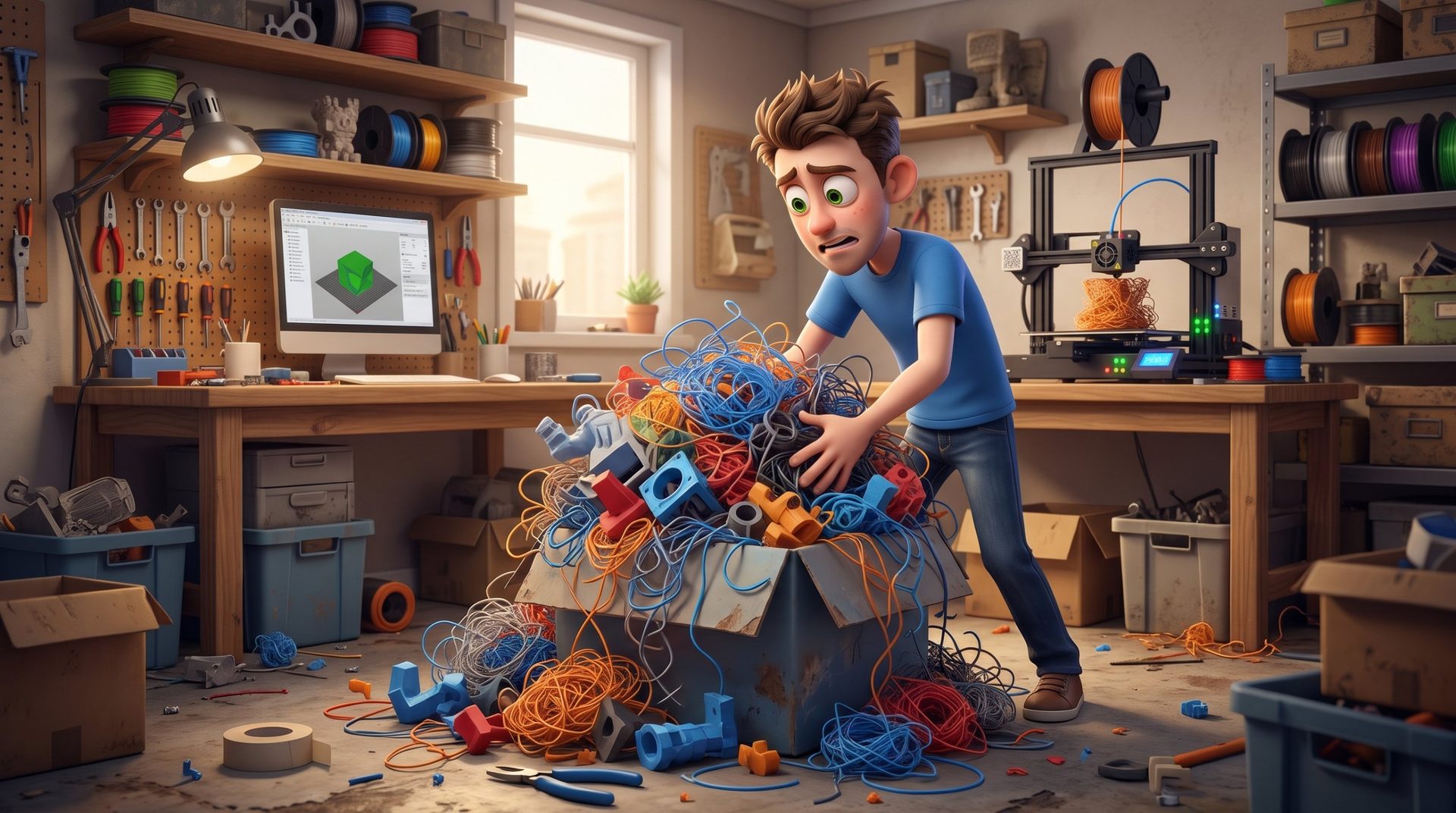
Let's be honest for a second. If you open the cabinet under your desk or the back shelf of your workshop, how many nearly empty spools are gathering dust?
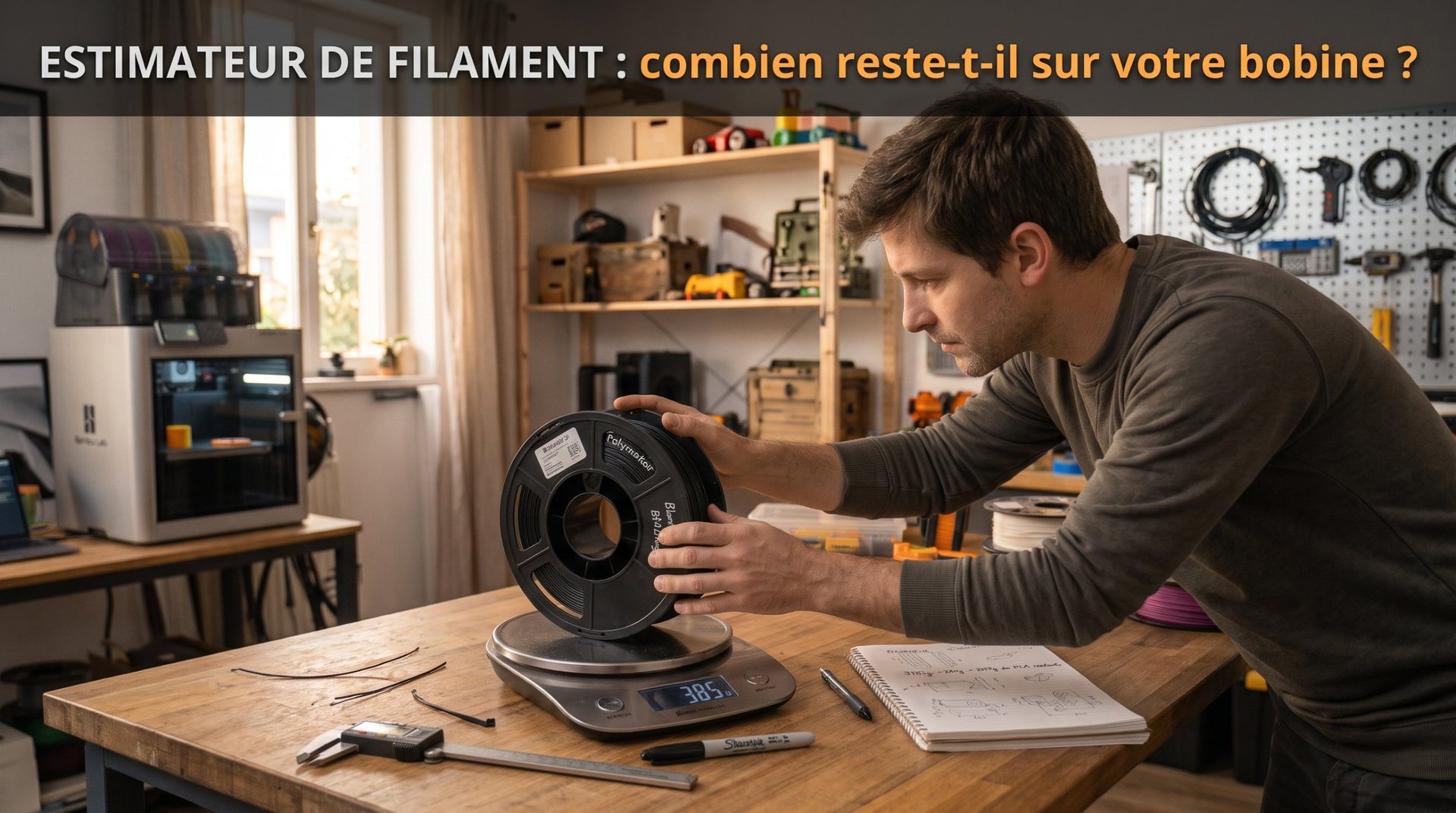
We all have this habit: there's 60 or 80 grams of filament left on the roll, just enough to make you wonder if it'll finish a medium part, but way too much to throw away. So you stick it in a zip bag thinking: "I'll use it for a small bracket or a test." Six months later, you've got twelve of them. To know exactly what's left on a spool, weigh it and use our filament length estimator.
Rather than let the equivalent of one or two full spools sit idle in little scraps, here's how to clear out your stockpile intelligently and turn those leftover bits into genuinely useful prints.
1. The unapologetic "striped" method: multicolor functional parts
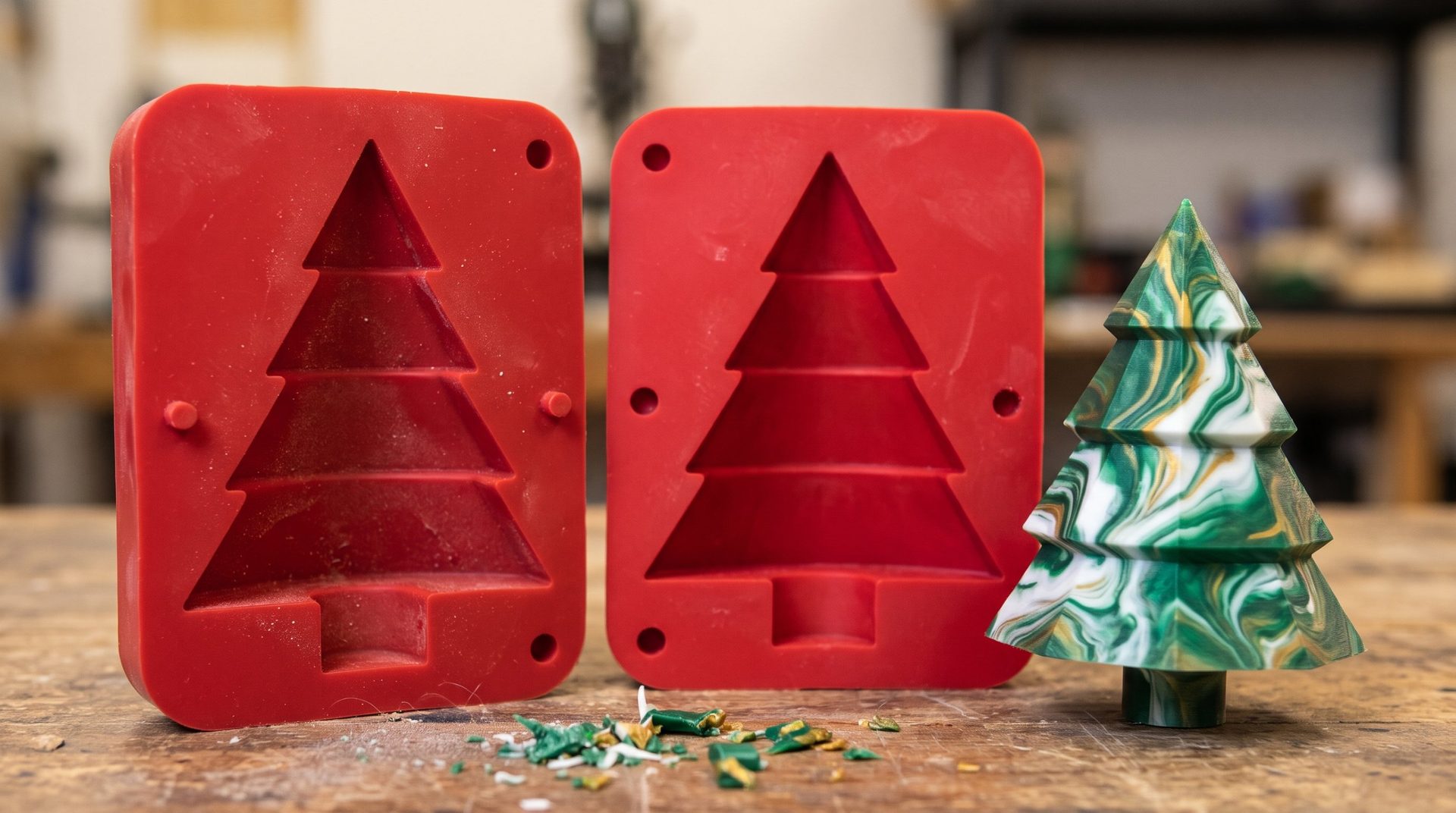
Anything that lives inside a cabinet, under a workbench, or in a garage couldn't care less if it has an unlikely gradient of anthracite gray, neon yellow, and electric blue:
- Mid-print filament swap: if your printer has a reliable filament runout sensor or a multi-spool system that automatically switches to an identical spool (like the AMS from Bambu Lab or the CFS from Creality), print your Gridfinity storage boxes, cable ties, or workshop shims by chaining together your scraps.
- Intentional layer effect: on pencil holders, drawer organizers, or protective shells, alternating 3 or 4 scraps of the same material (PLA with PLA, PETG with PETG) gives a very graphic striped look without buying multicolor filament. Just add color changes at certain heights in your slicer (pause or "filament swap").
2. The "spool finishers": prints that use 3 to 40 grams
When less than 50 grams remain, don't risk a four-hour print. Keep a selection of quick small models on hand that consume exactly what you've got lying around:
- Filament clips (around 3 g) and spool spacers: the ultimate irony—using your scraps to organize your other spools.
- Cable combs, wall clips, and pegboard hooks (Skadis, Multiboard), 10 to 25 g: you can never have enough in a workshop.
- Box cutters, plastic bed scrapers (around 8 g), and tube caps: workshop consumables you'll be glad to have on hand.
- Shopping tokens, bookmarks, and keychains: perfect for finishing those last 10 grams while checking your first layer after a nozzle change.
Thousands of small models like these are available for free, including in our own file catalog.
3. Welding your scraps to recreate a full spool
If you have six or seven scrap rolls of the same diameter (1.75 mm) and material (PLA with PLA only, never mix PLA + PETG), you can splice them end to end:
- The PTFE tube technique: cut both ends square, slide them into a small piece of PTFE tubing, gently heat the joint (heat gun or soldering iron tip rather than an open flame, which burns plastic) while pushing the two strands together, then let cool before removing the tube. Deburr with a craft knife to maintain even diameter.
- Dedicated filament welders: small heating devices, like the Sunlu Filament Connector, make clean welds in under a minute. We've tested it in detail.
A weld is always a weak point: flex the filament gently before rewinding to test it. Too much bead can jam in the extruder or a multi-spool system; it's best to reserve your "patchwork" spools for prints where appearance doesn't matter.
The trap to avoid: the bent end of a full spool
Many manufacturers bend the filament end at a right angle to lock it in a hole in the spool hub. When your machine reaches the end of the roll:
- On a multi-spool system (AMS, CFS…): this stiff, bent end can catch on the spool or jam in tubes and the drive mechanism instead of releasing cleanly. The result: a loading error or even filament breaking and needing extraction.
- The right move: as soon as the last few wraps appear on the hub, pull the end out of its hole and snip off the bent part with side cutters so the filament unwinds freely to the very end.
Team waste-free
With these simple habits, your filament scraps aren't a problem anymore—they're a free stockpile of useful small parts. Sort them by material, write the remaining weight on the spool with a marker, and always keep a list of "finishers" ready to print.
What do you do with your leftover filament? Share your favorite models in the comments!