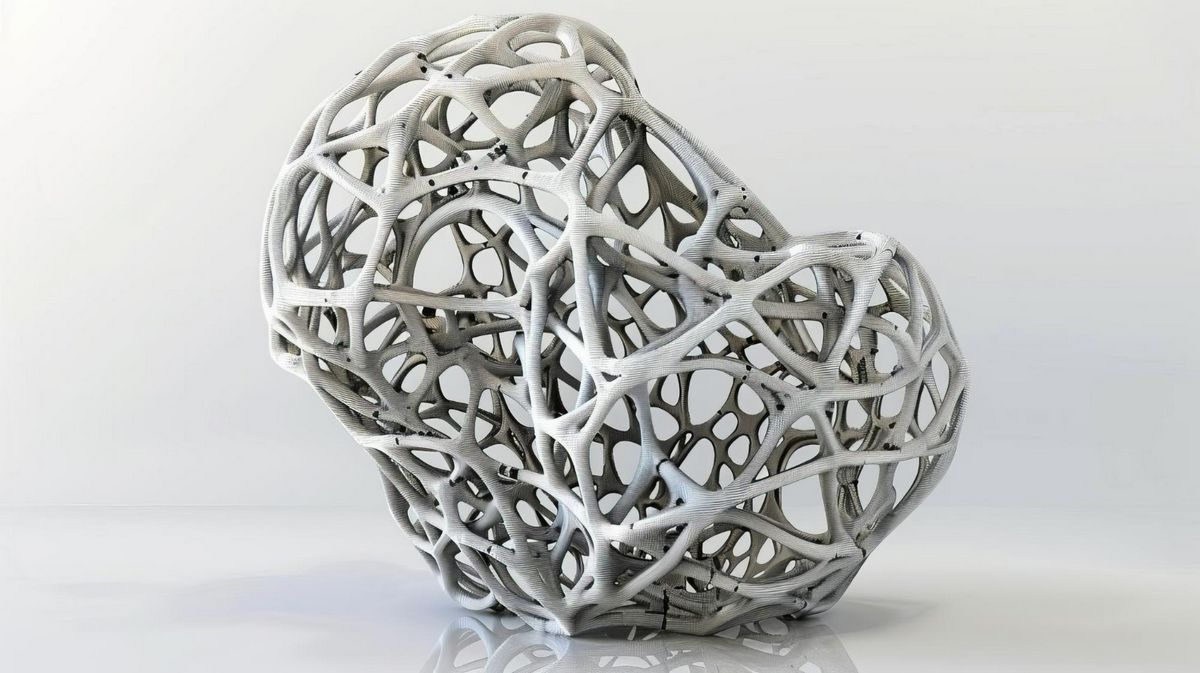
FDM 3D Printing (Fused Deposition Modeling)


How Does FDM Work? The Layer-by-Layer Deposition Principle
FDM operation relies on an additive material deposition process:
- The Filament: The base material comes in the form of filament wound on a spool. These filaments are typically thermoplastics (plastics that soften when heated and harden when cooled).
- The Heated Extruder: The filament is fed to a print head, called an extruder, which contains a heated nozzle. Inside this nozzle, the filament is melted at a precise temperature.
- Material Deposition: The extruder then precisely deposits the melted material, layer by layer, onto a build plate. The filament is extruded in thin lines that adhere to the previous layer.
- Cooling and Solidification: The melted material solidifies almost instantly after being deposited, thanks to ambient cooling or with the help of fans. This allows each layer to form a stable base for the next one.
- Precise Movement: The print head moves along the X and Y axes (horizontally) to form each layer, while the build plate or print head moves along the Z axis (vertically) to build the object in height.
Support Structures: For parts with significant overhangs or complex geometries, temporary support structures are printed. They are removed after printing.
Advantages and Strengths of FDM:
The success of FDM is explained by a series of significant advantages:
- Accessibility and Cost: FDM printers are the most affordable on the market, making 3D printing accessible to a wide audience. Materials (filaments) are also relatively inexpensive.
- Wide Choice of Materials: FDM is compatible with a wide variety of thermoplastics, offering different properties (rigidity, flexibility, heat resistance, etc.).
- Ease of Use: While there is a learning curve, FDM is generally simpler to understand and master than other 3D printing technologies.
- Print Volume: Many FDM printers offer generous build volumes, allowing you to create large-sized parts.
- Robustness of Parts: Objects printed with FDM, especially with materials like ABS or PETG, can be very robust and functional.
- Color Variety: Filaments are available in an almost infinite range of colors.
Common Materials Used in FDM:
- PLA (Polylactic Acid): Easy to print, biodegradable, ideal for beginners and rapid prototypes.
- ABS (Acrylonitrile Butadiene Styrene): More durable, resistant, and heat-resistant than PLA, but harder to print (often requires an enclosure).
- PETG (Polyethylene Terephthalate Glycol): An excellent compromise between PLA's ease of printing and ABS's durability.
- TPU (Thermoplastic Polyurethane): For flexible and elastic parts (e.g., phone cases).
- Nylon (Polyamide): Highly resistant to abrasion and impact, durable.
- Composites: Filaments loaded with carbon fiber, wood, metal, etc., for specific properties.
Applications of FDM: Versatile Use
- Rapid Prototyping: Creating functional prototypes to validate designs before production.
- Manufacturing Functional Parts: Brackets, electronics enclosures, spare parts, adapters.
- Tooling and Fixtures: Manufacturing custom tools, drilling guides, assembly jigs.
- Custom and Decorative Objects: Figurines, desk organizers, interior decorations.
- Education and Research: Educational tool for teaching design and manufacturing.
- DIY: Creating solutions for everyday problems, repairing objects.
In short, FDM is the gateway to the world of 3D printing. Its simplicity, affordable cost, and versatility make it an essential technology for enthusiasts and many professional applications, continuing to evolve with improvements in machines and materials.