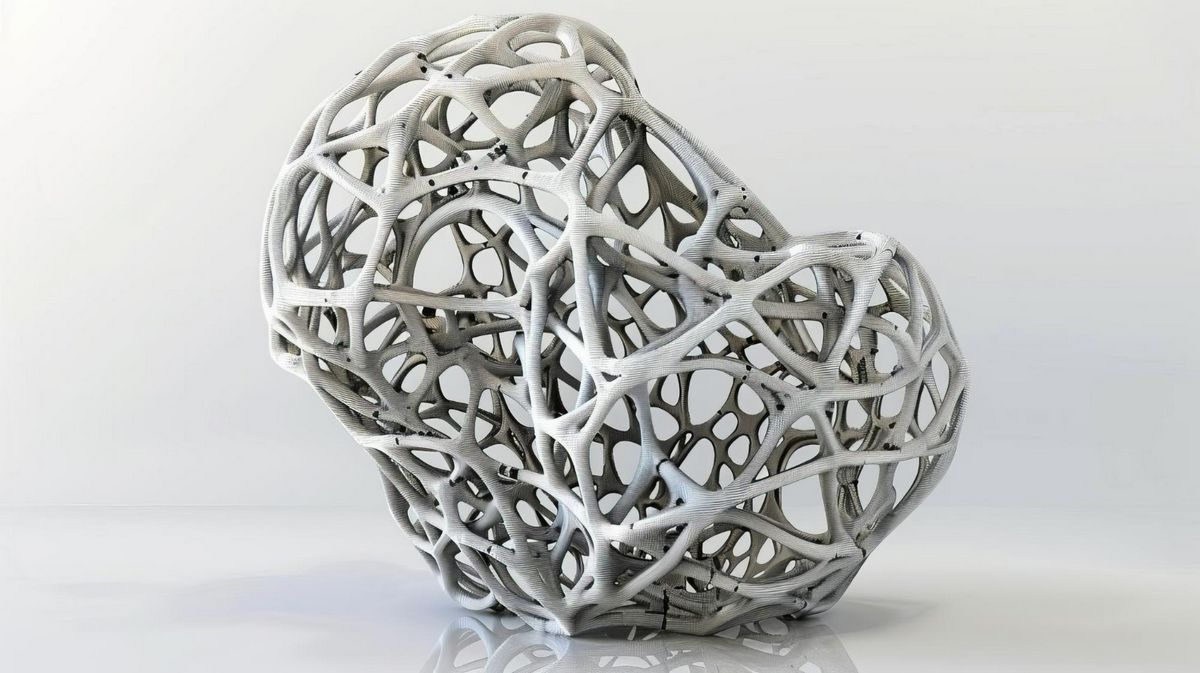
Ceramic 3D Printing: When Technology Meets Art

3D printing is a world of ever-expanding innovation. After plastics, metals, and composites, the technology has turned to a material as ancient as humanity itself: ceramics. Far from replacing traditional pottery techniques, ceramic 3D printing opens up an entirely new realm of possibilities, blending digital precision with the artisanal charm of clay.
How does ceramic 3D printing work?

There are several methods, but two stand out for their accessibility and practical applications:
- Paste Extrusion This is the most common method. It's very similar to FDM (filament) printing, but instead of melting a plastic filament, the printer extrudes liquid ceramic paste (clay) layer by layer. The machine is equipped with a syringe or piston system that pushes the clay through a nozzle, creating the desired object. Pieces are printed in what's called their "green state"—still fragile and moisture-laden.
- Resin-Based Printing (SLA/DLP) This newer technique delivers extreme precision. A photosensitive resin mixed with ceramic powder is used. A laser or projector hardens the resin layer by layer. Once printed, the piece is cleaned, then fired at very high temperature to burn out the resin and leave a solid, dense ceramic object. It's the method of choice for the finest details.
Post-Processing: An Art in Itself
Unlike plastic, ceramic 3D printing doesn't end when it leaves the machine. Post-processing is a crucial step requiring patience and expertise:
- Drying: The printed piece must be dried very slowly and evenly over several days to prevent cracking or warping.
- First Firing (Bisque Firing): The piece is fired once in a pottery kiln at high temperature. This step makes it hard and porous, ready to receive glaze.
- Glazing: Once fired, you can apply a glaze—a mixture of powdered glass and metal oxides—that gives it color and a glassy finish after the second firing.
- Second Firing (Glaze Firing): A final firing at an even higher temperature melts the glaze and bonds it permanently to the ceramic, making the object waterproof and durable.
Advantages and Applications of Ceramic 3D Printing
Ceramic 3D printing pushes the boundaries of creation:
- Complex Geometries: It enables lattice structures, hollowed objects, and shapes impossible to create with a pottery wheel or traditional molding.
- Mass Customization: Designers and artisans can easily create unique pieces or custom-made object series (dinnerware, lighting, vases, etc.).
- Functionality: Final objects are just as functional as traditional ceramics: they're strong, waterproof (if glazed), and food-safe.
- Blending Techniques: Artists can combine 3D printing for form with traditional glazing and decorating techniques for finishing.
While ceramic 3D printing requires some investment and kiln-firing expertise, it offers a unique synergy between cutting-edge technology and ancient art. It's an exciting path for creators wanting to explore new forms and textures, and looking to evolve pottery for the 21st century.