🚀 Building the Future on Mars: The 3D Printing Revolution

To establish a sustainable human presence on Mars, the major challenge is the cost of transportation: sending 1 kg of material to Mars costs tens of thousands of euros. The solution? In Situ Resource Utilization (ISRU). Instead of shipping bricks, we ship printers.

✅ Martian Concrete: Printing with Regolith
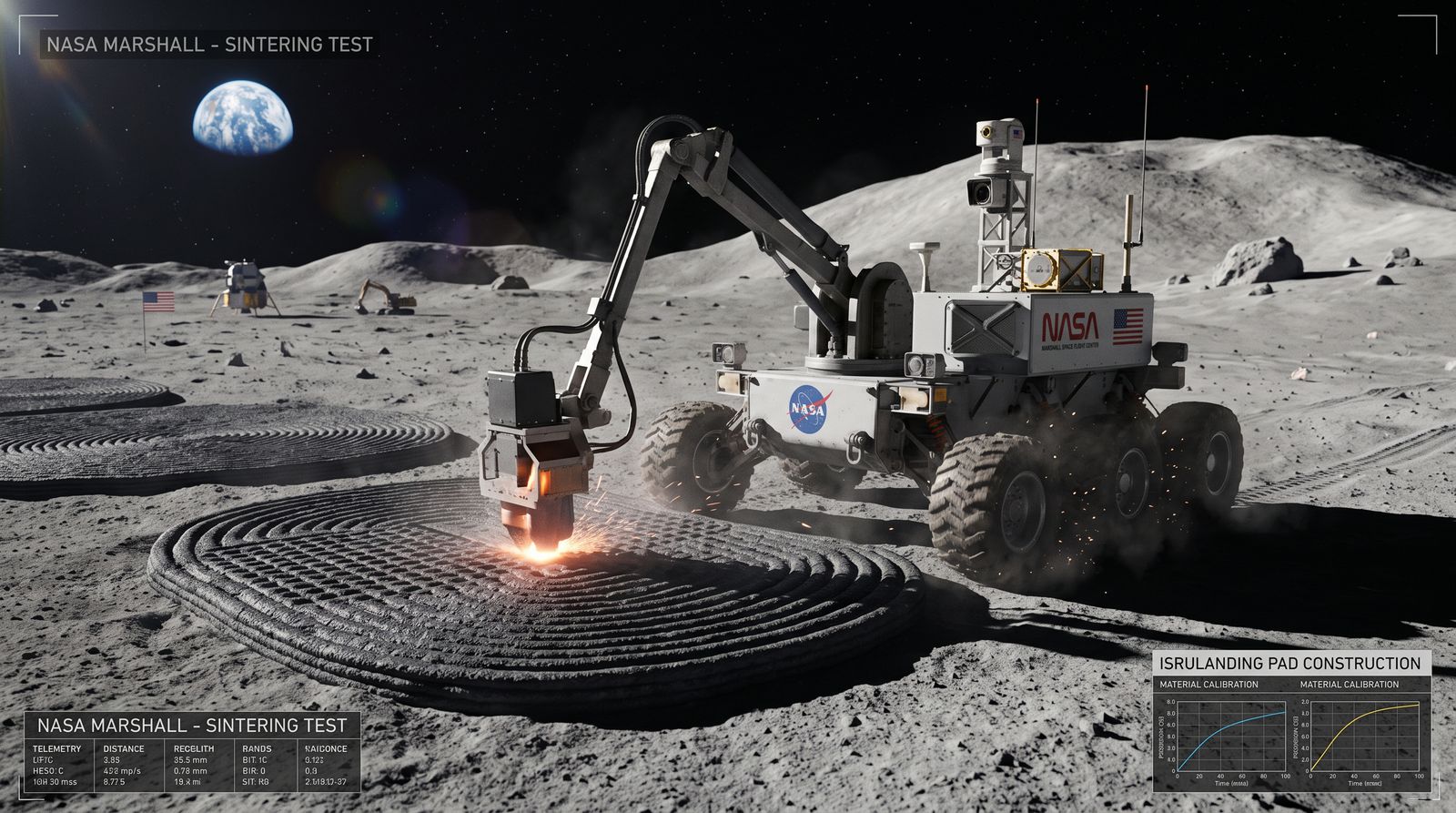
Mars's surface is covered with regolith, a rock dust rich in iron and silicon. NASA projects (such as the 3D-Printed Habitat Challenge) use this regolith mixed with biodegradable polymers (from greenhouse crops) to create a "martian concrete".
-
Protection: These thick-walled structures shield astronauts from deadly radiation and dust storms.
-
Autonomous Robotics: Before humans even arrive, robots could be deployed to autonomously print survival domes.
✅ Manufacturing Spare Parts
On Mars, a broken part can be fatal if you have to wait two years for the next resupply mission.
-
Recycling: 3D printers onboard habitats will allow recycling plastic packaging into printing filament.
-
Metal Printing: Thanks to laser sintering, it will be possible to manufacture tools, bolts, or rover components directly from minerals extracted from the Martian soil.
✅ Challenges of the Martian Environment
3D printing on Mars must overcome obstacles we don't face on Earth:
-
Low Gravity (3.71 m/s²): Material layer deposition behaves differently; ultra-precise extrusion systems are needed.
-
Extreme Temperatures: Between −125°C and 20°C, materials can shrink or crack. Printers must be heated or buried.
-
Thin Atmosphere: Mars's near-vacuum can cause certain liquid binders to evaporate before they even harden.
✅ Toward "Organic" Martian Cities
Unlike rectilinear terrestrial structures, 3D-printed habitats on Mars often adopt organic or spiral shapes. These forms optimize resistance to internal air pressure (necessary for humans to breathe) while using the least material possible.
It's a project that pushes humanity to exceed its technical limits, which often benefits life on Earth (medicine, water recycling, solar energy).
What do you think? Would you be ready to board a rocket to Mars if the journey were one-way?