Beyond the Slicer: How BumpMesh Revolutionizes 3D Texture
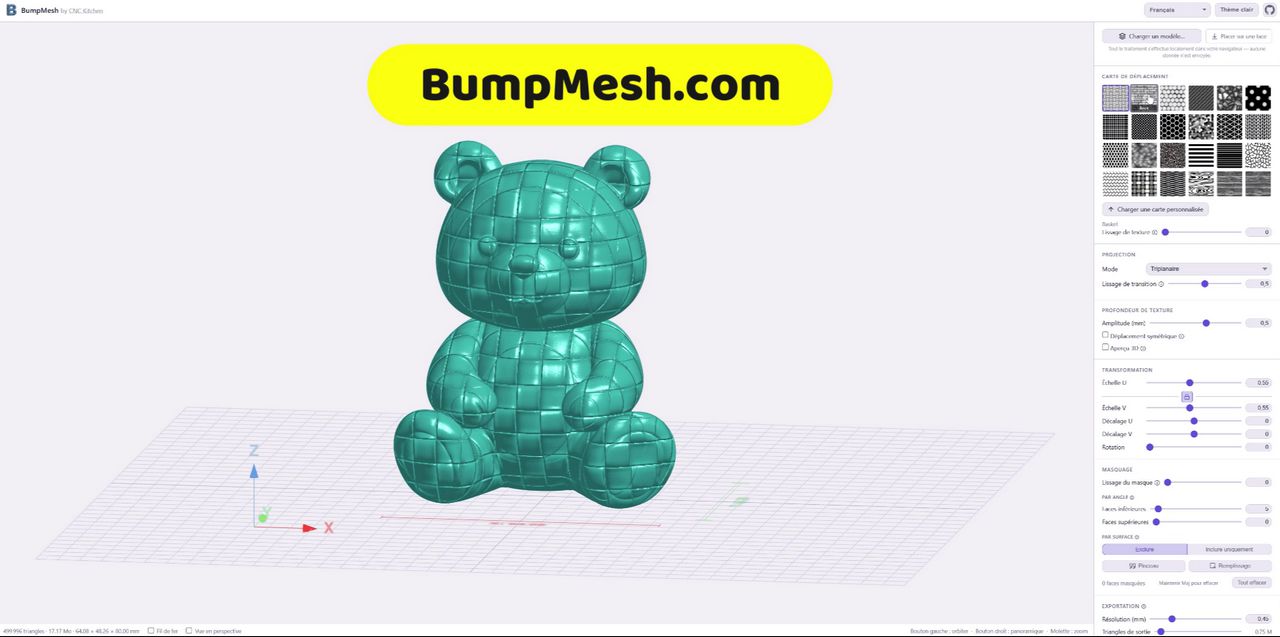
In traditional 3D workflows, there's often a gap between an object's geometry (the Mesh) and its visual appearance (the Bump Mapping). While the former defines the shape, the latter simulates surface details without modifying the actual structure. A service like BumpMesh aims to merge these two worlds.

✅ What is Bump-to-Mesh Conversion?
Bump Mapping is a graphics trick used in video games to create the illusion of relief (wrinkles, skin pores, rock texture) on a smooth surface. BumpMesh, on the other hand, transforms these optical illusions into actual 3D geometry.
-
The value for 3D printing: A 3D printer can't print an "illusion". It needs details to be physically present in the STL or STEP file.
-
Precision: By converting a relief map into a mesh, you get organic textures impossible to model by hand.
✅ Practical Applications
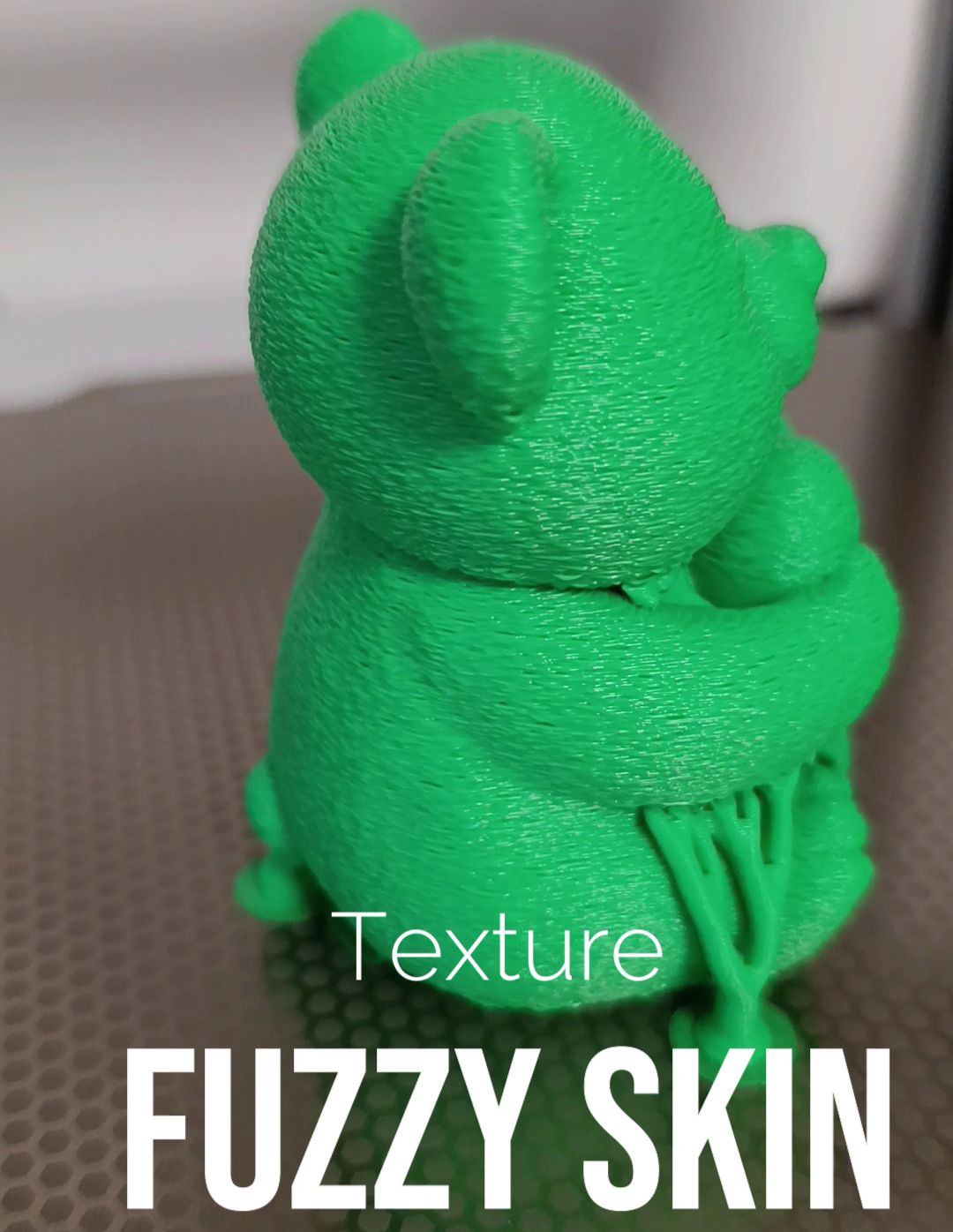
Beyond simple visuals or "Fuzzy Skin", applying complex textures (like BumpMesh) opens fascinating doors in fields where you wouldn't necessarily expect 3D printing.
1. Biomimetics and Aerodynamic Performance
Some textures aren't just for looks—they mimic nature and improve the object's physical properties.
-
Shark Skin (Riblets): Applying micro-texture with longitudinal grooves to walls can reduce friction drag in water or air. It's used for drone prototypes or small nautical appendages.
-
Lotus Effect: Creating specific micro-roughness that, when combined with hydrophobic varnish, allows water to bead and clean the part as it flows.
2. Security and Anti-Counterfeiting
Integrating unique textures can serve as a physical digital "signature".
-
Micro-marking: Embedding a QR code or serial number in almost invisible relief (0.1 mm depth), detectable only by touch or grazing light.
-
Security textures: Applying a complex, random pattern on a technical part to guarantee it comes from the original model and isn't a simplified copy.
3. Grip Engineering and Advanced Ergonomics
Fuzzy Skin is basic, but BumpMesh enables a surgical approach to grip.
-
Directional grip: Creating "scale-like" textures that slide in one direction but catch in another (useful for shoe soles or specialized tool handles).
-
Sweat zones: On prosthetics or worn equipment, applying draining textures to let air circulate and evacuate moisture between skin and plastic.
4. Acoustics and Sound Diffusion
Surface texture changes how sound waves bounce.
-
Diffuser panels: Using BumpMesh-type algorithms to create mathematically calculated irregular surfaces (like quadratic residue) to break up echoes in recording studios or speaker enclosures.
-
Whistle reduction: Breaking up smooth surfaces on parts exposed to strong airflow to prevent aerodynamic whistling noise.
5. Art and Heritage Restoration
-
Tactile replica: For museums, transforming the "height map" (bump map) of a famous painting into actual 3D mesh. This lets visually impaired people "touch" Van Gogh's brushstrokes or details of an ancient relief.
-
Invisible restoration: Recreating the exact texture of old stone or carved wood on a 3D-printed repair piece so it blends perfectly with the original after painting.
✅ Why is This a Technical Challenge?
Converting a relief image into 3D mesh isn't without risks:
-
File weight: Adding millions of micro-facets to simulate grain can make an STL file impossible to open in a standard slicer.
-
Slicing: The more complex the mesh, the longer calculating nozzle paths takes.
✅ The Future of Procedural Texture
With AI integration, tools like BumpMesh no longer just copy an image—they generate mathematically perfect textures that adapt to object curvature without distortion (stretching).
Key Takeaways:
-
Aesthetics: You can now hide layer lines and give a professional look (matte, leather, organic) without manual post-processing.
-
Functionality: Texture improves grip, reduces friction (aerodynamics), or optimizes ergonomics (comfort).
-
Accessibility: Tools like embossing and relief pave the way for tactile, inclusive signage.
In short, mastering effects in your slicer means graduating from "maker" to designer—capable of transforming a simple plastic object into a finished, technical, and sensorial product. The only limit today remains your imagination... and your nozzle's resolution!