What Glue Should You Use for Your Large 3D Prints?
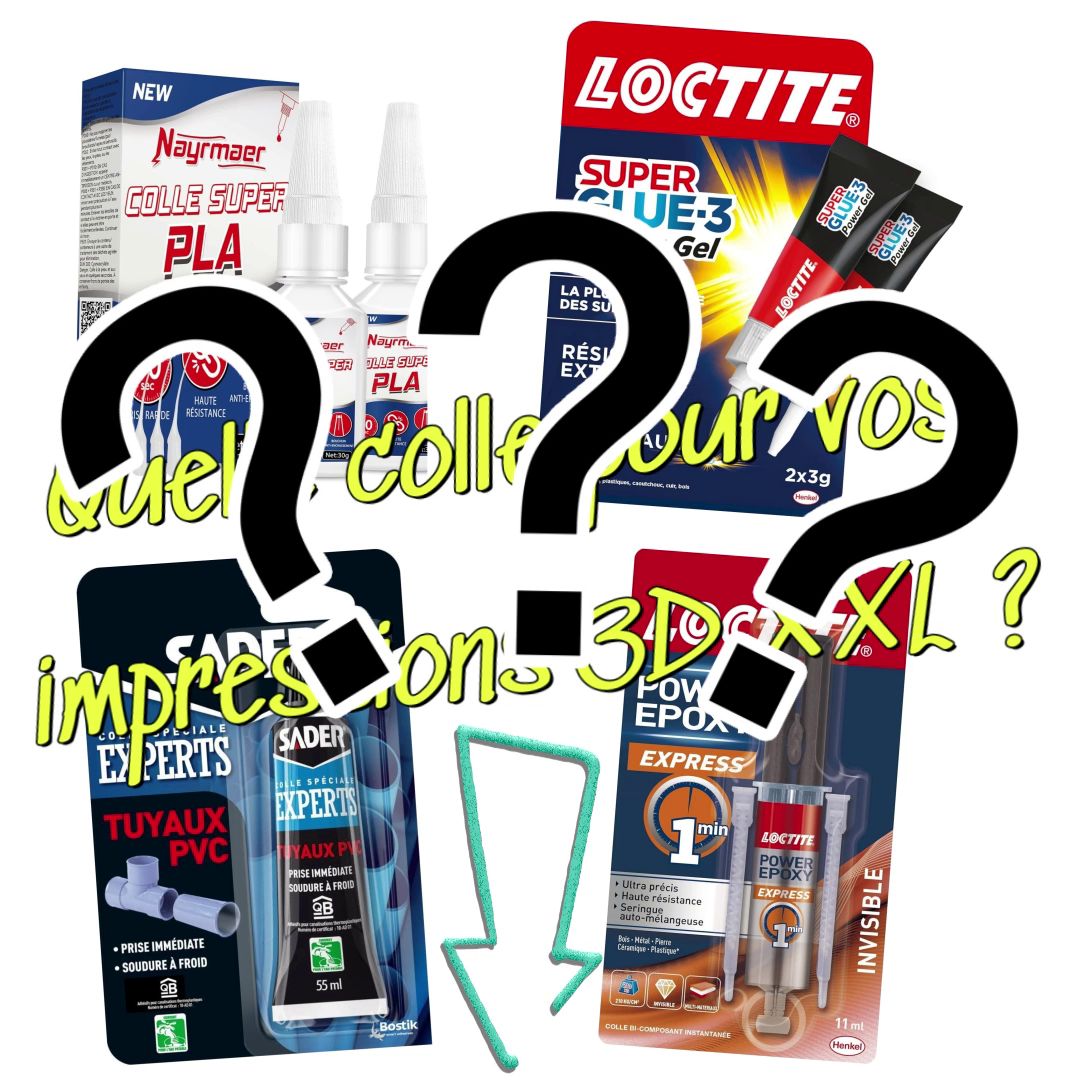
Whether you're repairing a broken part or assembling a model that's too large to fit on your build plate, adhesive is an essential tool for any maker. But not all glues are created equal. Choosing the right adhesive is crucial and depends on both the filament you're using and the strength you expect from the bond.
Here's a guide to help you choose the right glue for every situation.
1. Super Glue (Cyanoacrylate)

It's the all-purpose glue, fast and effective for most situations.
- What's it for? Ideal for small repairs, quick assemblies and bonds not subject to heavy mechanical stress. It sets almost instantly.
- Works with: PLA, PETG, ABS, and most standard filaments.
- Usage tips: Apply a very small amount to just one of the two surfaces. Make sure the parts are properly positioned, as the reaction time is very short. Be careful not to glue your fingers together!
Partner links: https://amzn.to/4mbwLID or https://amzn.to/3Hj0U9E
Epoxy Glue (Two-Component)
This is the go-to solution for maximum strength.
- What's it for? Perfect for assembling large-scale parts and structural bonds that need to be strong and long-lasting. Epoxy glue is also excellent for filling small gaps between parts. Once dry, it can be sanded and painted.
- Works with: PLA, PETG, ABS, ASA and almost all filaments.
- Usage tips: You must mix the two components (resin and hardener) in the proportions indicated. Epoxy offers a longer working time than super glue, which is ideal for positioning large parts. Use clamps to hold the assembly while the glue fully hardens.
Partner links: https://amzn.to/4fA34OP or https://amzn.to/4fuDcnz
PVC Cement
This type of glue is a solvent cement, originally designed for PVC but surprisingly effective for other plastics like PLA.
- What's it for? This glue creates a very robust and waterproof chemical weld. Based on community experience, it also works very well for PLA assemblies.
- Works with: PLA, PVC, and ABS.
- Usage tips: Apply it to both surfaces, assemble quickly and maintain pressure. Drying is fast and the result is a permanent bond. Like other solvent-based glues, work in a well-ventilated area.
Partner link: https://amzn.to/3UnkioN
Specialty Glues for 3D Printing
With the growth of 3D printing, specialized products have emerged. These glues are formulated to provide optimal adhesion and perfect chemical compatibility with the most common filaments.
- What's it for? To achieve the cleanest and most durable bond possible, often stronger than super glue. These products are often sold as gels or pastes and are designed to blend into the plastic safely.
- Works with: PLA, ABS, PETG (versions specific to each filament are available).
- Usage tips: Follow the manufacturer's instructions carefully. These glues are ideal for those who want a professional result without compromise.
Partner links: https://amzn.to/4lnNQxw or https://amzn.to/4otvcab
Tips for Perfect Bonding
- Prepare the surfaces: For best results, lightly sand the areas to be glued with fine-grit sandpaper. This improves adhesion.
- Clean: Degrease and clean the surfaces with isopropyl alcohol. They must be perfectly clean and dry before applying glue.
- Apply pressure: Use clamps or rubber bands to hold the parts together during the drying time. Pressure is as important as the glue itself for a strong bond.