AI Takes Over CAD: Ultra-Lightweight 3D Parts Designed in Seconds
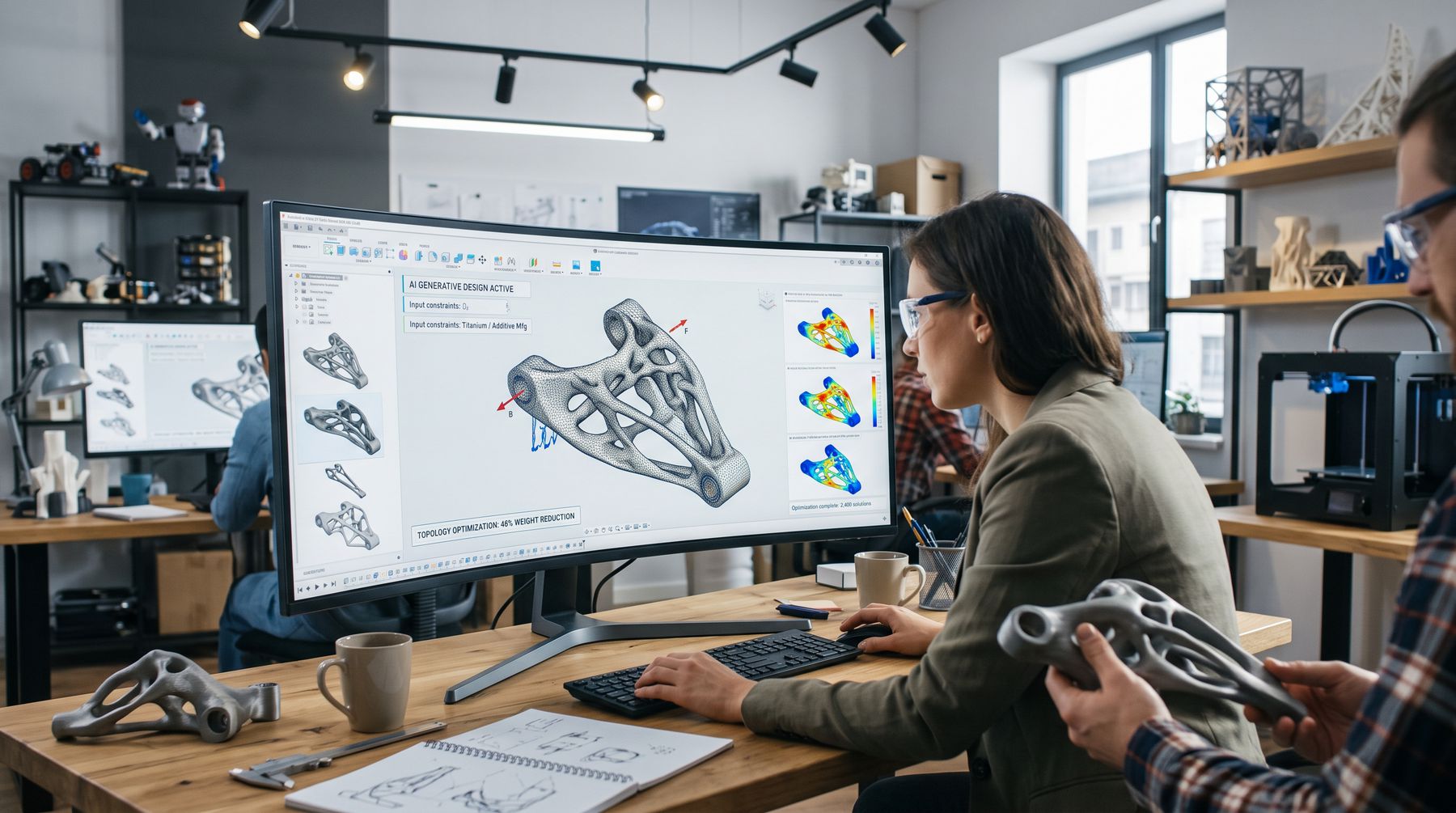
Industrial design and CAD (Computer-Aided Design) offices are undergoing a true transformation with the widespread adoption of generative design powered by artificial intelligence (particularly at Autodesk Fusion, SolidWorks, and Dassault Systèmes). Rather than manually drawing every curve, engineers now simply set constraints — applied forces, anchor points, materials, and manufacturing methods (such as 3D printing) — and let the algorithm generate thousands of geometric alternatives impossible for the human brain to imagine.
✅ The key points of this revolution:
-
Organic geometry, the signature of AI: The parts generated this way display complex bionic shapes, reminiscent of bone structures or natural vines. They eliminate unnecessary material where forces aren't applied, keeping only optimal "force paths."
-
Up to 50% weight reduction without loss of strength: This approach makes it possible to design components (motor mounts, drone parts, cranks, or suspensions) infinitely lighter—a crucial challenge for automotive and aerospace industries to cut carbon footprint and save material.
-
3D printing as the ideal partner: These extremely complex shapes, packed with voids and intricate curves, cannot be machined by traditional methods (milling, molding). Additive manufacturing is often the only method capable of bringing these organic geometries to life, merging intelligent virtual design with physical reality.