The Advantages of 5-Axis 3D Printing
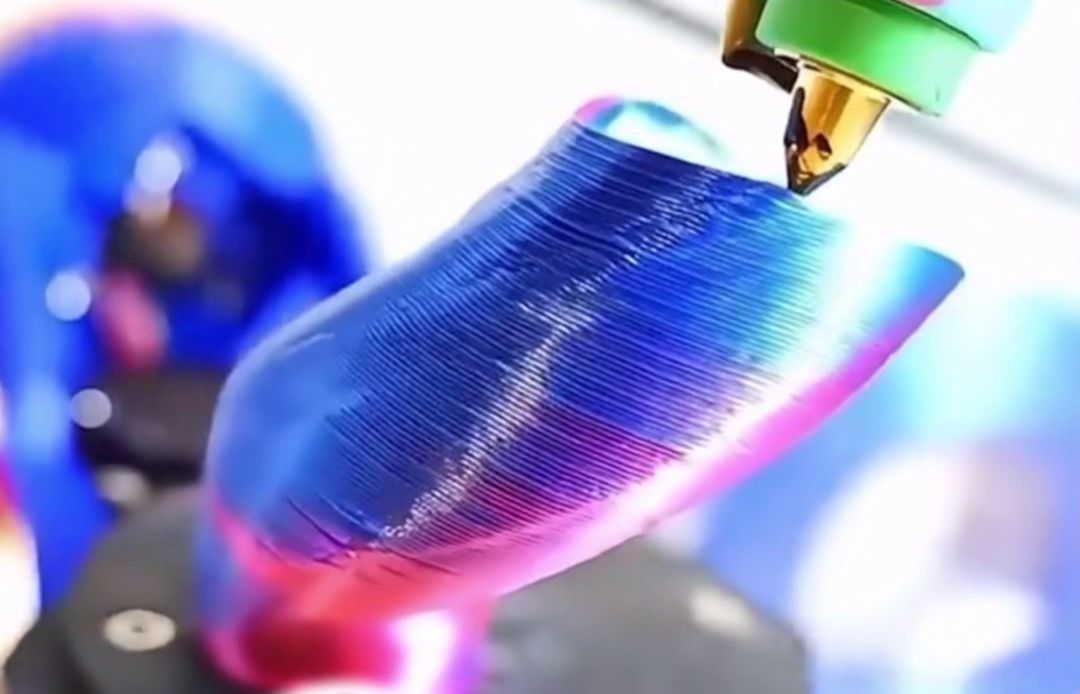
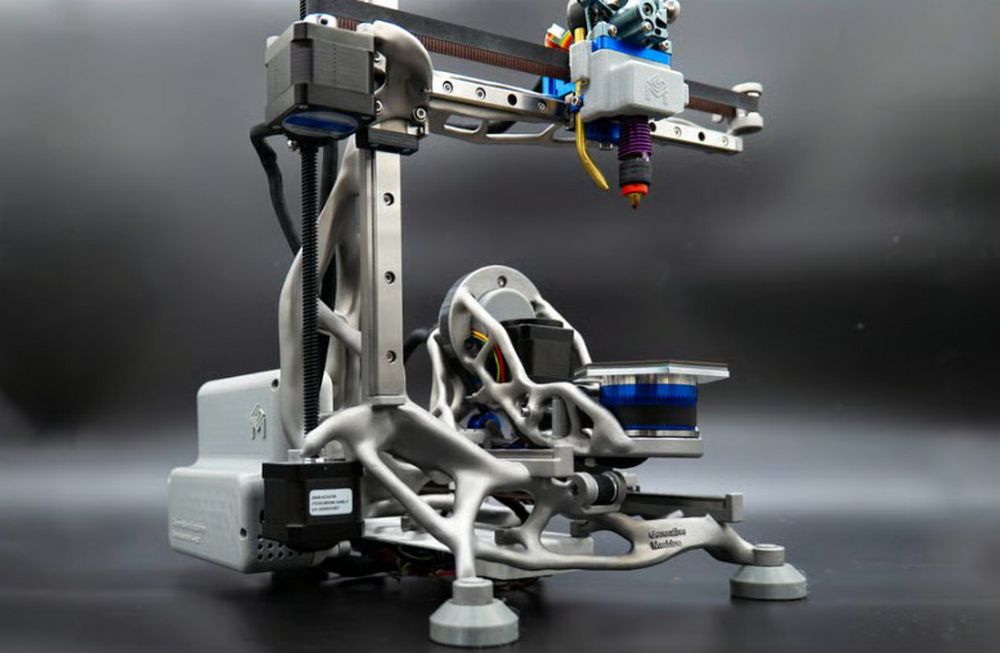
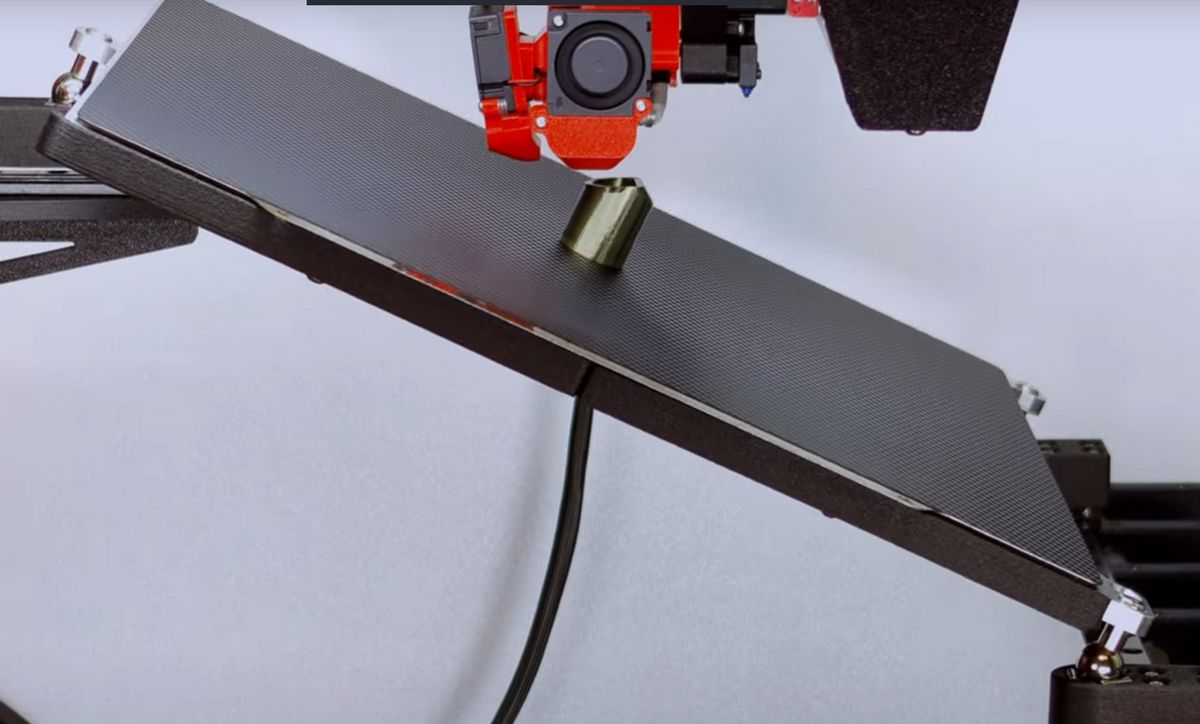
Imagine a printer capable of moving in every direction, like the arm of a skilled artisan. That's the promise of 5-axis 3D printing. Unlike conventional machines that stack layers from bottom to top, 5-axis technology adds two rotational movements, allowing the nozzle to perfectly conform to the shape of the object for stronger, more precise results.

✅ Elimination or Reduction of Support Structures
This is the number-one argument. In a 3-axis printer, overhanging parts require support structures to prevent collapse.
-
Material savings: You only use the filament needed for the final part.
-
Time savings: No tedious post-processing to remove supports manually or chemically.
-
Surface finish: The absence of attachment points leaves a smooth, flawless surface right from the start.
✅ Enhanced Mechanical Strength
In standard 3D printing, structural weakness often occurs between layers (the Z-axis).
-
Fiber orientation: In 5-axis printing, the nozzle can orient itself to deposit material along the stress lines of the part.
-
Curved printing: You can print layers that follow the shape of an arch or tube, making the object far more solid than a stack of flat slices.
✅ Printing on Existing Surfaces
Unlike the traditional flat build plate, a 5-axis machine can print directly onto an already-fabricated part, even if it's curved or complex.
-
This is ideal for adding features to molded objects or for repairing metal parts (such as turbine blades) using DED (Directed Energy Deposition) technology.
✅ Speed and Geometric Efficiency
Although programming the nozzle path is more complex, the overall process is often faster:
-
Fewer unnecessary paths: The print head can take geometric "shortcuts."
-
Optimal orientation: You can print complex shapes in a single step, where you'd sometimes need multiple separate prints to assemble in 3-axis printing.
✅ Summary Table
| Feature | 3-Axis Printing | 5-Axis Printing |
| Supports | Required for angles > 45° | Virtually nonexistent |
| Finish | Visible "stair-step effect" | Much smoother surface |
| Strength | Limited isotropy (Z-axis weakness) | High directional resistance |
| Complexity | Simple to set up | Requires advanced CAM software |
More than just a technical improvement, 5-axis 3D printing is a shift in perspective. By freeing the nozzle from the constraint of horizontal layers, it finally allows us to design objects that aren't simply "printed," but truly "sculpted" by technology. A major breakthrough that promises to transform our production methods for years to come.