
3D Printing Becomes the Accelerator for Humanoid Robot Manufacturing
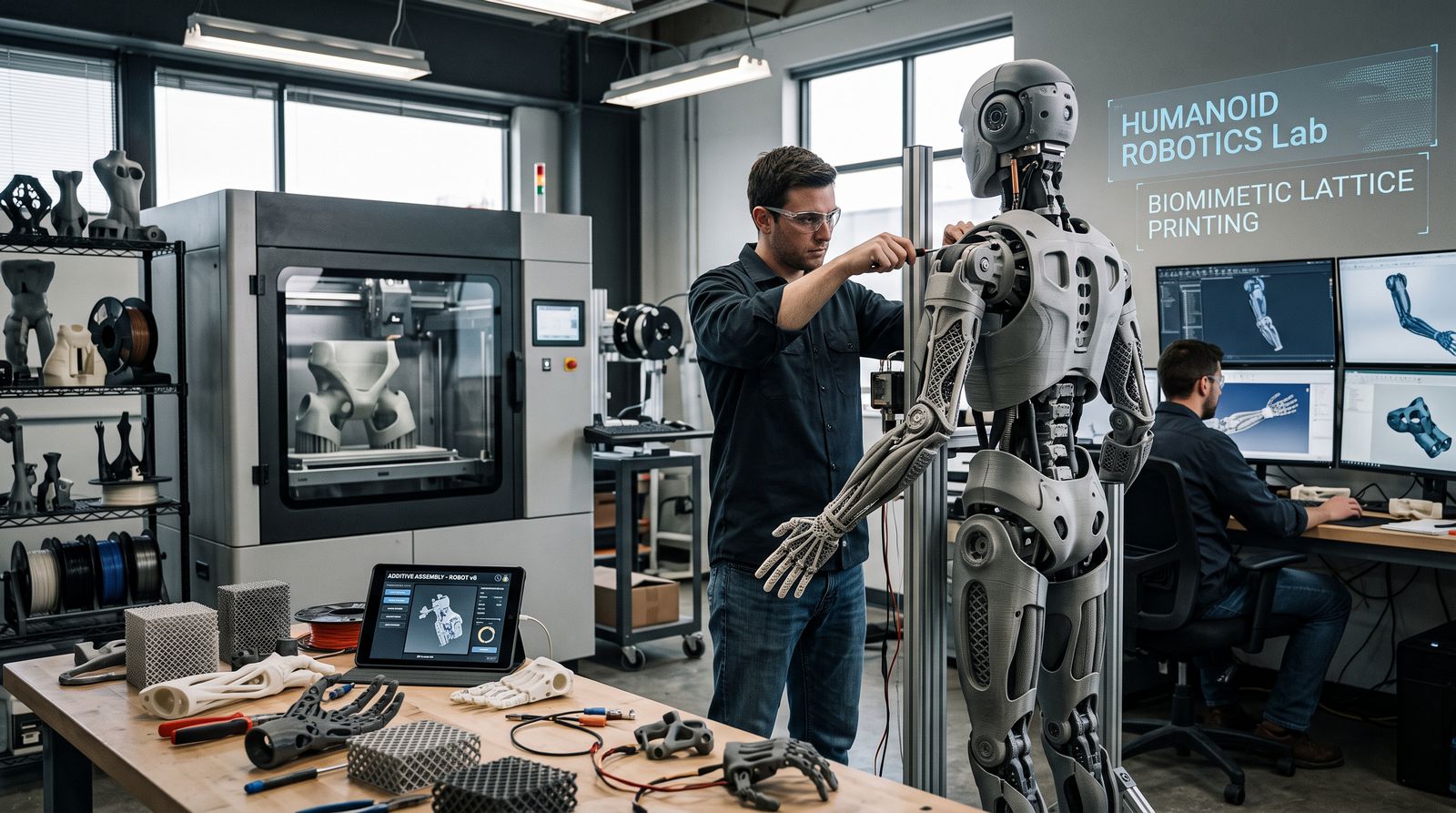
The convergence between humanoid robotics and industrial additive manufacturing is reaching a critical milestone, making 3D printing the essential engine for accelerating market launch and reducing costs for these complex machines. Whether it's biomimetic structures, soft dampers, or mold-free prototyping, the technology is radically transforming how tomorrow's robots are designed.
✅ Why this is a major breakthrough:
-
Bionic weight reduction: By 3D printing metals and lightweight alloys using "trabecular" lattice designs (similar to bone structures), engineers can reduce the weight of humanoid chassis and joints by up to 60%. This weight loss is crucial for motor and battery autonomy and agility.
-
Muscles and dampers in soft materials: New soft 3D printing processes (such as PEBA or expanded TPU) now enable direct 3D printing of "lattice muscles" and protective structures with high shock absorption capacity, protecting humanoids from violent impacts during movement or interaction.
-
The rapid prototyping boom: Through partnerships between major manufacturers and 3D printing leaders, additive manufacturing enables iterating on shells, agile multi-degree-of-freedom hands, and cabin components in just hours with zero mold costs—a key advantage when designs evolve constantly.


