3D-Printed Shoes at Home: Living-Room Gimmick or the Real Future of Our Wardrobes?
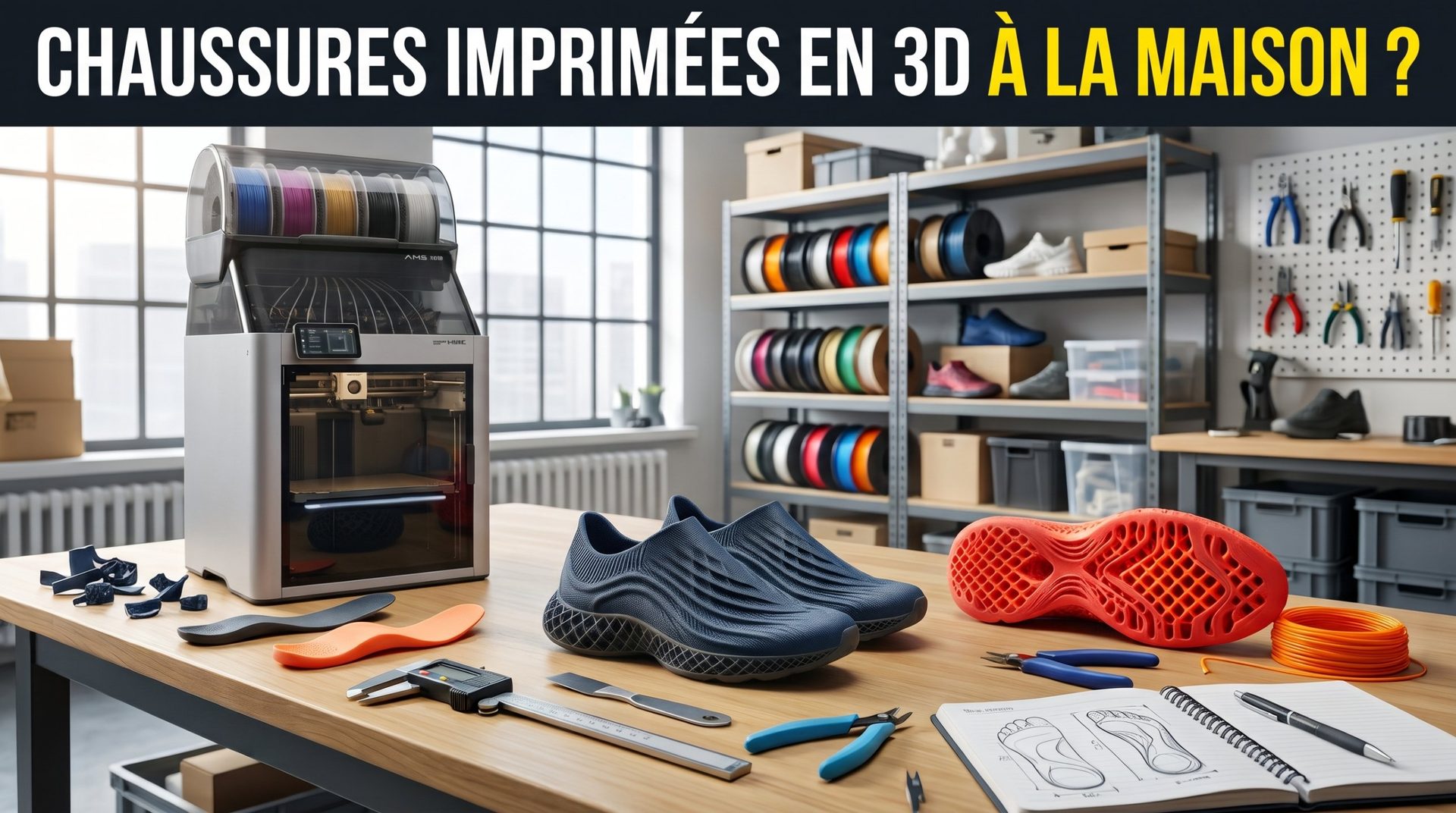
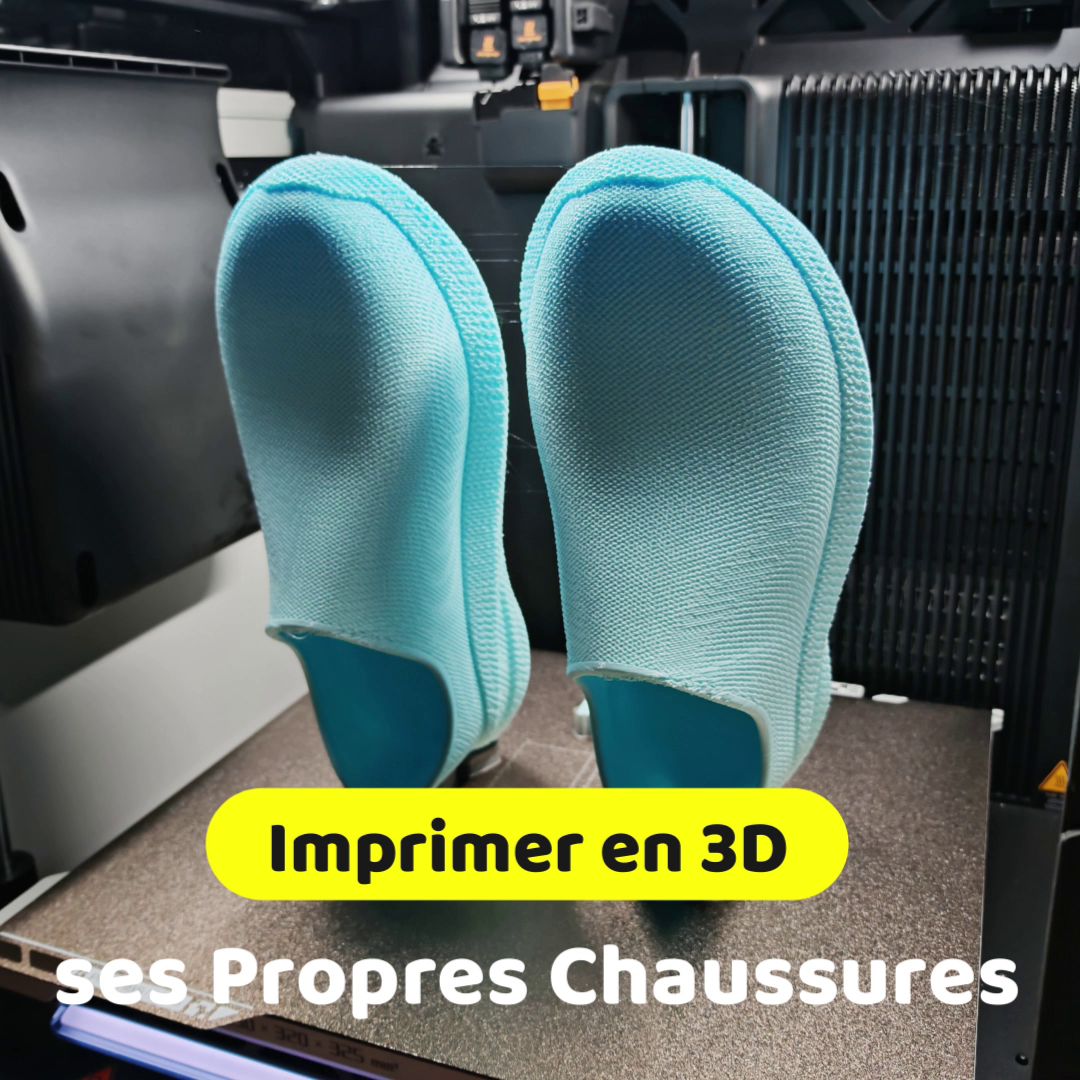
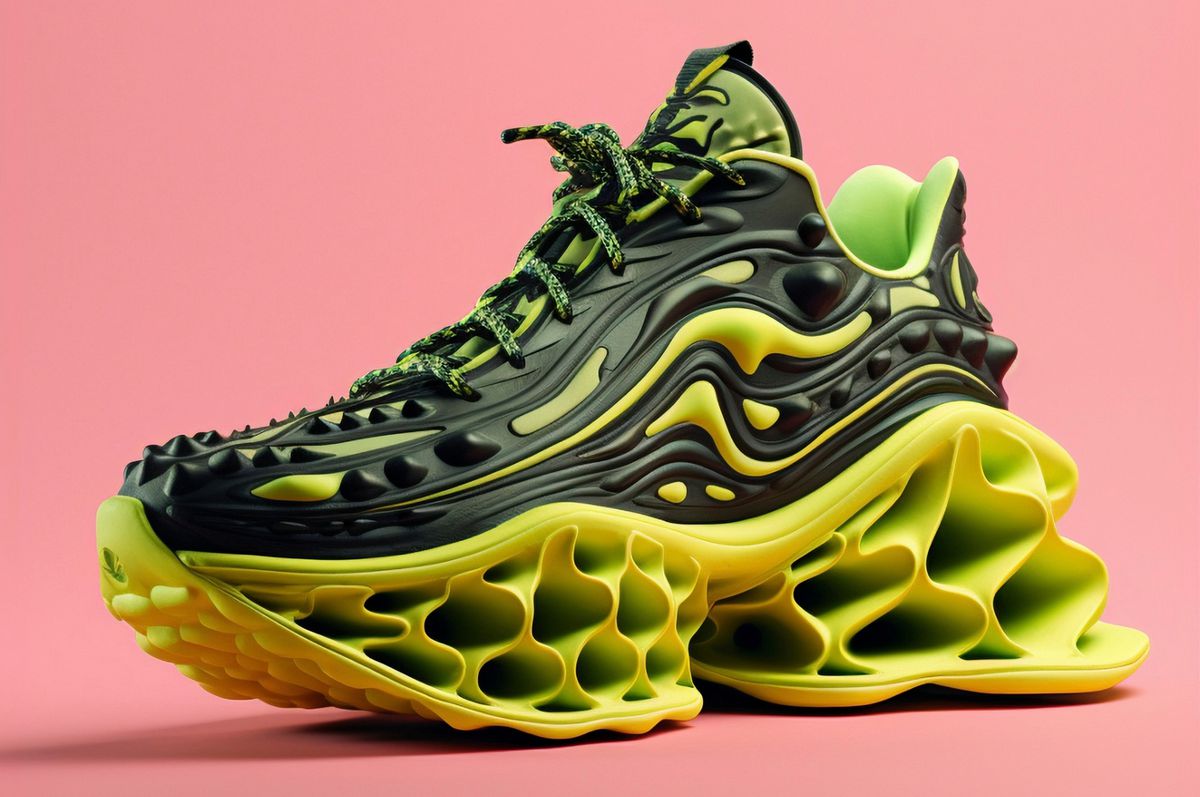
After the cushioning lattice midsoles popularised by the big sportswear brands (Adidas’s 4DFWD range, then the Climamog, a fully 3D-printed shoe), a new step is taking shape in 2026: printing your own pair of shoes at home, on a desktop FDM printer, with no glue or stitching.
Long limited to rigid prototypes or basic TPU clogs, home-printed shoes are moving up a gear thanks to new flexible filaments, advances in lattice structures and increasingly polished downloadable designs.
1. The Three Pillars That Make Home-Printed Shoes Credible
If printing a comfortable, durable shoe on a desktop printer is becoming realistic, it’s thanks to three developments:
- Foaming TPUs and very soft TPUs: standard TPU (95A) is still fairly firm for a walking sole. Softer filaments (82A to 85A) and “foaming” TPUs, such as colorFabb’s varioShore or Recreus’s Filaflex Foamy, expand more or less depending on the extrusion temperature, so you can vary the density and cushioning within the same part. To dial in these materials, see our guide to printing flexible filament like TPU.
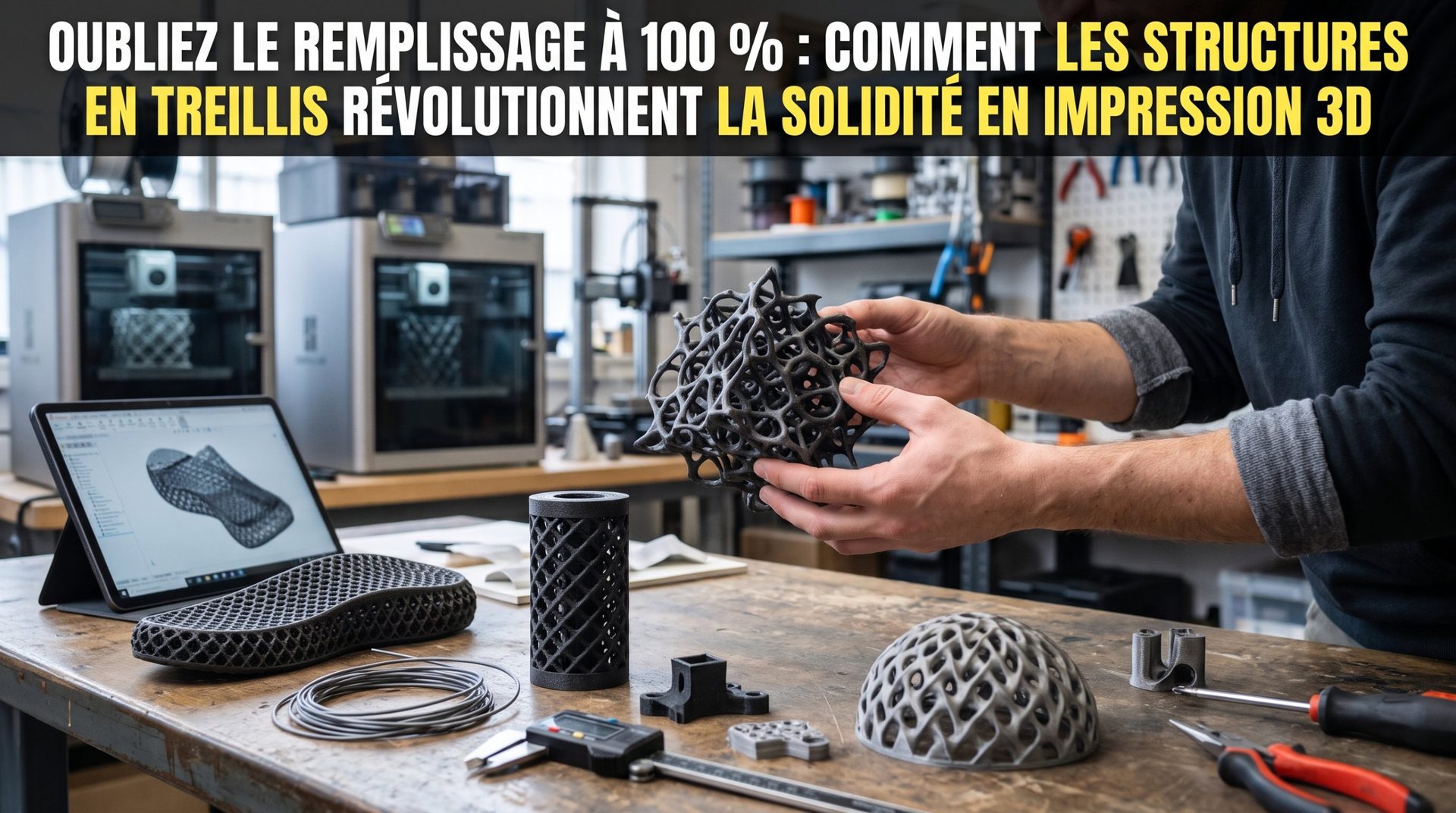
- Lattice structures: by replacing solid walls with an open cellular network (gyroid, Voronoi or a custom lattice), the sole becomes lighter, breathes better and cushions more under the heel and forefoot. The principle is explained in our article on lattice structures.
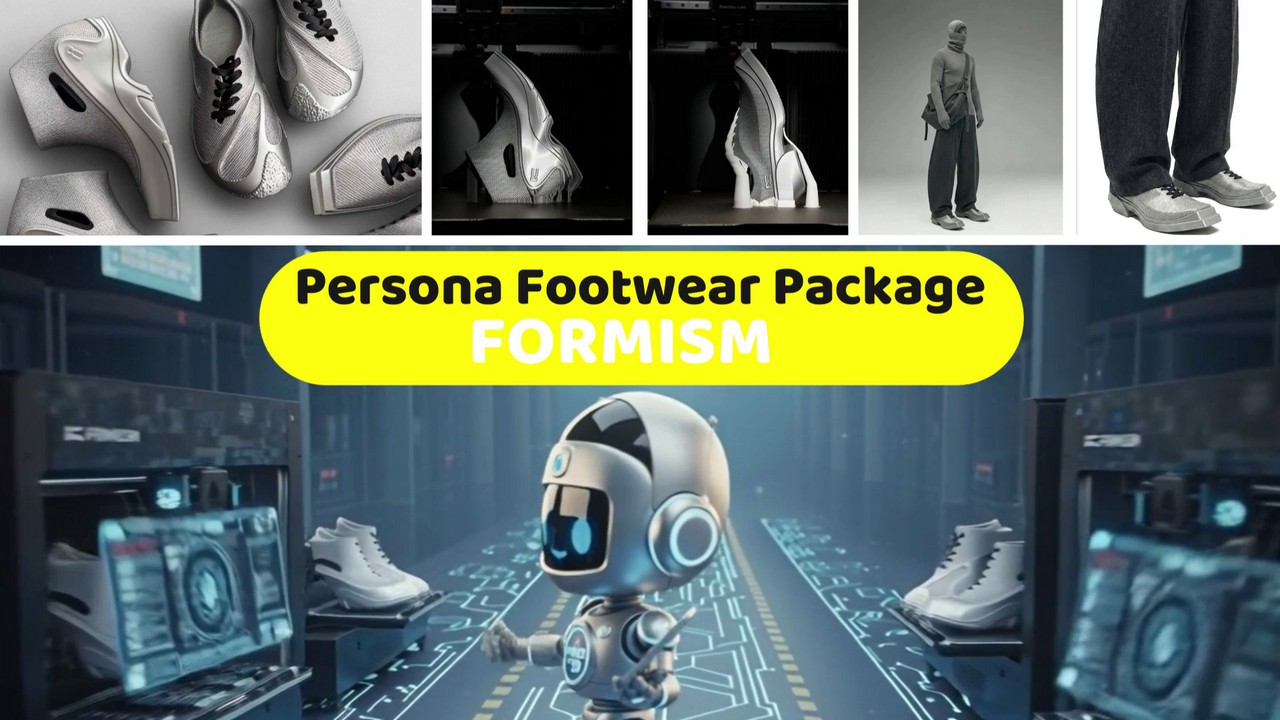
- Single-piece printing with no supports: platforms such as Zellerfeld, which prints designers’ models on demand on its own FDM machines, and downloadable designs printable flat or in one piece show that you can get a flexible upper and sole in a single print, with no complex assembly.
Mind your bed size: a size 42 EU (UK 8) shoe is about 27 cm long. On a 256 × 256 mm bed you’ll often need to print it diagonally, or even move to a bigger machine for large sizes.
2. Foot Scanning and Custom Fit: The Real Home-Made Revolution
The point of printing shoes at home isn’t to copy a shop-bought trainer on the cheap: a factory will always be faster. The real advantage of home 3D printing is fitting your foot:
- Scanning your foot in seconds: with a smartphone fitted with a LiDAR sensor or a light handheld scanner such as the Shining 3D Einstar EZ GO, you can capture your arch, the width of your forefoot, or a size difference between your left and right foot.
- Aesthetic and functional customisation: colours of your choice on a multicolour printer, a softer heel, extra ventilation for summer, or replacing a single worn shoe without buying a whole new pair.
3. What’s Still Holding Back Everyday Use
Despite impressive results on social media and at trade shows, three limits remain before we replace all our trainers:
- Print time: often 15 to 35 hours per shoe, depending on wall thickness and the speed the flexible filament can handle.
- Mastering TPU: very soft filaments (below 85A) need a well-tuned direct drive extruder, perfectly dry filament and moderate speeds to avoid jams.
- Wet grip and wear: bare TPU can slip on wet tiles and wears faster than a rubber sole. The most advanced makers glue on a thin rubber outsole or design a dedicated tread pattern.
Finally, a walking shoe isn’t a trivial object: for orthotic insoles or posture issues, a podiatrist’s advice remains essential before you print.
And You, Ready to Go from Workshop to Wardrobe?
Between soft TPU summer sandals, custom slippers and the first real trainers printed in one piece, the playground is growing fast. Have you ever tried printing a pair of shoes or insoles on your machine? Tell us in the comments!