
3D Digital Modeler: Architect of the Virtual, Shaper of the Real

The 3D digital modeler, often called a 3D artist or 3D modeler, is far more than a simple software operator: he or she is a true 21st-century sculptor, an architect of the virtual whose art and technique lie at the heart of creating our modern visual environment. The primary mission is to transform an idea, a sketch, an abstract concept, or an existing reality into a three-dimensional object or environment that can be manipulated and visualized in digital space.
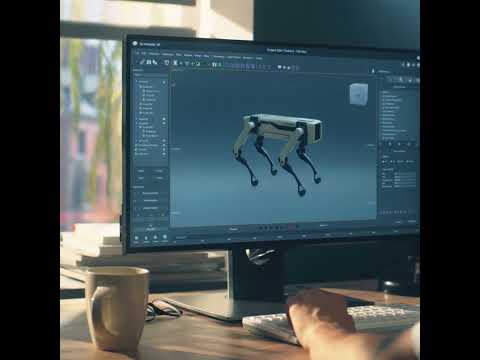
From Concept to 3D Modeling
The 3D digital modeler's work begins where creativity takes shape. Armed with specialized software (such as Blender, ZBrush, Maya, 3ds Max, SolidWorks, or SketchUp), they build volumes, surfaces, and complex structures point by point, polygon by polygon, or from geometric primitives. Every detail, every curve, every texture is meticulously crafted to match the original vision of the project.
This creative process is iterative and demands a deep understanding not only of digital tools, but also of principles like anatomy (for characters), physics, lighting, and real-world constraints if the object is destined for fabrication.
A Profession at the Intersection of Multiple Industries
The expertise of a 3D digital modeler is sought across numerous sectors, each with its own specific demands:
- Video Games and Animation: Creating characters, environments, vehicles, and objects that populate virtual worlds and bring stories to life. The modeler must balance aesthetics with technical optimization for game engines or animation pipelines.
- Industrial Design and Engineering: Designing product prototypes (automobiles, electronics, furniture), complex mechanical parts, or architectural components. Here, precision, functionality, and compliance with technical specifications are paramount.
- Architecture and Urban Planning: Creating virtual models of buildings, entire districts, or landscapes, enabling immersive visualization and better communication of projects to clients and investors.
- Advertising and Marketing: Creating photorealistic product visuals for campaigns, 3D animations for commercials, or elements for augmented reality experiences.
- Healthcare and Medicine: Modeling organs, custom prosthetics, medical devices, or anatomical representations for training or surgical planning.
- Digital Art and Sculpture: Pure artistic expression, where the modeler uses 3D tools like brushes or chisels to create digital artworks intended for virtual exhibition or physical fabrication through 3D printing.
The 3D Digital Modeler and 3D Printing
3D printing has become a natural extension of the 3D digital modeler's work, offering a direct bridge between the virtual world and physical reality. The modeler designs the object in 3D, but they—or the engineer they collaborate with—must also ensure that the model is "printable". This requires knowledge of additive manufacturing constraints: managing mesh topology, optimizing wall thicknesses for strength or flexibility, anticipating support needs for overhanging sections, and understanding the properties of printing materials. Through 3D printing, the modeler can quickly materialize their creations into functional prototypes, aesthetic models, or even personalized finished parts. This synergy accelerates development, enables rapid iterations, and offers unprecedented freedom to realize complex and innovative designs that were once impossible to manufacture.
More Than an Artist, a Technician
Beyond creativity, the 3D digital modeler must possess sharp technical skills:
- Software Mastery: Deep knowledge of modeling, texturing, rendering, and sometimes animation tools.
- Understanding Production Constraints: Knowing how to optimize a model for 3D printing, CNC fabrication, integration into a game engine, or photorealistic rendering.
- Problem-Solving: The ability to find creative solutions to technical and aesthetic challenges posed by each project.
- Collaboration: Working closely with designers, engineers, art directors, and developers.
The 3D digital modeler is thus an essential link in the modern production chain, a craftsperson of the digital age who gives form to ideas and makes the virtual tangible. Their role, constantly evolving with technological advances, is more central than ever in our visual and technological world.


