SpaceX 🚀 How 3D Printing Is Revolutionizing Space Exploration

3D printing has become the cornerstone of SpaceX's manufacturing strategy, enabling the transformation of complex concepts into flight-ready hardware with stunning speed. What was once a prototyping technology is now a mass production method for the most powerful rockets in history.
Here's a summary of the current state of 3D printing at SpaceX in 2026.

✅ SpaceX's Raptor Engine: A Masterpiece of Additive Manufacturing
The Raptor 3 engine, which powers the Starship, is the most striking example of this revolution. Unlike earlier versions that featured a maze of external tubing and sensors, the Raptor 3 boasts a sleek, almost "smooth" design.
-
Circuit integration: Most of the cooling channels and fluid conduits are now printed directly into the engine structure. This eliminates hundreds of potentially weak solder joints.
-
Weight reduction: Thanks to topological optimization (placing material only where physical constraints demand it), SpaceX has reduced engine weight while increasing thrust, now exceeding 300 tonnes.
-
Proprietary superalloys: SpaceX uses its own metal alloys, engineered to withstand extreme temperatures and pressure from full-flow staged combustion cycles.
✅ Why 3D Printing Changes Everything
For Elon Musk and his engineers, 3D printing (or additive manufacturing) addresses three critical imperatives:
| Advantage | Impact for SpaceX |
| Iteration speed | A design change can be printed and tested in days, versus months with traditional casting. |
| Reduced cost | Printing a hollow part with complex internal channels costs no more than printing a solid block. |
| Reliability | Fewer assembled parts means fewer risks of leaks or structural failures at launch. |
✅ Beyond Engines: Starship and Dragon
While engines are the most sophisticated components, 3D printing extends to other systems:
-
Dragon spacecraft: Propulsion valves and life support system components have been 3D printed for years, ensuring total precision for crewed missions.
-
Ground infrastructure: Complex parts of the launch tower's capture arm system (Mechazilla) also benefit from this technology to handle colossal loads.
-
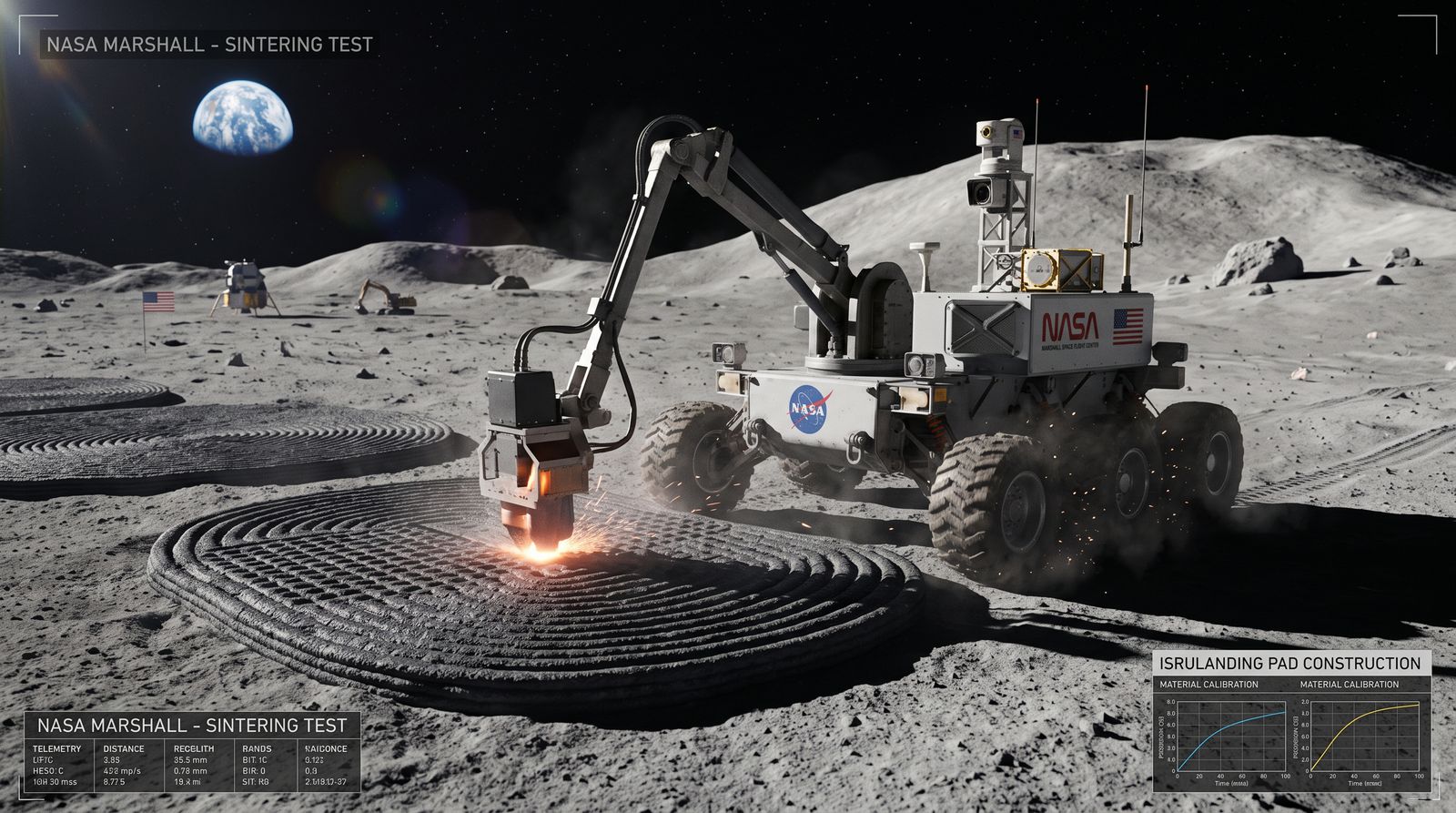
On Mars: The long-term goal is to use 3D printing to build habitats using local regolith (dust), a logical extension of their current expertise.
SpaceX uses high-precision metal 3D printers capable of running 24/7. Some components that once took months to machine can now be produced in less than 24 hours at their Hawthorne or Starbase facilities.