A 3D-Printed Helmet Worthy of the Best Science-Fiction Films
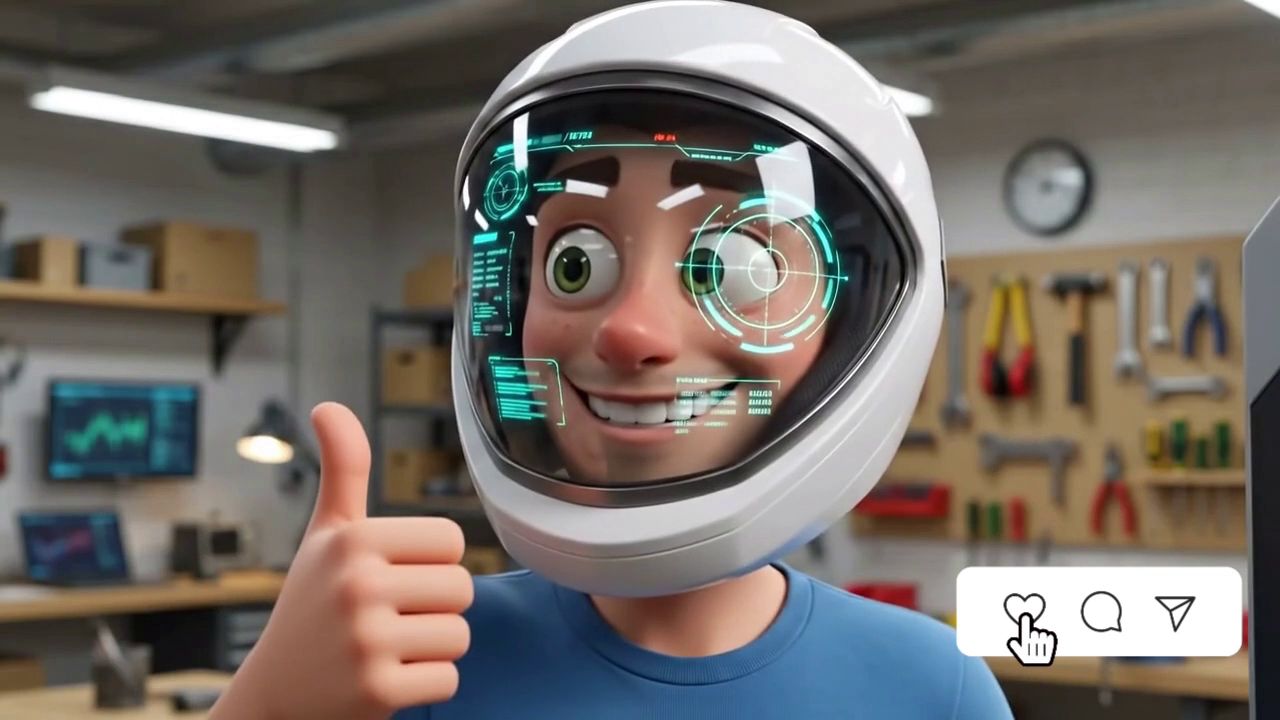
When you think of SpaceX, images of giant rockets blasting off or boosters landing perfectly come to mind. Yet Elon Musk's company's use of 3D printing extends far beyond propulsion. SpaceX is rethinking every piece of spacecraft hardware, right down to the very suits worn by those traveling to the stars.
The best example of this miniaturized revolution can be found in the intra-vehicular spacesuit of the Crew Dragon capsule, and more specifically, in its helmet.
✅ A Helmet Worthy of the Best Science-Fiction Films
Forget the round, bulky, and standardized helmets from Apollo missions or the Space Shuttle era. Astronauts flying aboard SpaceX's Crew Dragon capsules sport helmets with a sleek design that looks like it came straight out of a Hollywood sci-fi film.
But this futuristic aesthetic is far more than just a design choice—it's the direct result of additive manufacturing (3D printing). This technology allowed SpaceX engineers to design equipment where form is entirely dictated by function, without the constraints of traditional manufacturing methods.
✅ Perfect Customization Through 3D Printing
The real feat of these helmets lies in their ultra-personalized design. Space doesn't tolerate discomfort, especially during critical launch acceleration or atmospheric reentry phases.
Here's how 3D technology transforms the astronaut experience:
-
Perfect morphological fit: Before it's manufactured, each astronaut's helmet doesn't exist in a standard size. The wearer's head is scanned in three dimensions. The helmet is then 3D printed specifically to adapt to their morphology down to the millimeter, ensuring optimal support and comfort against G-forces.
-
Integration of life-support systems within the structure: This is where 3D printing reveals its full potential. Instead of assembling dozens of separate parts (screws, cables, external tubes), the helmet is printed as one complex, unified structure. Engineers integrate directly into the shell thickness:
-
Channels for microphones and speakers, enabling clear communication.
-
Cooling valves and ducts, essential for regulating temperature inside the suit and preventing fogging on the visor.
-
Visor retraction and locking mechanisms.
-
✅ Why Does 3D Printing Change the Game?
Using additive manufacturing for human equipment gives SpaceX three major strategic advantages:
-
Weight reduction: By eliminating heavy fasteners and optimizing material density where strength is needed, 3D printing creates a helmet that's both extremely durable and incredibly lightweight. In space, every gram saved is a victory.
-
Reliability: Fewer assembled parts means fewer potential failure points. An air channel printed directly into the helmet's structure won't disconnect due to launch vibrations.
-
Rapid prototyping and iteration: If an astronaut reports a pressure point or discomfort during ground testing, the digital 3D model can be modified in seconds and a new helmet can be printed in hours.
With these custom-fit tools, SpaceX demonstrates that technological innovation must serve both machine and human. 3D printing doesn't just build tomorrow's rockets—it also ensures that the astronauts piloting them will enjoy a level of comfort, ergonomics, and safety never before achieved in the history of space exploration.