The RepRap Project: The Engine of the 3D Printing Revolution
In the history of 3D printing, few projects have had as profound and lasting an impact as the RepRap project. More than just a machine, RepRap is a philosophical concept that transformed additive manufacturing, taking it from an expensive industrial tool to a technology accessible to everyone.

A revolutionary concept: the self-replicating printer
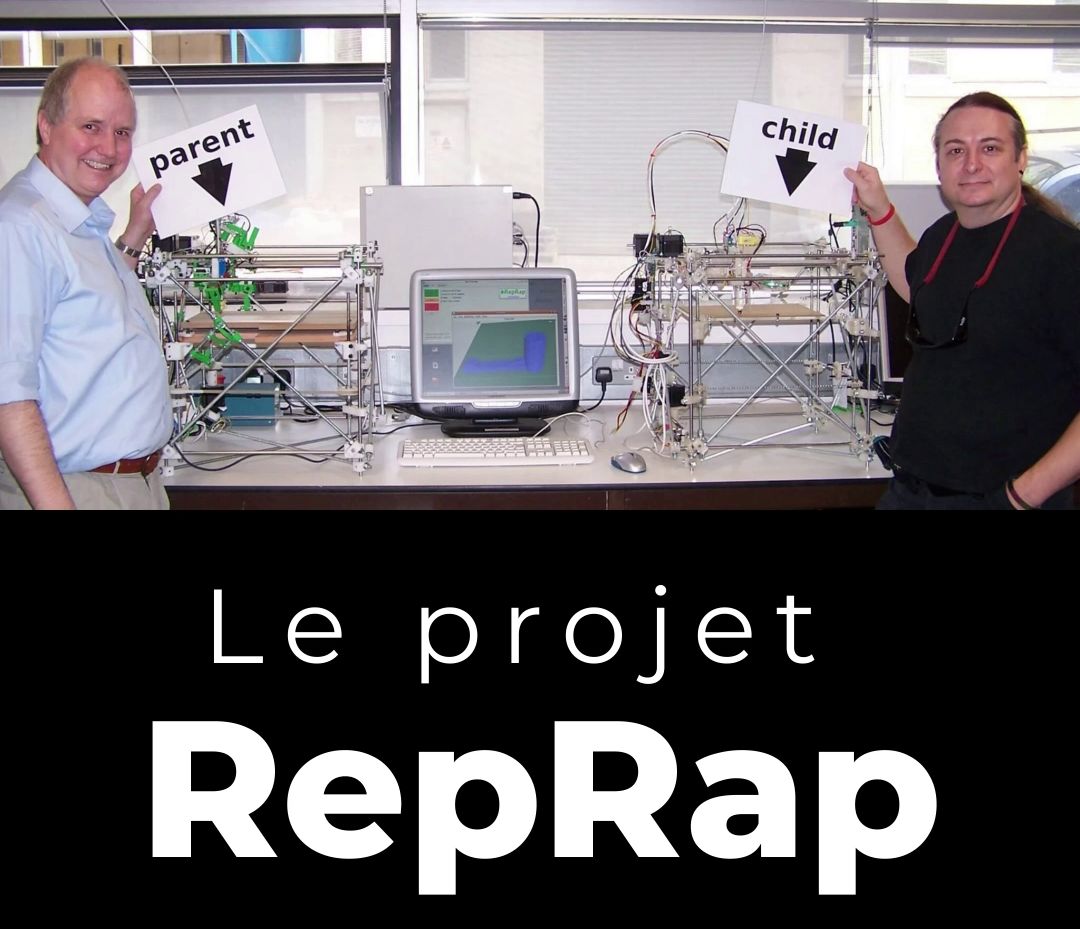
The RepRap project (short for Replicating Rapid Prototyper) was launched in 2005 by Dr Adrian Bowyer at the University of Bath in the United Kingdom. His goal was simple yet bold: create a 3D printer capable of printing the majority of its own plastic components. The idea was that the printer could "replicate" itself by producing the parts needed to build another machine, thereby democratizing manufacturing.
The project was built on fundamental principles:
- Open source: All plans, source code, and software were to be completely free and available without restriction on the Internet.
- Autonomy: The machine had to be able to manufacture its own structural parts, thus reducing costs and dependence on traditional manufacturing methods.
The legacy of a global community
Although a 100% self-replicating model was never fully realized, the project was a resounding success. By releasing the technology, Adrian Bowyer triggered a wave of global innovation. Thousands of engineers, makers, and students joined the project, improving the design, creating new versions, and sharing their knowledge.
From this collaboration emerged several iconic models, including the Mendel and, most importantly, the Prusa i3. The Prusa i3, designed by a RepRap community member, Josef Prusa, became the most copied and improved design in 3D printing history. Its simplicity, robustness, and efficiency served as the foundation for countless desktop printers we see today.
RepRap's legacy manifests itself in two main ways:
- The democratization of 3D printing: The open-source approach enabled hundreds of manufacturers to build upon RepRap designs, creating affordable machines that made the technology accessible to a much wider audience.
- The "Maker" spirit: The project reinforced the idea that complex technologies are not reserved for large corporations. It encouraged knowledge sharing and collaboration, which today lie at the heart of the "maker" movement.
In conclusion, the RepRap project is not simply a chapter in the history of technology—it is the foundation of the personal 3D printing revolution. Without Adrian Bowyer's bold vision and his community's commitment, the market we know today would likely never have emerged.