The Closed Garden Trap: 3D Printing's First Existential Crisis
Born from the RepRap project and the vision of a machine that could reproduce itself, personal 3D printing long embodied technical independence. For over a decade, owning a 3D printer meant mastering every screw, every line of Marlin configuration, and every standard electronic component.
The arrival of a new generation of manufacturers changed the game. By adopting consumer tech methods (controlling everything from hardware to software, with effortless onboarding and a closed ecosystem in Apple's style), these makers pushed performance to unprecedented levels. But this leap forward came with a quiet trade-off: less independence for more convenience. Today, this "closed garden" model raises real questions about the future of decentralized manufacturing.
The Illusion of Ownership: When the Cloud Holds the Keys
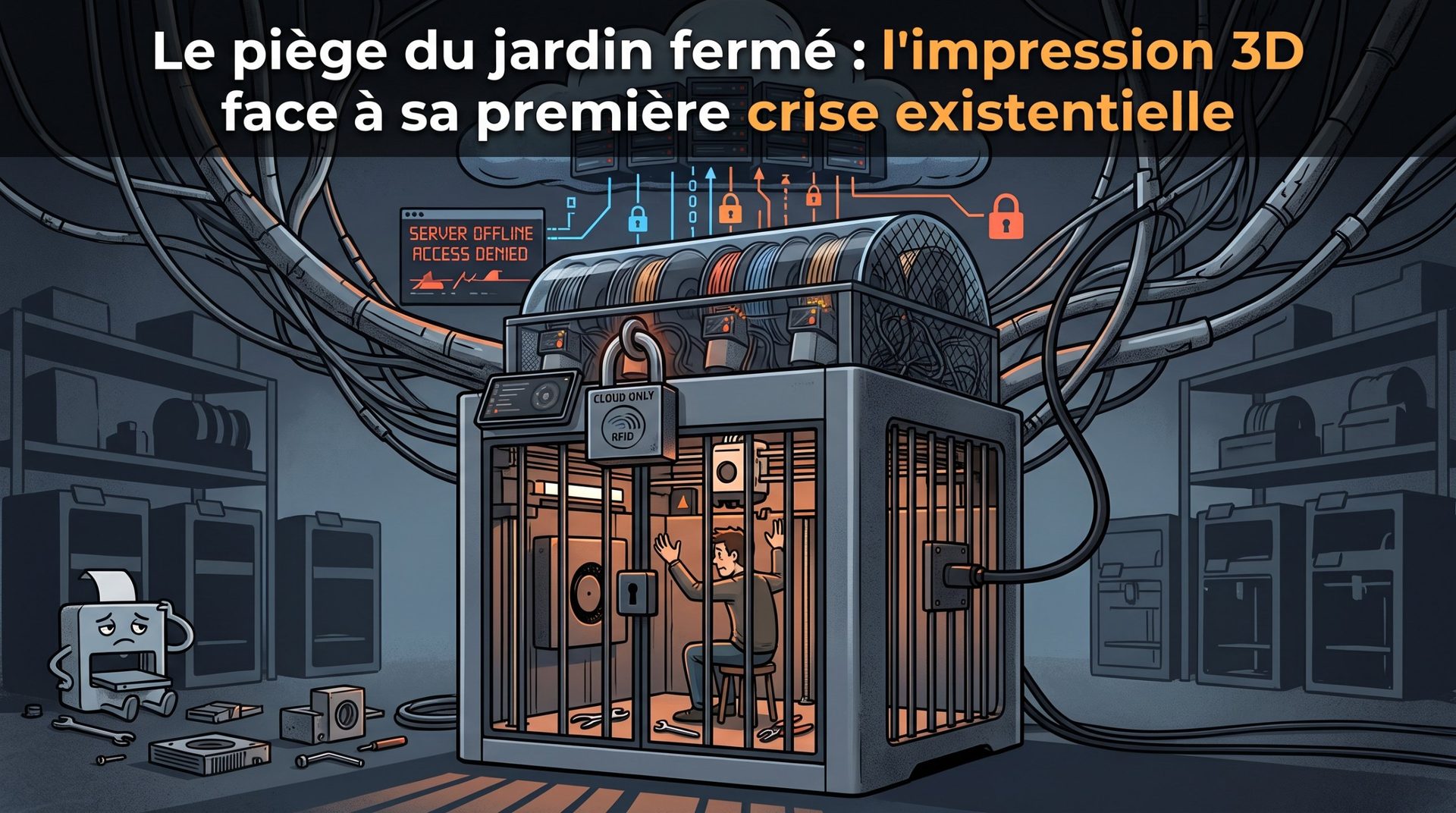
The first lock is invisible, but it's the most constraining. In the name of synchronization and camera monitoring, prints increasingly flow through the manufacturer's servers. Ownership of the tool then resembles mere usage rights:
- Dependency on outages: server maintenance or a network incident can be enough to block file uploads to an entire printer fleet, interrupting commercial activity instantly.
- Cloud incidents: in August 2023, during a Bambu Lab server outage, printers restarted old print jobs without their owners' permission, sometimes in the middle of the night. A harsh reminder: the user is no longer the only one deciding when the machine heats up and moves.
- Local network lockdown: facing the success of third-party tools (OctoPrint, open dashboards, home automation), some recent firmwares restrict machine access much more strictly. At Bambu Lab, the early 2025 update made control by third-party software require authorization; a developer mode still allows local work, but at the cost of losing cloud features.
Captive Hardware: From Repairable Tool to Disposable Module
The second lock directly affects repairs. In the open-source world, a V6 nozzle, a 24V heating cartridge, or a leveling sensor can be replaced for a few dollars from dozens of competing manufacturers. Proprietary ecosystems often follow the opposite logic:
- All-in-one assemblies: print heads often combine nozzle, heater block, and temperature sensor in a single proprietary module. You don't repair a part anymore: you replace the entire module.
- Consumables control: RFID chips on filament spools make it easy to auto-load the right settings, which is convenient. But if one day a slicer restricted certain functions for unrecognized "original" spools, we'd fall back into the desktop printer cartridge model. It's not happening today, but the technical door exists.
- End of support: the day a manufacturer stops producing parts for an old machine generation, the lack of standard alternatives can turn a working printer into e-waste.
Micro-Factories Trapped by Their Own Profitability
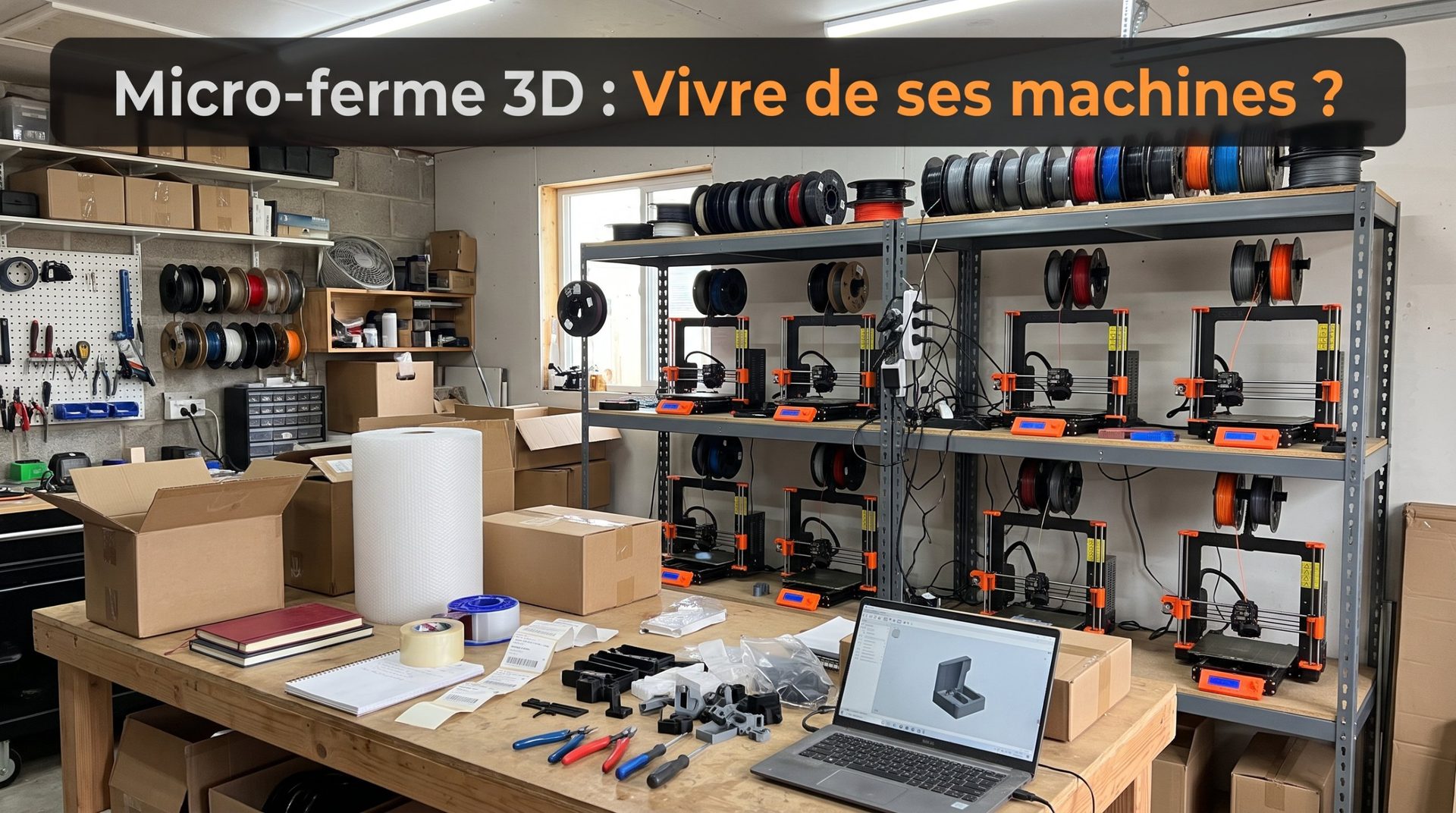
This shift hits hard on an increasingly essential player: the 3D printing micro-factory. Seduced by speed, low failure rates, and ease of use, many craftspeople, entrepreneurs, and engineering firms have built their workflows around these closed ecosystems. In the short term, the math is unbeatable: the machine pays for itself quickly and daily maintenance is minimal. Over time, a weakness emerges:
| Risk | Open-Source Model (Voron, Prusa, Rat Rig) | Closed Proprietary Model |
|---|---|---|
| Software | Klipper or Marlin—locally modifiable, for life | Depends on manufacturer servers and firmware updates |
| Spare Parts | Dozens of independent suppliers | Manufacturer's catalog or authorized resellers only |
| Privacy | 100% offline operation possible on isolated networks | Telemetry and files routed through third-party servers (except local mode) |
| If the Manufacturer Disappears | Plans, code, and schematics remain public | Cloud features lost, updates stop, parts become unavailable |
A micro-factory that controls neither its software nor its spare parts is no longer truly an autonomous workshop: it depends entirely on a single supplier's strategic choices.
The Counteroffensive: Klipper and "Local Mode"
Facing this risk, the community is organizing—and not just on principle. Alternative firmwares (like X1Plus for certain Bambu Lab printers), adapters to mount standard nozzles on proprietary heads, contractual clauses demanded by industrial users: resistance takes concrete form. More and more makers are switching to Klipper, which offers speed and freedom, or to manufacturers like Prusa that bet on open source and repairability.
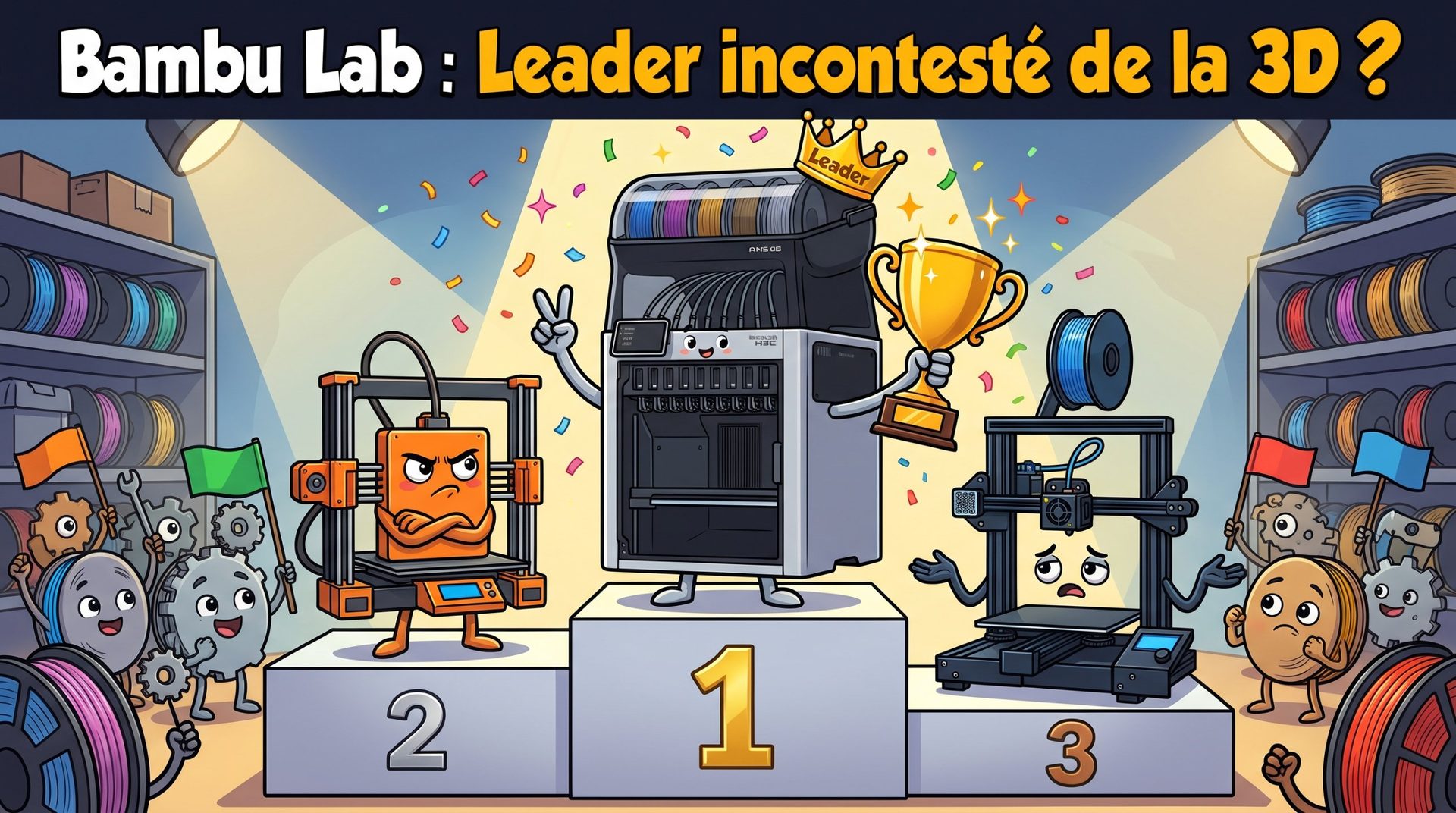
3D printing shouldn't come down to a choice between time-consuming tinkering and total dependence on a closed ecosystem. Truly resilient production demands that simplicity not come at the cost of losing control of your tool: a machine must remain usable, repairable, and locally controllable, even if the company that designed it disappeared tomorrow. To weigh these risks against the real benefits of "turnkey" machines, read our related analysis Is Bambu Lab the undisputed leader?
What about you? Could your workshop keep running if your manufacturer's cloud went down tomorrow? Do you print in local mode, or do you trust the cloud? Let us know in the comments!