
How Humanoid Robots Will Transform Our Lives in the Next 5 Years
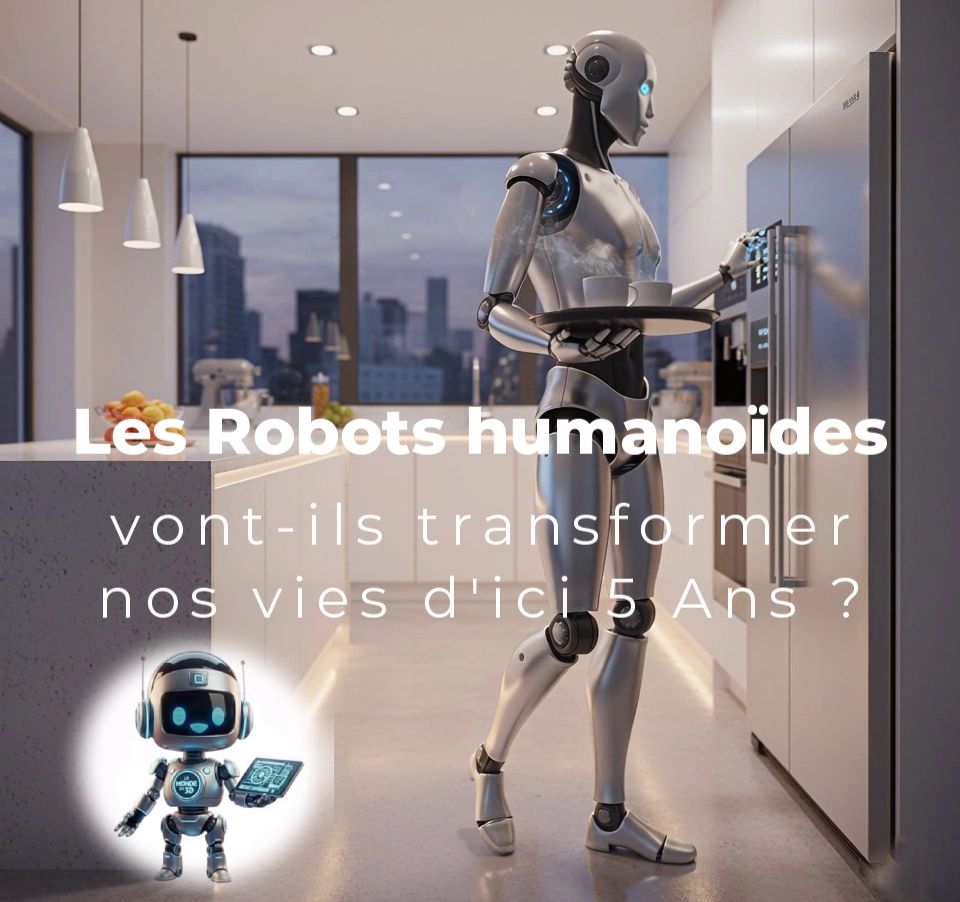
The year 2026 marks a historic turning point: we're no longer in science fiction, but in the phase of mass industrialization. If you're wondering whether humanoid robots will be part of our landscape within 5 years (by 2030-2031), the answer is a nuanced "yes": they'll be omnipresent in industry, but still rare in our homes.
Here's a rundown of what's coming over the next 5 years.

✅ The Explosive Acceleration (2025-2026)
The past two years have seen progress that was thought impossible within a decade.
-
Tesla Optimus Gen 3: Elon Musk is targeting large-scale production by late 2026, with a goal of over one million units. The target price is $20,000, roughly the cost of a small car.
-
Boston Dynamics (Atlas): At CES 2026, the commercial version of Atlas (fully electric) was launched. Unlike the old prototypes, it's now ready for 20-hour workdays in Hyundai factories.
-
Figure 02: This robot has already proven its effectiveness at BMW by handling thousands of parts with millimeter precision, thanks to advanced AI integration (Vision-Language-Action models).
✅ The 5-Year Roadmap (2031 Horizon)
| Period | What Will Happen |
| 2026 - 2027 | Factory Invasion: Massive deployment in automotive and logistics (Tesla, BMW, Amazon). Robots perform "3D" tasks (Dirty, Dull, Dangerous). |
| 2028 - 2029 | Professional Services: Appearance in hospitals (internal logistics), airports, and security. Component costs (actuators, batteries) plummet dramatically. |
| 2030 - 2031 | First Steps at Home: Arrival of first high-end domestic assistants for affluent consumers (Early adopters). They won't yet prepare gourmet meals, but will be able to tidy, clean, and carry loads. |
✅ Why Now? (The AI "Brain")
The major shift isn't mechanical, but software-based. The arrival of generative AI applied to robotics allows robots to learn by observation or simulation (Sim2Real).
A robot like the Unitree G1 (priced from $16,000) can now learn complex movements, like kung-fu or folding laundry, in a few hours of intense computing, whereas it used to take years of manual programming.
✅ Remaining Challenges
Not everything is settled for full adoption within 5 years:
-
Energy Independence: Most current models run for 2 to 4 hours before they need to return to their charging station.
-
Fine Dexterity: Handling soft or fragile objects (like eggs or fabrics) remains a huge challenge for low-cost robotic hands.
-
Social Acceptance: Moving from an industrial machine to a domestic companion requires flawless safety and ethics.
The countdown has begun: between Tesla's factories and Boston Dynamics' labs, the humanoid robot is no longer an engineer's fantasy but an industrial product being rolled out. While the technical feat seems secured, the real question is no longer whether these machines will be capable of walking among us in 5 years, but whether we're ready to give them a place in our daily lives.
And you—facing this revolution, are you ready to hand over the keys to your home to a metal assistant, or are you afraid that humans might end up becoming the machine's helper?


