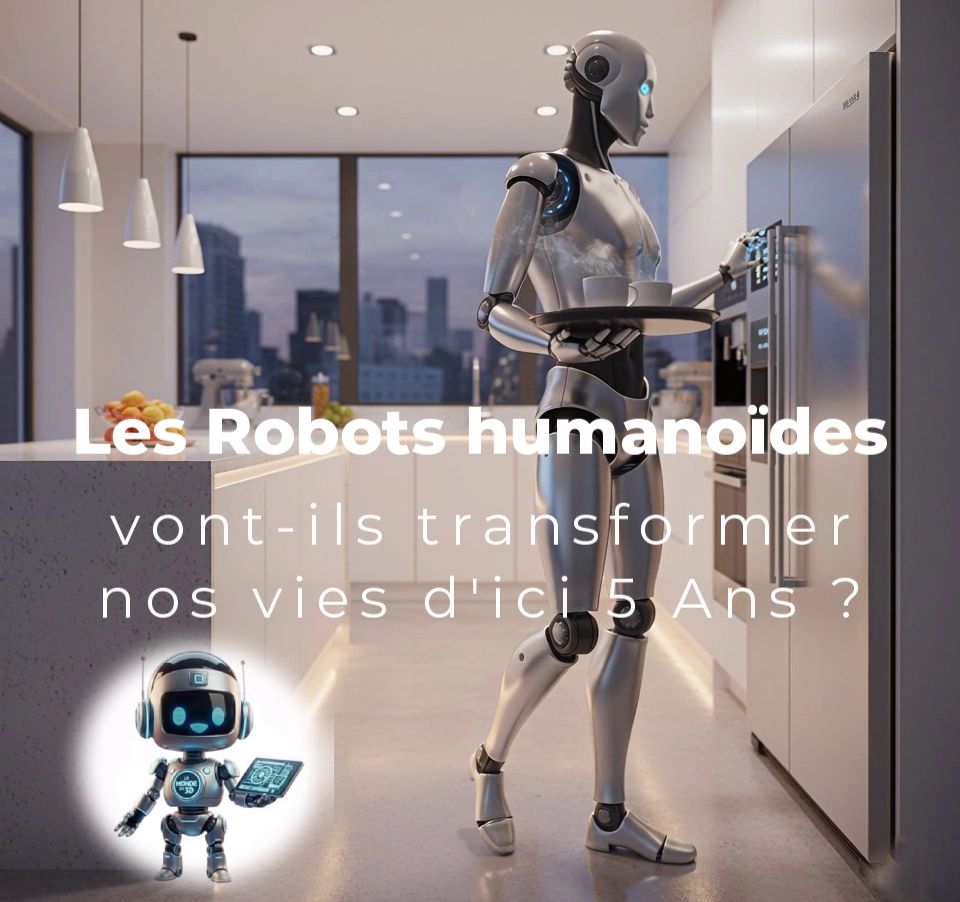
PNDbotics: The Revolution of Biomimetic Movement with the Adam Robot

PNDbotics is a Chinese startup (based in Beijing) that has quickly established itself on the international robotics scene, particularly at CES 2026 and WAIC 2025. The company stands out for its commitment to creating humanoid robots capable of moving with extreme fluidity and "biomimetic" motion (inspired by nature).
Here's an overview of their technology and flagship models:

✅ The Adam Robot: The Biomimetic Flagship
Adam is PNDbotics' main model. Its standout feature is its ability to reproduce an almost natural human gait, far from the jerky movements typical of traditional robotics.
-
Biomimetic Pelvis: This is Adam's major innovation. It features a unique hip structure that enables a hip motion and balance management very close to that of humans.
-
PSA Actuators (PND Smart Actuator): The robot uses proprietary "quasi-direct drive" actuators. They integrate the motor, reducer, and controller into a single modular unit, delivering high torque (up to 340-360 Nm) while being capable of detecting subtle forces for safe human interaction.
-
Freedom of Movement: It has between 41 and 44 degrees of freedom (including fingers), allowing it to perform complex tasks like playing musical instruments (it was spotted playing keytar at festivals).
✅ Adam-U: The Research Platform
Presented more recently, the Adam-U is a specialized version for data collection and AI training.
-
Purpose: To serve as a foundation for imitation learning and reinforcement learning.
-
Precision Hands: It's equipped with 6-degree-of-freedom hands (developed with Inspire Robots) enabling fine manipulation of objects.
-
Price: A packaged version for researchers was announced at around €40,000.
✅ Technical Specifications (Adam Series)
| Specification | Details (Standard/SP Model) |
| Height / Weight | 1.67 m / 62 kg |
| Max Speed | Approximately 6 km/h |
| Brain (Computing) | Intel i7 (Motor Control) + NVIDIA Jetson Orin NX (AI Perception) |
| Battery Life | Approximately 2 hours per charge |
| Learning | Deep Reinforcement Learning (DRL) via NVIDIA Isaac Gym |
✅ Why is PNDbotics Getting Attention?
-
Sim2Real Approach: PNDbotics excels at transferring virtual learning to reality. Their robots train in accelerated simulations thousands of times before executing movements in the physical world with high fidelity.
-
Accessibility and Modularity: Unlike some closed lab prototypes, PNDbotics offers an open-source SDK and modular components, aiming to become a standard for "Embodied AI" developers.
-
Pop Culture: The company isn't shy about "humanizing" its robots by dressing them up (hoodies, caps) and staging them in artistic contexts to demonstrate their agility.
💡 Conclusion: Adam, the New Standard of Biomimetics?
PNDbotics' arrival marks a turning point in the race for humanoids. While players like Boston Dynamics or Tesla often dominate headlines, the Chinese startup is carving a unique path by betting on the elegance of movement rather than brute force.
✅ PNDbotics vs Industry Giants
| Robot | Developer | Strength | Philosophy |
| Adam | PNDbotics | Biomimetic Gait | Reproducing human fluidity through an articulated pelvis. |
| Optimus Gen 2 | Tesla | Integration & Scale | Designed for mass production and total autonomy. |
| Electric Atlas | Boston Dynamics | Power & Agility | Capable of non-human movements (360° rotations) and parkour. |
| Figure 02 | Figure AI | Intelligence (VLM) | Specialized in voice interaction and complex factory tasks. |
| Unitree G1 | Unitree | Price & Portability | A compact, foldable robot accessible for under $16,000. |
While Boston Dynamics' Atlas impresses with its sometimes "superhuman" athletic abilities and Tesla's Optimus bets on the industrial ecosystem, PNDbotics' Adam positions itself as the most "natural" robot.
By combining a revolutionary hip architecture and reinforcement learning (Sim2Real), PNDbotics proves that for acceptance in our daily lives, a robot must not only be efficient: it must also move harmoniously. In 2026, the question is no longer whether robots will walk among us, but which one will best imitate us to become indispensable.