What Budget Do You Need to Get Started in 3D Printing?

3D printing is no longer that futuristic technology reserved for engineers or cutting-edge industrial pros. Over the past few years, it has become mainstream, finding its way into our living rooms and home workshops. Whether you want to repair an everyday object, create collectible figurines, or prototype your own inventions, budget is often the first hurdle to overcome.
Yet evaluating the real cost to get started can be tricky: beyond the price on the printer box, you need to factor in materials, essential tools, and operating costs. So is it possible to dive in on a tight budget? What's the "sweet spot" for a frustration-free experience? This guide breaks down every expense category so you can accurately estimate your investment, from your first kilo of plastic to your electricity bill.

✅ The Printer: Your Main Investment
This is your biggest expense. In 2025, the market breaks down into three main categories:
-
Entry-level (€180 - €250): At this price point, you get compact, capable machines like the Bambu Lab A1 Mini or the Ender 3 V3 series. Perfect for discovering 3D printing without emptying your savings account.
-
Mid-range "hassle-free" (€250 - €350): Here you're paying for speed and ease of use. Models like the Bambu Lab A1 or the latest Anycubic Kobra offer fully automatic leveling. This is the best bang for your buck if you don't want to spend hours tweaking settings.
-
High-end (€400 and up): This budget covers enclosed printers (with heated chambers) like the Bambu Lab P1S or P2S or the Prusa MK4. They let you print advanced materials (ABS, Nylon) and deliver rock-solid reliability.
✅ Materials: Bringing Your Creations to Life
Don't rely on the small sample often included with the printer. For FDM (filament), a 1 kg spool of PLA runs €10 to €25. To get going properly, budget for two or three basic colors (black, white, gray, or a bright color)—around €30 to €50 total.
If you go for Resin, a liter costs €10 to €30. Keep in mind that resin gets used up faster than you'd think because of the support structures needed for printing.
✅ Tools and Maintenance
This is often where hidden costs creep in:
-
Tools (€20 - €30): If not included, you'll need precision cutters, a scraper, and possibly calipers to measure your prints.
-
Post-processing (Resin-specific): This is a crucial cost. Between isopropyl alcohol for cleaning and a Wash & Cure machine, add easily €120 to €150 to your initial bill.
-
Safety (€20): Especially for resin (nitrile gloves, cartridge respirators, safety glasses).
✅ Operating Costs
Over time, 3D printing stays economical:
-
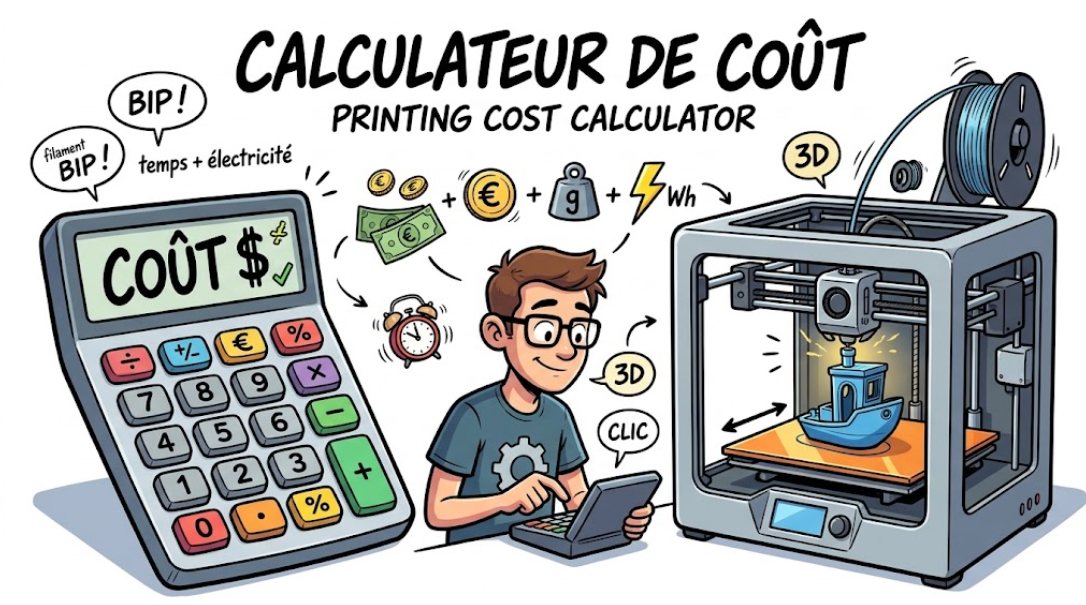
Electricity: A 3D printer uses minimal power (roughly 100 to 300 Watts during heating). This adds up to just a few euros per month on your bill.
-
Maintenance: Budget around €10 to €50 per year to replace nozzles (the part that melts plastic) or build surfaces that wear out over time.
✅ Bottom Line
To get started comfortably with FDM (plastic), a total budget of €300 gets you a solid printer and enough material for two months of printing.
For Resin, budget at least €450 minimum to cover all the cleaning and safety gear you absolutely need.