Bring the Simpsons Characters to Life with 3D Printing
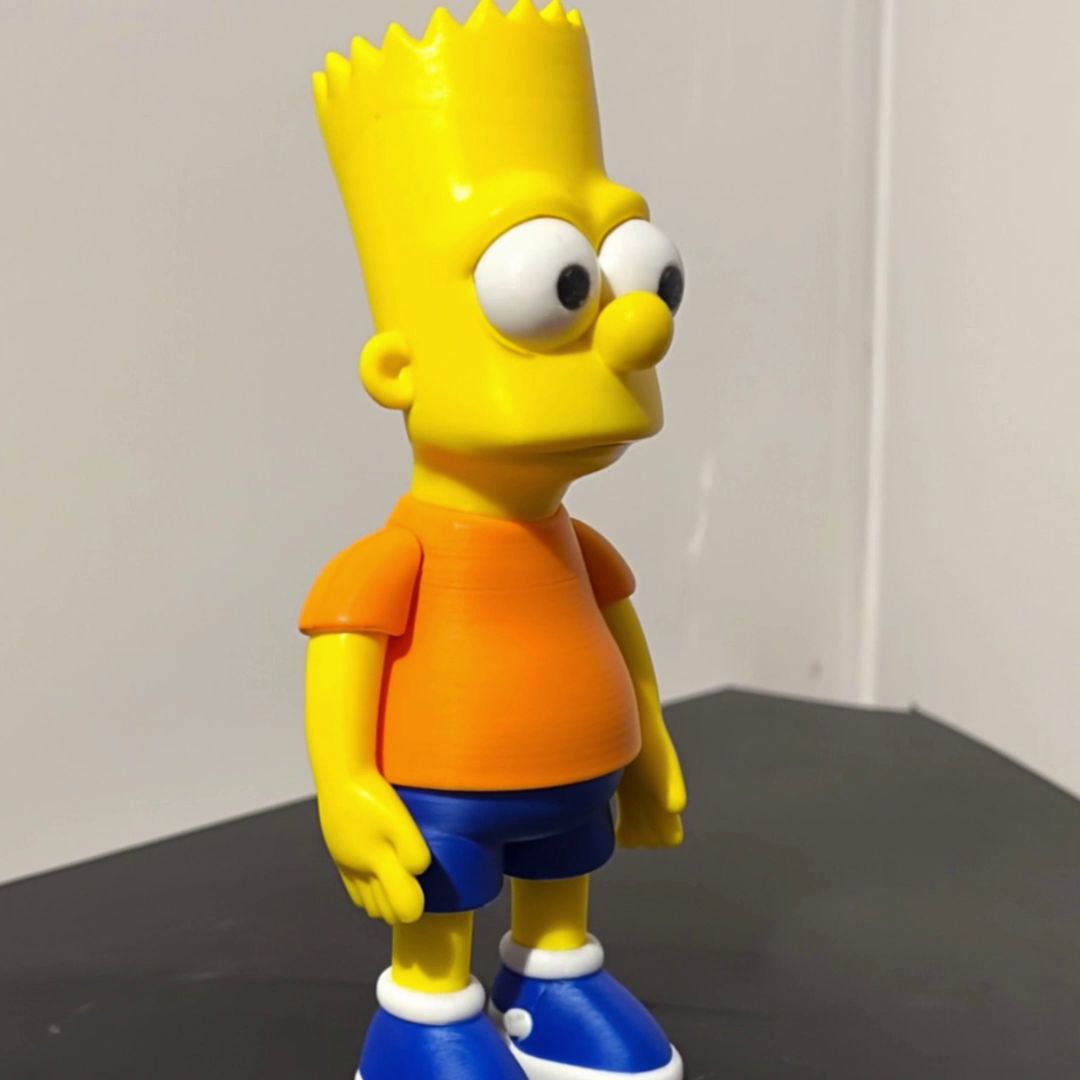
For over 30 years, The Simpsons have been a cornerstone of popular culture, with instantly recognizable yellow characters. For devoted fans, the desire to own a Homer slouching on his couch, Marge with her iconic blue hair, or Bart on his skateboard is strong. 3D printing offers a unique opportunity to bring these Springfield residents to life, enabling customization and accuracy to the animated series that mass-produced products often can't match.

(Image Source and 3D File: Dano98 via MakerWorld)
3D Printing Technologies
The choice of printer depends on the level of detail and size you want for your Simpsons figurines.
A. FDM Printers (Filament)
- Ideal for: Larger figurines (10 cm and above), busts, or dioramas. PLA is an excellent choice for its ease of printing and layer adhesion, producing sturdy parts.
- The Challenge: Layer lines can be an issue. Post-processing (sanding, primer, filler) is often needed to achieve the smooth surface of a collectible figurine.
- The Advantage: Using a multi-material FDM printer (like Bambu Lab's AMS systems) lets you print directly in multiple colors (yellow for skin, blue for Marge's hair, etc.), drastically cutting painting time.
B. Resin Printers (SLA/DLP)
- Ideal for: Highly detailed figurines, small-scale models where every facial expression matters. Resin offers exceptional resolution and very smooth surfaces.
- The Challenge: Resin is more fragile and requires more rigorous post-processing (IPA washing and UV curing). Material costs are also higher.
Modeling and 3D Files
The Simpsons fan community is very active in creating 3D models:
- Free Platforms: Sites like Thingiverse, Printables, Makerworld... are packed with free models of Homer, Marge, Bart, Lisa, and Maggie, often in iconic poses or parody versions.
- Premium, High-Quality Models: For models with exceptional accuracy and resolution, artists offer paid files on various platforms. These models are often optimized for 3D printing and may include "separated" versions for painting.
- Personal Modeling: With software like Blender or Nomad Sculpt on a tablet, fans can sculpt their own versions of the characters or even create entire scenes from the show.
Painting and Finishing: The Final Touch
Painting is essential to bring your 3D-printed Simpsons characters to life.
- Preparation: Apply light gray or white primer to even out the surface and help paint adhere.
- Bright Colors: Use acrylic model paints in the iconic Simpsons shades (yellow, blue, white, red, black). Apply thin, even coats.
- Black Outlines: For an authentic cartoon look, use a fine-tipped acrylic marker or very fine brush in black to outline the eyes, clothes, and shapes, recreating the "ligne claire" effect of the original artwork.
- Protective Varnish: A matte or satin varnish will protect the paint and give the figurine a uniform finish.
Thanks to 3D printing, Simpsons fans can now turn their desks and shelves into true mini-Springfields, populated with custom figurines full of the irreverent joy of television's most famous family.