AI and 3D Modeling: The Creative Alliance of the Future

Updated November 12, 2026
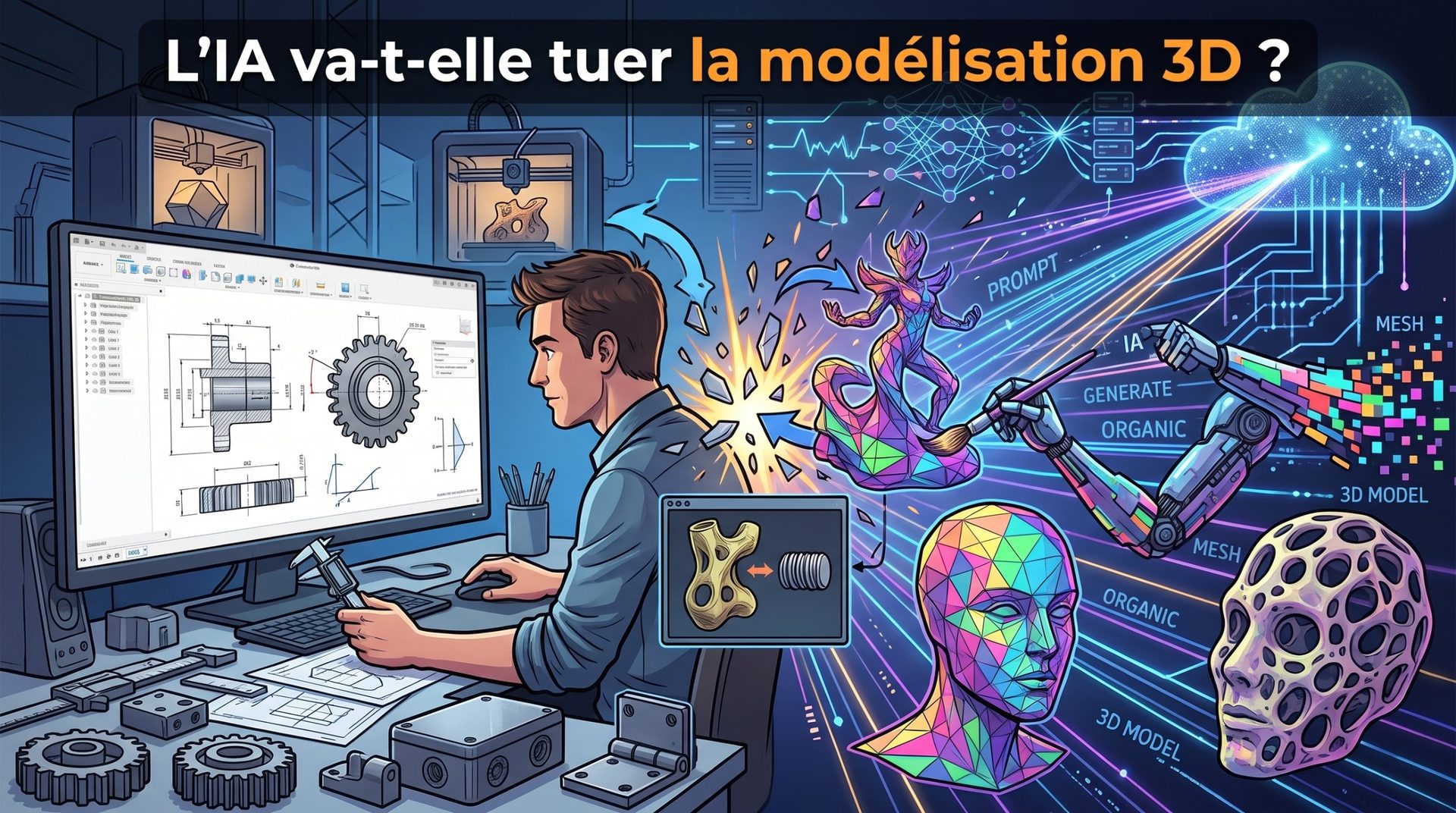
3D modeling has long been seen as a technical field requiring years of practice to master complex software. But the rise of artificial intelligence (AI) is transforming this sector. Far from replacing designers, AI is establishing itself as a powerful tool that automates complex tasks, optimizes processes, and pushes the boundaries of creativity.
AI-Generated Models: From Idea to Form

One of the most spectacular applications of AI is its ability to create 3D models from simple data.
- Text to 3D: Generative AI models can transform a simple text description, like "a futuristic wooden chair with curved legs," into a detailed, textured 3D model. Current tools do this in under a minute, drastically speeding up the conceptualization phase.
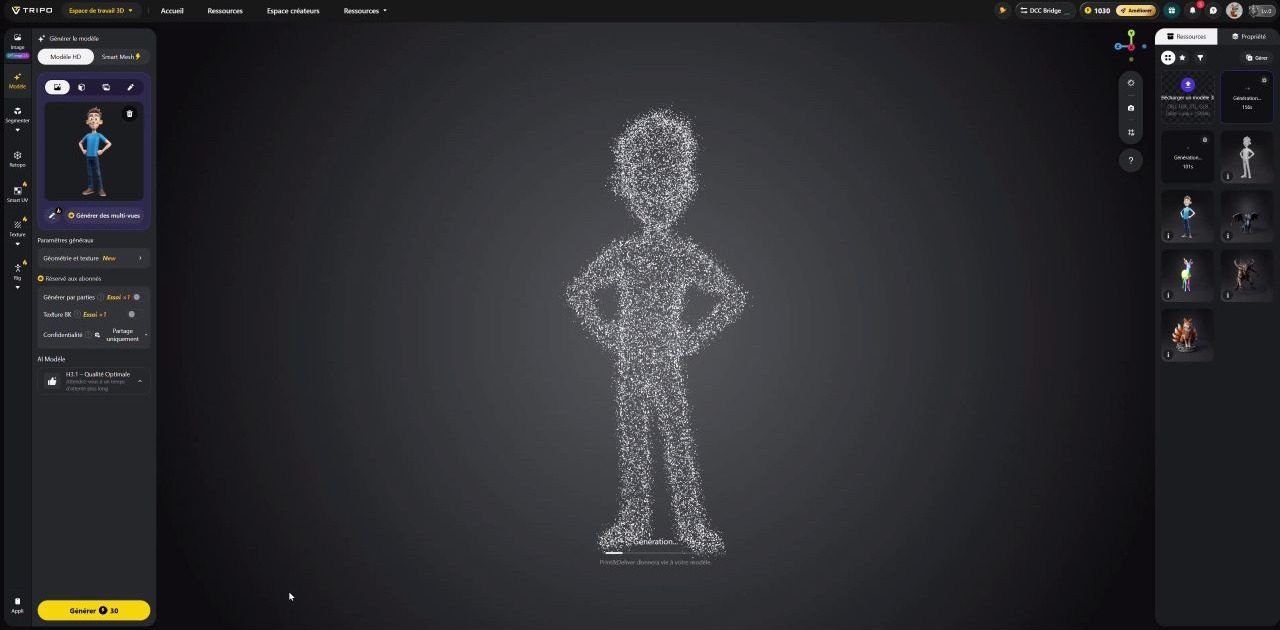
- 2D to 3D: AI can also analyze a 2D image (a photo, a sketch) and extract depth from it to generate a 3D model. This is a great asset for artists or architects who can digitize their sketches and transform them into virtual objects.
This generation capability makes 3D modeling more accessible to non-experts, and allows designers to focus on artistic direction rather than technical complexity.
Practical Tools for AI-Powered Modeling
Many online tools already integrate AI to help with your projects. They work in the browser, require no expensive hardware, and most offer free credits to try. Here are the ones that matter in 2026:
- Tripo AI: our top pick for 3D printing. It generates clean models from text or photos, exportable as STL or 3MF, with tools to cut the model into pieces or transform it into an articulated figurine.
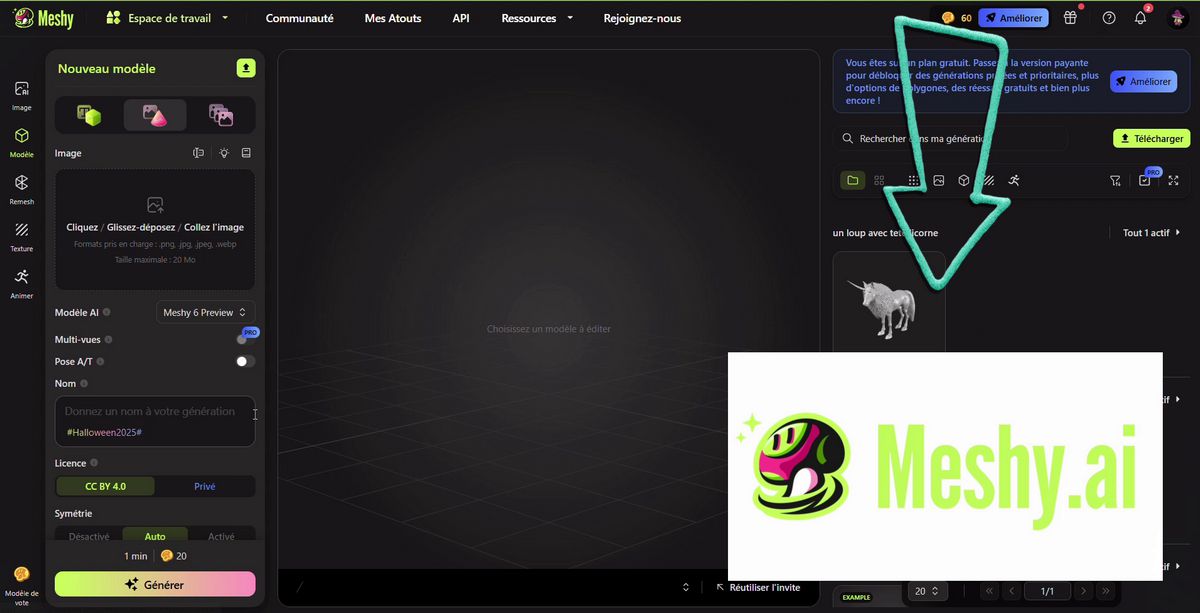
- Meshy: very comprehensive, it creates models from text or images and also generates realistic textures (PBR) for your existing models.
- Hyper3D Rodin: known for fine detail, it focuses mainly on highly realistic models.
- MakerWorld Image to 3D: the tool built into Bambu Lab's platform, transforming an image into a print-ready model without leaving the site.
- CSM AI: specialized in converting images to 3D models, with tools designed for video game creators.
- Kaedim: a professional service for video game studios, where artists verify AI-generated models. Powerful, but mainly for businesses.
Optimization and Process Automation
AI doesn't just create—it also improves existing work. It handles the most tedious tasks to make your workflow more efficient.
- Topology optimization: In engineering, AI can analyze a part's structure and reshape it to be lighter while maintaining strength. This topological optimization reduces material and improves performance, a key advantage for aerospace or automotive industries.
- Mesh cleanup and repair: 3D models, especially those from scanning (3D scanners), often have defects. AI can automatically detect and fix errors, holes, or flipped faces—work that would take hours manually.
- Print support generation: Recent slicers analyze piece geometry to place tree-like supports that are easy to remove and material-efficient. These aren't always true AI, but increasingly intelligent algorithms.
AI as a Collaborator, Not a Replacement
Integrating AI into 3D modeling isn't a threat to human creativity—it's an evolution. AI positions itself as a powerful collaborator that:
- Democratizes creation: It makes modeling accessible to more people, from hobbyists to architects who aren't 3D experts.
- Frees the creator: By automating technical and repetitive tasks, it lets designers focus on artistic aspects and problem-solving.
Its limitations remain clear for technical parts: a generated model has no precise dimensions or assembly clearances. For functional parts, AI provides the form while CAD adds precision.
In conclusion, the alliance of artificial intelligence and 3D modeling is redefining the boundaries of design. It's a partnership between human ingenuity and computing power that will let us create more complex, efficient, and faster objects than ever before.
👉 To test these tools: our 3D modeling software comparison, including AI.