3D Printing Electronic Circuits
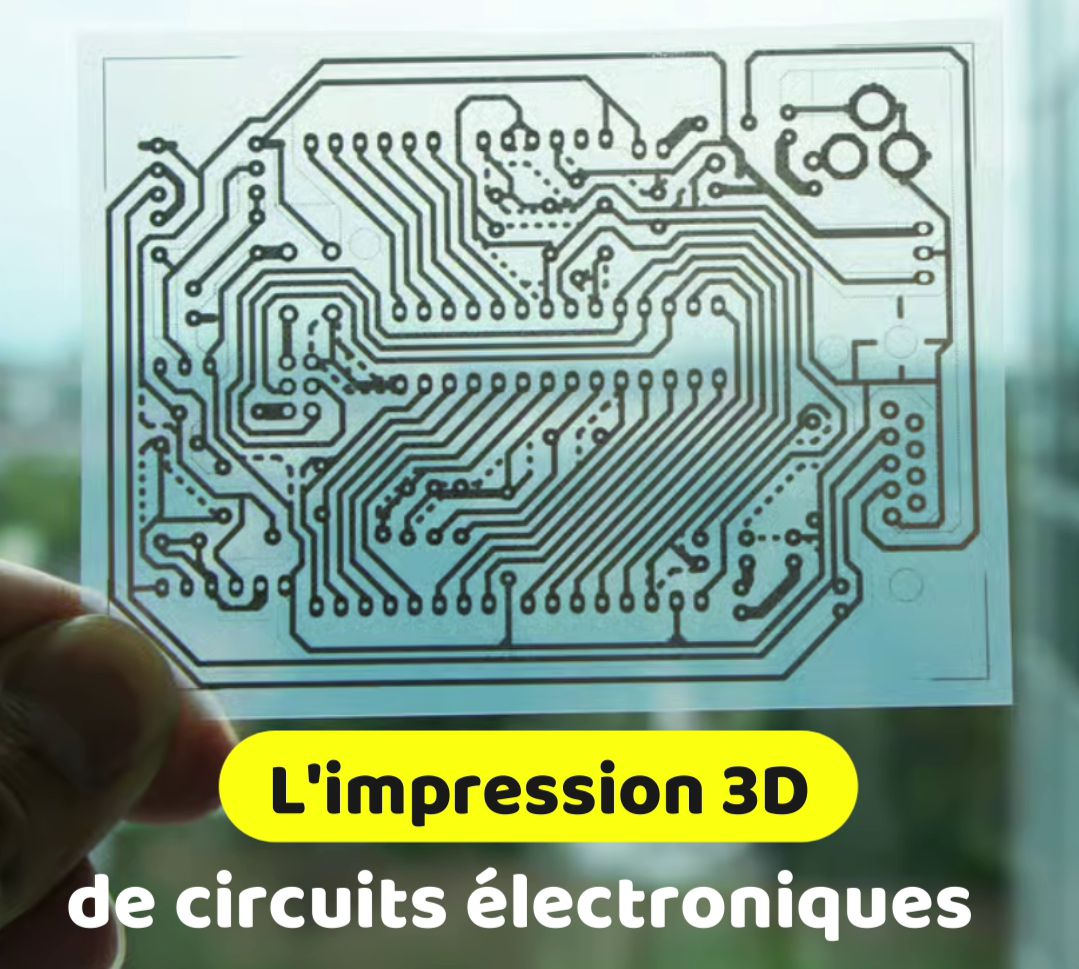
3D printing is often associated with manufacturing plastic objects. But a quiet revolution is underway that could well redefine electronics manufacturing. Beyond traditional printed circuit boards (PCBs), research and industry are turning to 3D printing of electronic circuits, a technology that merges the object and its components into a single process.

How does it work? A multi-layer printing process
Circuit printing isn't done with simple filament. It's a complex process that uses multiple materials to build a fully functional object from start to finish.
- The insulating support: The printer starts by building the base of the object, like a shell or enclosure, using a standard insulating material (plastic, ceramic, etc.).
- Conductive traces: This is where the magic happens. A special extruder deposits conductive ink or paste (silver or copper-based) to form the circuit traces. This layer is often hardened by heat or UV light.
- Component integration: The most advanced printers can even place small passive electronic components (resistors, capacitors) or active components (LEDs, chips) directly during printing.
The result? An object that isn't just a container for electronics, but a fully functional circuit whose traces conform to the complex shapes of your design.
Advantages for innovation and production
This technology opens stunning possibilities for creators, engineers, and companies.
- Integration and miniaturization: Electronics are no longer limited to flat boards. You can now integrate circuits into curved shapes, tool handles, or drone shells, making objects more compact and functional.
- Ultra-fast prototyping: Design time is drastically reduced. An engineer can go from modeling a concept to a working electronic prototype in just hours, without ordering PCBs and waiting for production.
- Extreme customization: The technology is ideal for low-volume production, one-off parts, or specialized sensors. It enables creating custom devices for precise medical, robotic, or industrial applications.
Challenges and the future of the technology
Although the technology is already commercialized by companies like Nano Dimension, it's not yet accessible to the general public. Costs are high and the conductivity of printed inks doesn't yet match traditional copper.
However, progress is rapid. As machines become more affordable and materials more performant, 3D printing of electronics is expected to revolutionize many industries. It will transform how we design, manufacture, and interact with our devices, creating "smart" objects that are more than the sum of their parts.