Japan's First 3D-Printed Railway Station

Japan, renowned for its technological innovation, has reached a historic milestone in infrastructure by unveiling what is presented as the world's first railway station constructed using 3D printing. This project, located in a rural area, is not only a technical feat, but a concrete response to the challenges of modern construction.

A pilot project for a future solution
The small Hatsushima station in the city of Arida (Wakayama prefecture) was selected for this innovation. The project, the result of a collaboration between West Japan Railway Company (JR West) and construction company Serendix Inc., aimed to replace a 75-year-old wooden structure in record time.
The approach is a full-scale test to evaluate 3D printing's effectiveness in addressing labor shortages and an aging population—major challenges in Japan's rural areas. If this experiment proves successful, it could pave the way for the rapid modernization of many other small stations throughout the country.
Construction in record time
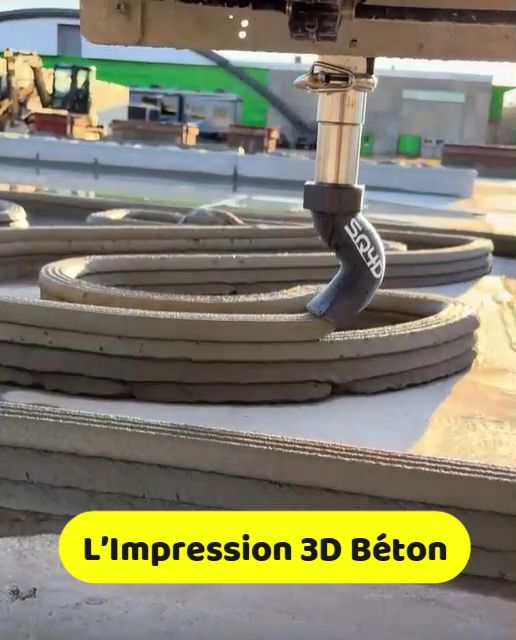
The manufacturing process is the true revolution of this project. The station was not printed on-site, but in several blocks at a factory hundreds of kilometers away. The technology used is a concrete 3D printing system with a robotic arm, which made it possible to fabricate the entire 10-square-meter structure in just seven days.
Once the pieces were printed and reinforced, they were transported to the station. The final assembly was a logistical feat: in less than six hours, between the last train at night and the first in the morning, a crew of workers assembled the blocks on-site using a crane.
A design that blends technology with local culture
The new Hatsushima station is a minimalist and streamlined structure. The designers used 3D printing not only for its speed, but also for its ability to create complex details. The station's walls are decorated with relief patterns representing mandarins and ribbonfish, two local specialties of Arida.
Despite its small size, the structure was designed to be as resilient as a reinforced concrete building—a crucial element in a region prone to earthquakes.
In conclusion, Hatsushima station is far more than a mere architectural curiosity. It represents a milestone in the convergence between civil engineering and additive manufacturing. This Japanese project demonstrates the potential of 3D printing to revolutionize infrastructure construction, offering a faster, more efficient, and more sustainable solution for the needs of our time.