Deeplee: Complete Review of an Affordable Filament Brand on the Rise
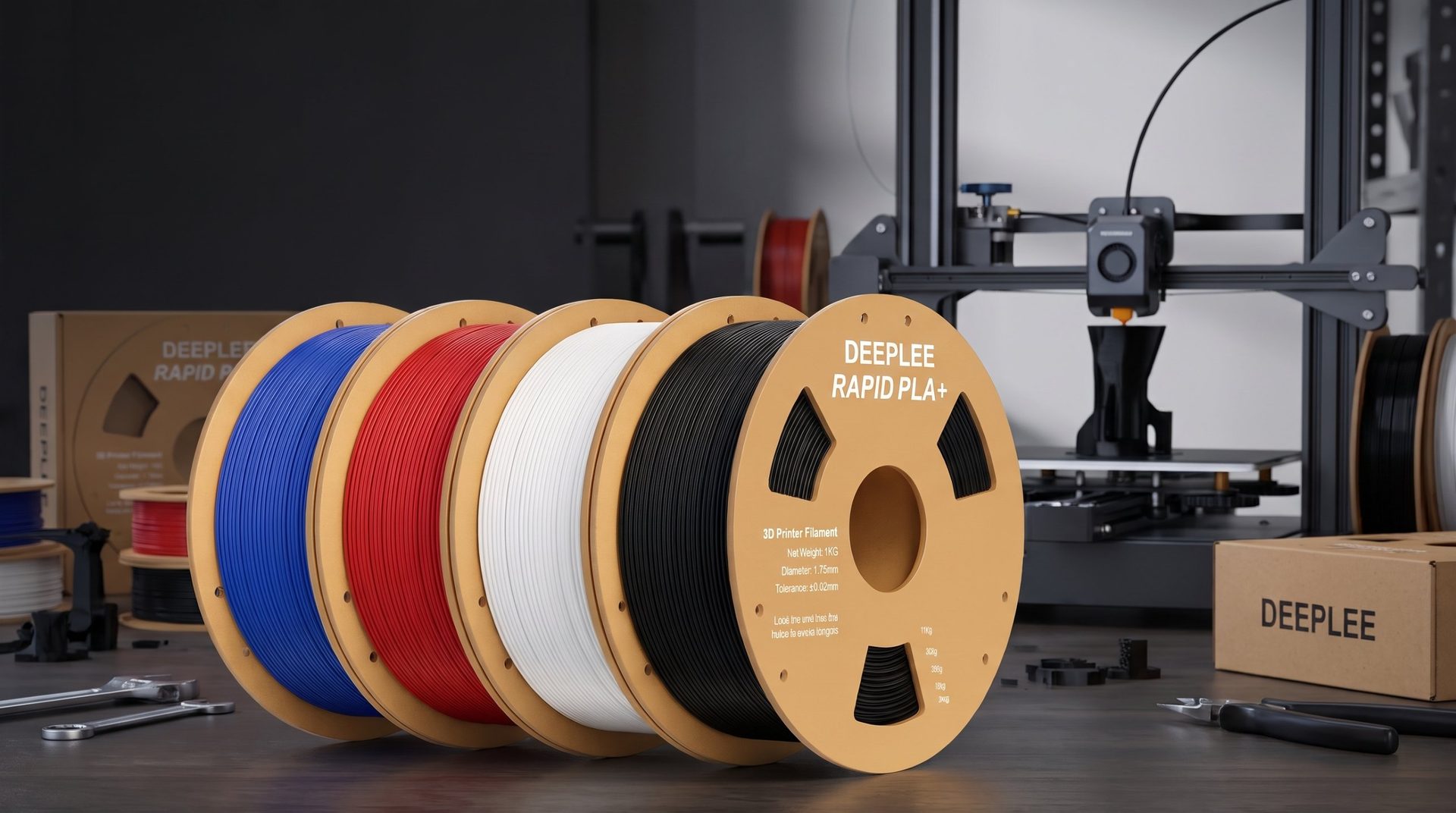
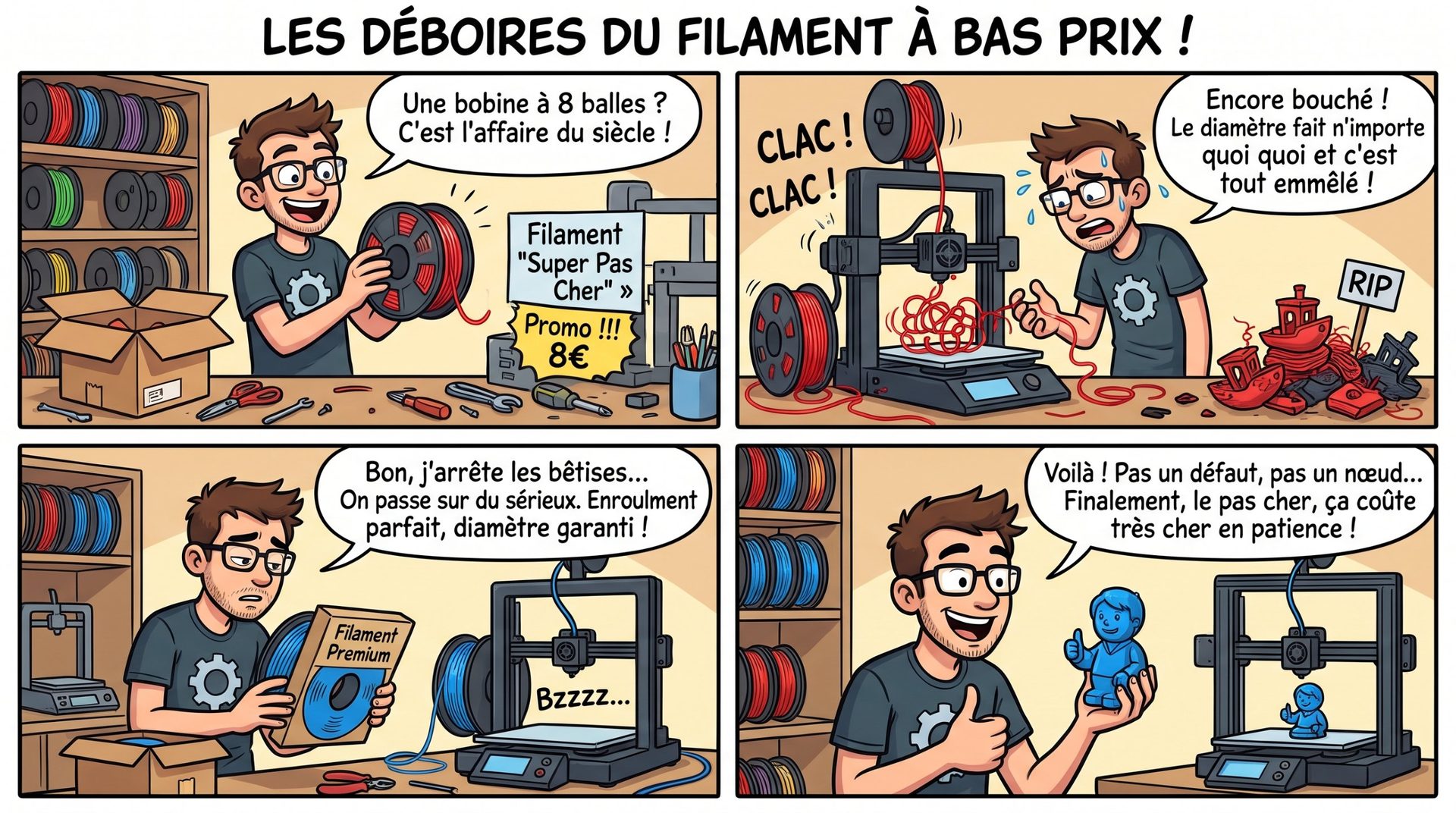
In FDM 3D printing, the search for the ideal filament always balances quality against price per kilogram. While major brands typically charge 18 to 25 € per spool, new players are appearing on marketplaces with very aggressive pricing. Such is the case with Deeplee, a brand rapidly gaining popularity among makers for everyday printing and small production runs.
Available ranges, quality, recommended settings, strengths and limitations: here's what this budget filament really delivers.
1. Who is the Deeplee brand?
Deeplee is a Chinese filament brand, sold primarily on Amazon and through its own online store. It positions itself as an affordable alternative to industry standards (eSUN, Sunlu, Elegoo, Kingroon), with spools sold individually or in packs. Several resellers present it as a brand linked to Elegoo, though there is no official confirmation to date.
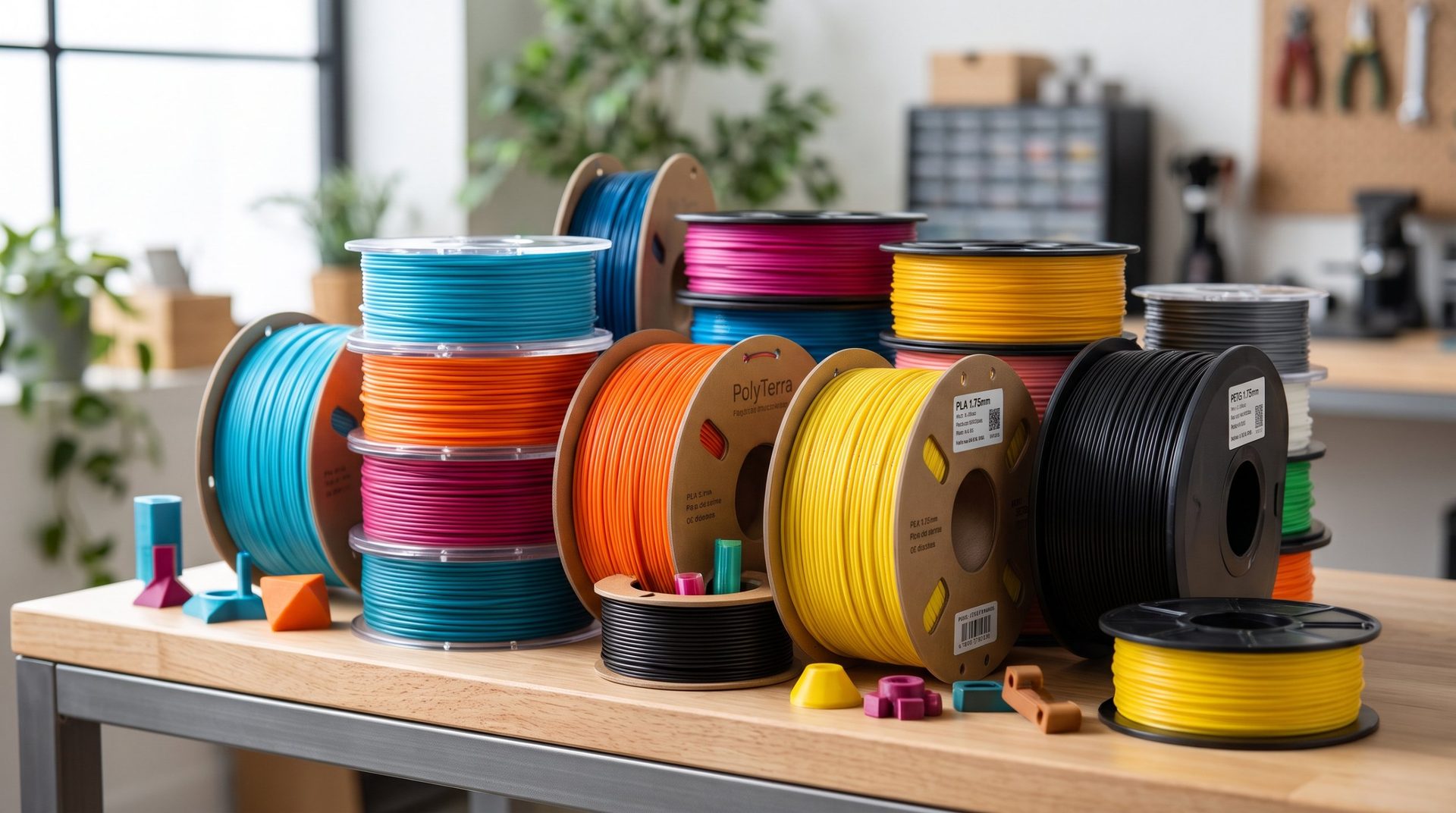
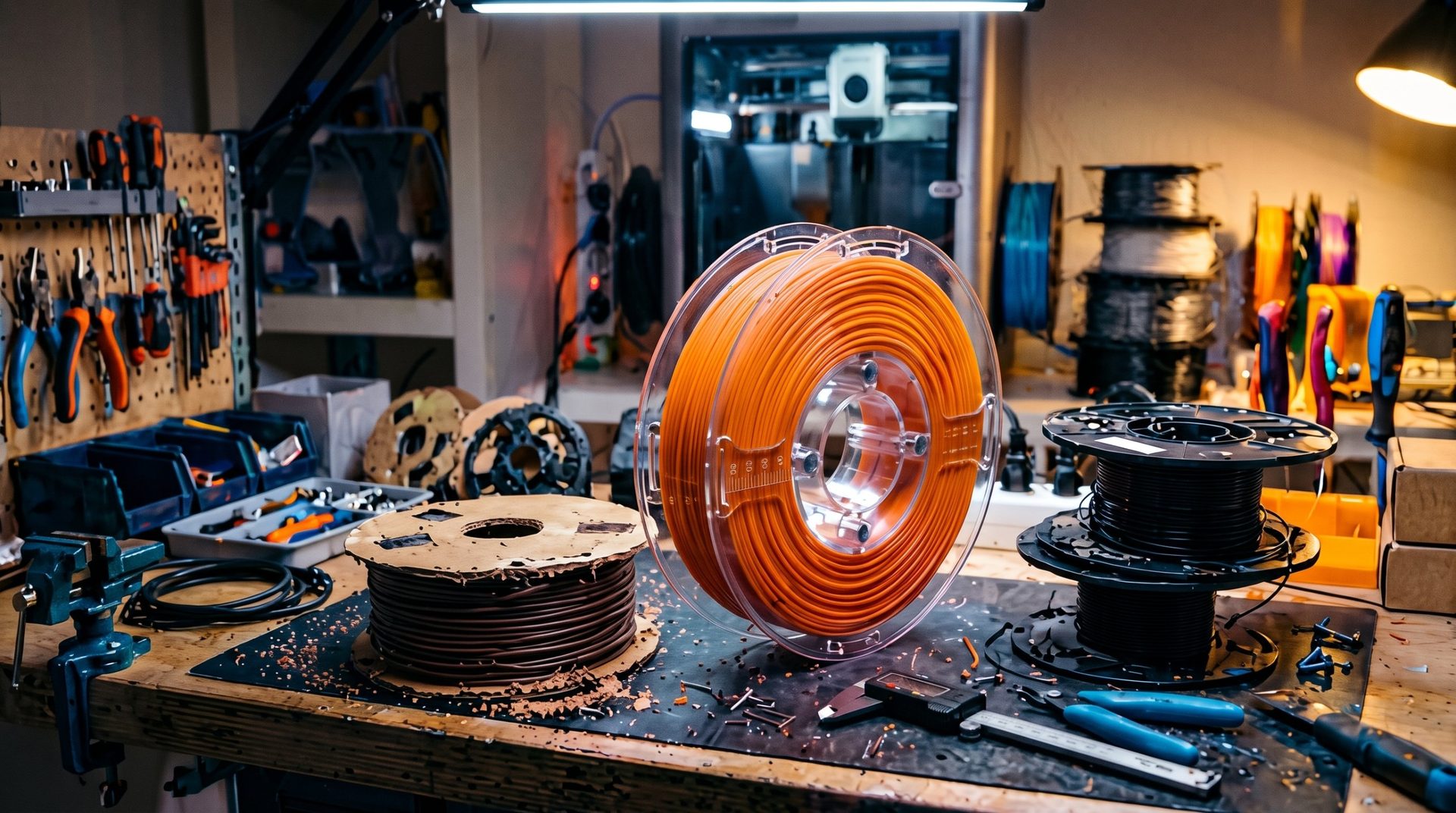
Despite its tight pricing, Deeplee follows current standards: cardboard spools, careful winding, and vacuum-sealed packaging with a desiccant sachet.
2. The Deeplee filament catalog
The brand focuses on the most popular materials in FDM:
- Rapid PLA+ / PLA+: the flagship product. Formulated for high throughput speeds on fast printers (Bambu Lab, Creality K1, Anycubic Kobra 3…), it's more impact-resistant than standard PLA, with good layer adhesion.
- Matte PLA: appreciated for its aesthetic finish, it softens layer lines. Ideal for figurines, decorative objects, and enclosures.
- PETG and Rapid PETG: for more technical parts or outdoor use. It resists heat (around 70 °C) and impact better than PLA.
- Other materials: depending on the retailer, you'll also find silk PLA, phosphorescent or glittery, ABS, ASA, wood-effect PLA, or PVB.
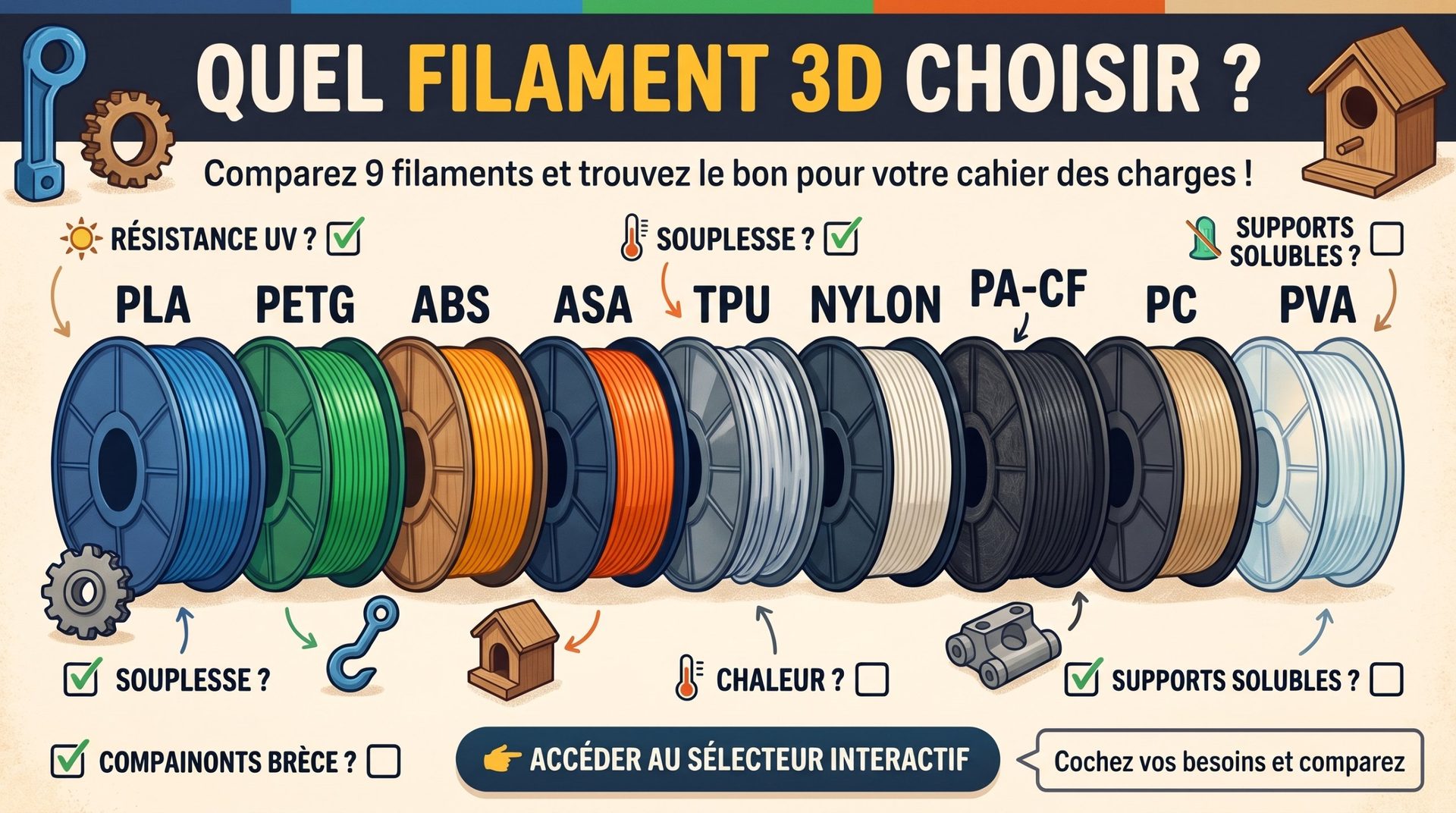
To know which material suits your part, use our selector:
Find the right filament with the selector
3. Recommended printing parameters
| Material | Nozzle | Bed | Speed | Fan |
|---|---|---|---|---|
| PLA / PLA+ | 200 – 220 °C | 50 – 60 °C | 60 to 300 mm/s depending on machine | 100 % |
| Matte PLA | 195 – 215 °C | 50 – 60 °C | 50 to 200 mm/s | 100 % |
| PETG | 230 – 245 °C | 70 – 80 °C | 40 to 150 mm/s | 30 to 50 % |
These values are starting points: always check the temperatures indicated on the spool. In Bambu Studio, OrcaSlicer, or PrusaSlicer, the "Generic PLA" profile usually works well. To get the most from Rapid PLA+, set the maximum volumetric speed (Max Volumetric Speed) around 16 to 20 mm³/s, then adjust with a flow test to avoid under-extrusion at high speed.
4. Strengths and limitations
The strengths
- Quality-to-price ratio: often significantly cheaper than major brands, especially in packs or on sale. This can dramatically reduce the cost of prototypes and large parts.
- Consistent diameter: 1.75 mm with a stated tolerance of ±0.02 mm, which limits clogging and extrusion variations.
- Careful packaging: cardboard spool that's easier to recycle and well-sealed sachet.
- Compatible with AMS and CFS: spools fit multicolor systems. For cardboard spools, a printed adapter ring is recommended to prevent friction dust (see our article on cardboard spools and the AMS).
Limitations to know
- Smaller color range: fewer advanced special effects (bicolor silk, complex gradients) than specialty brands.
- Moisture sensitive: like many budget filaments, an open spool after several weeks benefits from drying 4 to 6 hours around 45-50 °C to eliminate stringing.
- Consistency between batches: with budget brands, color and behavior can vary slightly between orders. For a series of identical parts, buy spools at the same time.
Should you go for Deeplee?
For utility parts, prototyping, workshop organizers, and large prints, Deeplee filament is a particularly cost-effective choice. It doesn't have the reputation of Bambu Lab or Polymaker, but it does the job very well every day. For demanding technical parts or highly aesthetic results, a premium brand remains a safe bet: compare with our ranking of the best filament brands and our analysis of budget entry-level filaments.