3D Printing News Roundup

From maker workshops to the flight deck of the Charles de Gaulle, additive manufacturing is no longer limited to prototyping—it's taking center stage across all critical applications. Next-generation hotends capable of withstanding extreme temperatures, metal replacement parts manufactured at sea, and aerodynamic textiles engineered for Olympic gold, recent developments showcase the technology's remarkable surge in power. Here's an overview of the most significant advances.
✅ Desktop Hardware & Machines
-
High-temperature nozzle from Prusa: Introduction of the "Prusa HT" hotend for the Core One, capable of reaching up to 400 °C. This upgrade unlocks direct access to advanced technical polymers (PA-CF, PC, PEKK) without machine swaps.
-
Fabbrix Elemento TC5: Unveiling of an industrial-grade toolchanger equipped with five independent print heads and a build volume over one meter wide, handling both 1.75 mm and 2.85 mm filaments.
-
New Technical Filaments: Bambu Lab has launched its PETG Matte filament, designed to combine the silky, non-reflective finish of matte PLA with the mechanical, chemical, and thermal strength of PETG.
✅ Sports, Defense & Cutting-Edge Applications
-
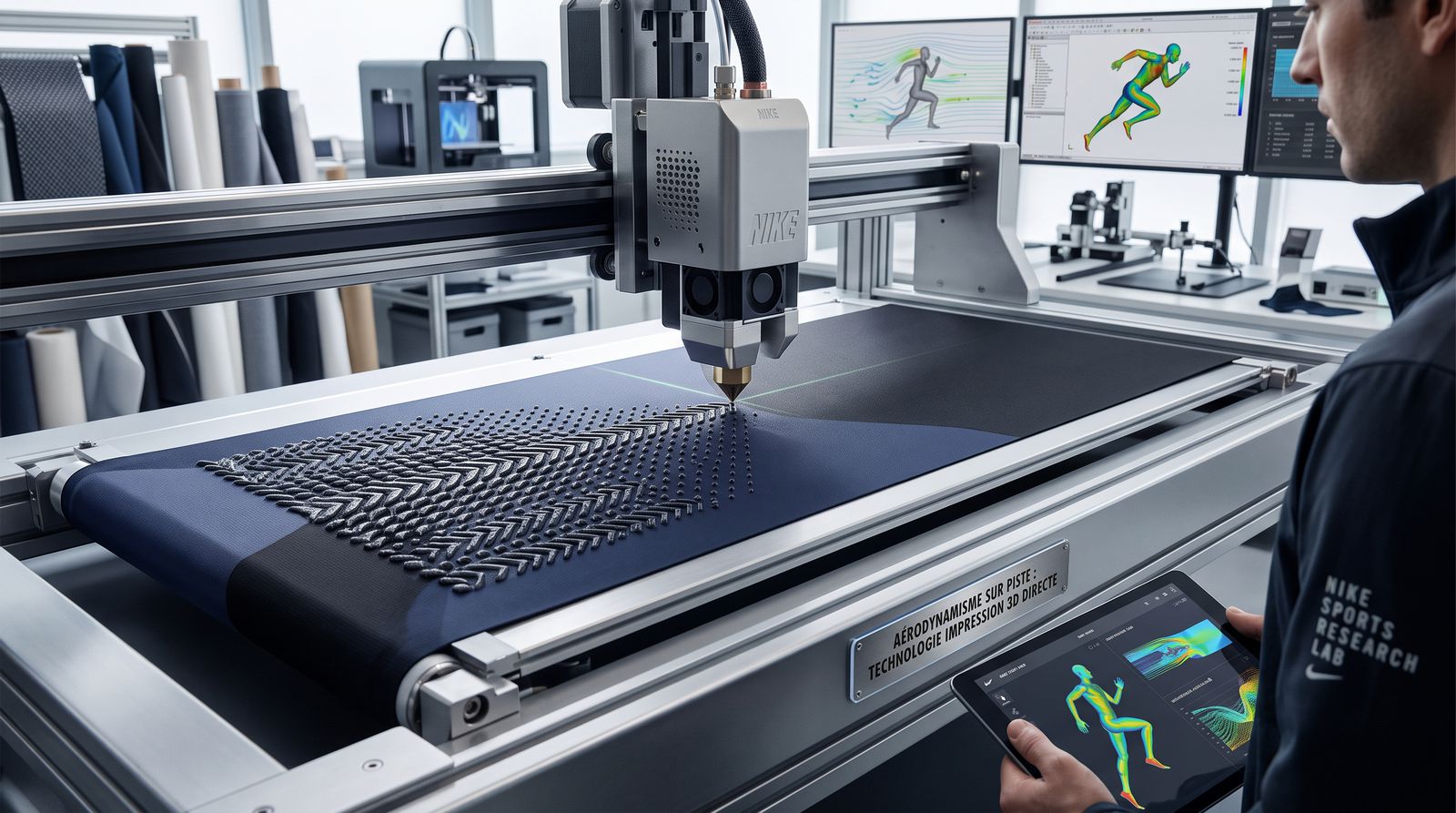
Aerodynamics at the Games and Track: Nike unveiled the custom-fitted suit of Olympic champion Keely Hodgkinson, featuring micro-textures and aerodynamic appendages 3D printed directly onto the textile to reduce air drag.
-
Metal Printing At-Sea for the French Navy: Naval Group and the Fleet Support Service (SSF) are integrating the Zetamix metal additive manufacturing solution aboard the Charles de Gaulle carrier, enabling production of critical spare parts directly at sea without waiting for resupply.
-
AI Server Cooling: Facing overheating challenges in data centers dedicated to artificial intelligence, several metal additive manufacturers are redirecting production capacity toward thermal dissipators (cold plates) with complex internal channels in pure copper, impossible to machine through traditional methods.