📏 3D Filament Diameters: 1.75 mm vs 2.85 mm
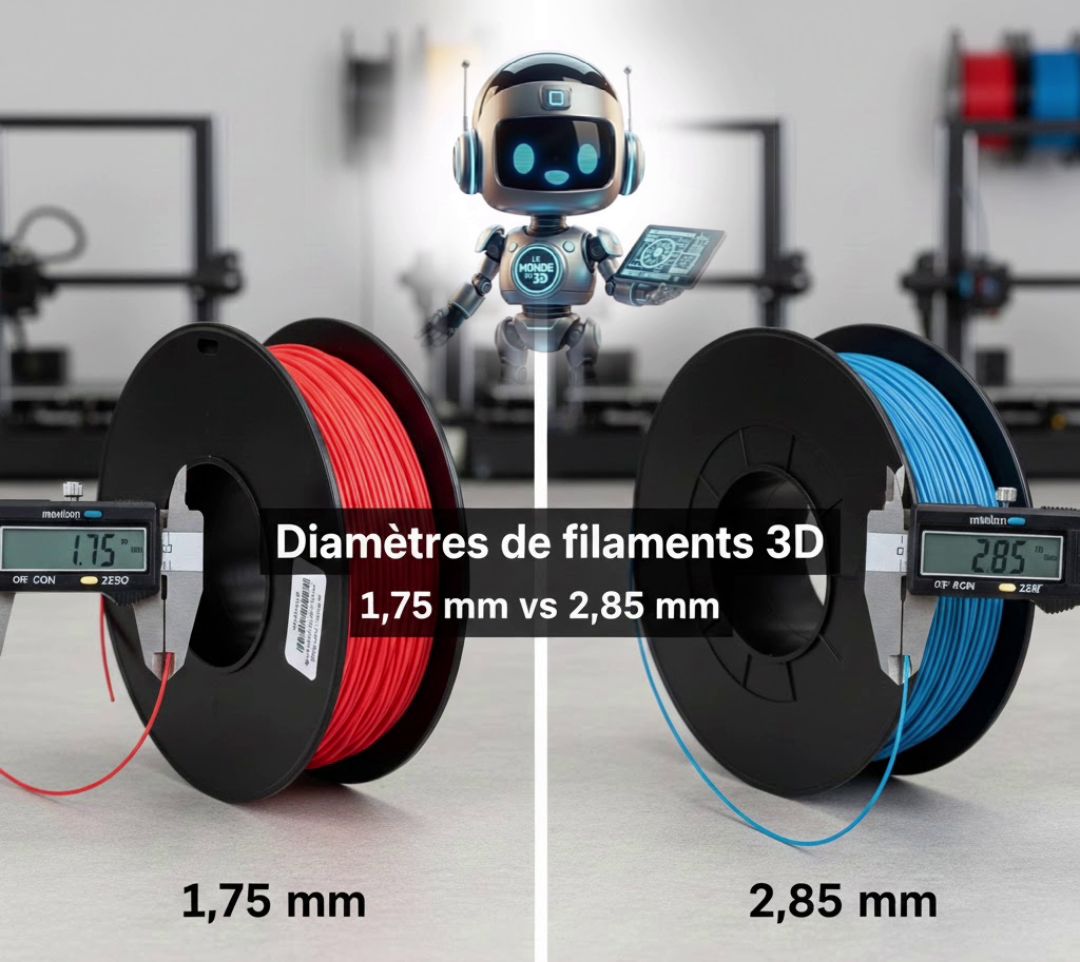
In the world of FDM 3D printing (fused deposition modeling), filament is the fuel of your machine. But before you even decide between PLA, ABS, or PETG, one technical question comes up: what diameter does your printer use?

✅ The modern standard: 1.75 mm
Today, this is the most widespread diameter, equipping the vast majority of consumer 3D printers (Creality, Prusa, Bambu Lab, etc.).
-
Advantages:
-
Availability: An enormous choice of colors and materials (roughly 90% of the market).
-
Precision: Because the filament is thinner, the extruder motor must spin faster to push the same amount of material. This enables finer control of flow rate (volumetric flow).
-
Flexibility: The filament is more supple at room temperature, which makes it easier to feed through tubes and reduces the risk of breakage with brittle materials.
-
-
Disadvantages:
-
Rigidity: In Bowden systems (remote extruder), it can "buckle" (bend) inside the tube, which makes printing with very flexible filaments (TPU) more difficult.
-
✅ The historical standard: 2.85 mm (often called 3 mm)
Often associated with brands like Ultimaker or LulzBot, this diameter is a legacy from the early days of 3D printing when manufacturing tolerances were less precise.
-
Advantages:
-
Increased rigidity: Ideal for long Bowden systems, since the filament won't bend inside the tube.
-
Performance with flexible materials: Its robustness allows it to "push" soft filaments (TPU/TPE) more effectively without them wrapping around the extruder gear.
-
Flow rate speed: Makes it easier to feed large-diameter nozzles (0.8 mm or 1 mm) for high-volume, fast prints.
-
-
Disadvantages:
-
Scarcity: Fewer and fewer manufacturers produce this format, limiting your choice of materials.
-
Handling: The filament is very rigid and can retain a "shape memory" (bend) that makes loading sometimes difficult.
-
✅ Quick technical comparison
| Characteristic | 1.75 mm | 2.85 mm |
| Popularity | Overwhelmingly dominant | Declining (pro/niche market) |
| Flow precision | High | Medium |
| Ease (Flexible Materials) | Medium (better with Direct Drive) | Excellent |
| Length (per 1kg of PLA) | ~ 330 meters | ~ 125 meters |
| Compatibility | Most FDM printers | Ultimaker, BCN3D, LulzBot |
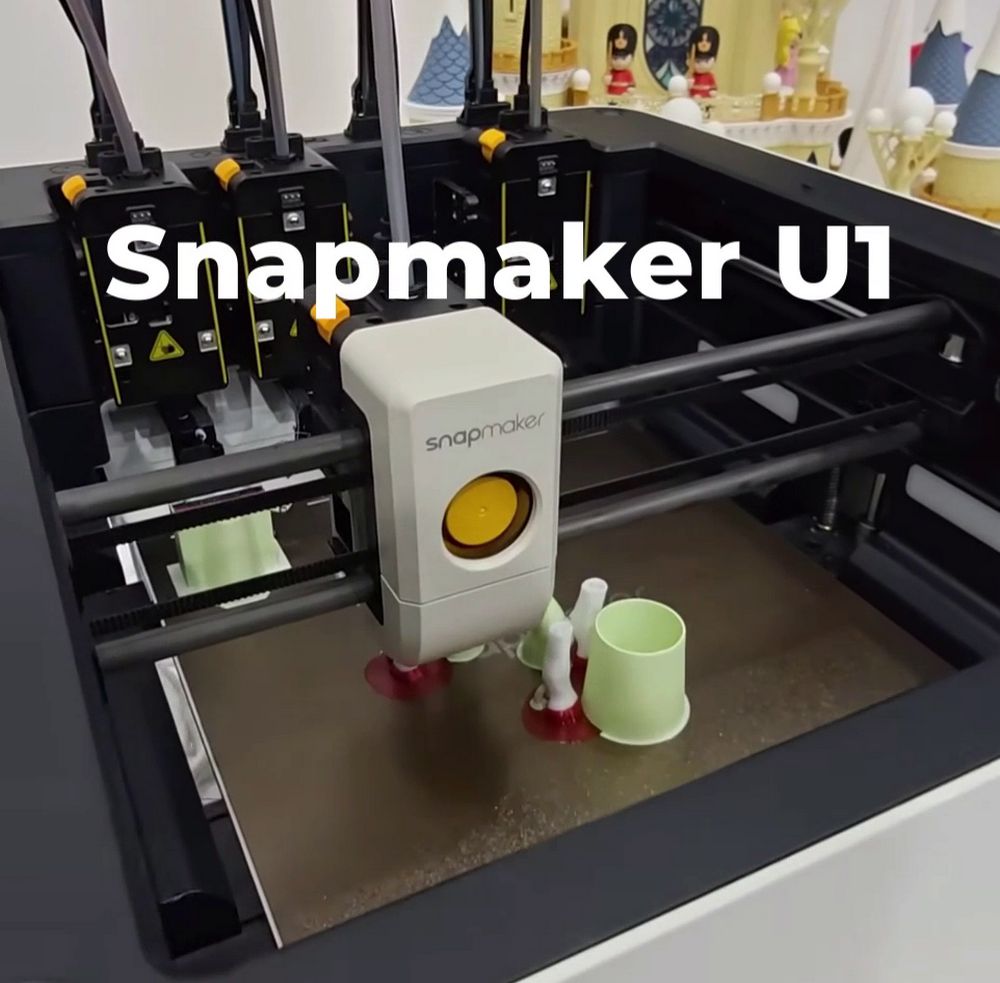
✅ Snapmaker U1: The power of CoreXY 4-in-1
The Snapmaker U1 is a workhorse built on an ultra-rigid CoreXY structure with carbon fiber rails.
-
The strength: The SnapSwap™ system. It has 4 interchangeable tool heads that swap automatically. Switching from one color to another takes about 5 seconds.
-
Volume & Materials: With 270 x 270 x 270 mm, it offers a generous build volume. Its high-temperature head (300°C) lets it handle technical materials like PA-CF (Carbon Nylon) in addition to standard colors.
-
Precision: Thanks to algorithm-based calibration, alignment between the 4 nozzles is accurate to less than 0.04 mm, guaranteeing perfect color transitions.
✅ Quick Comparison Table
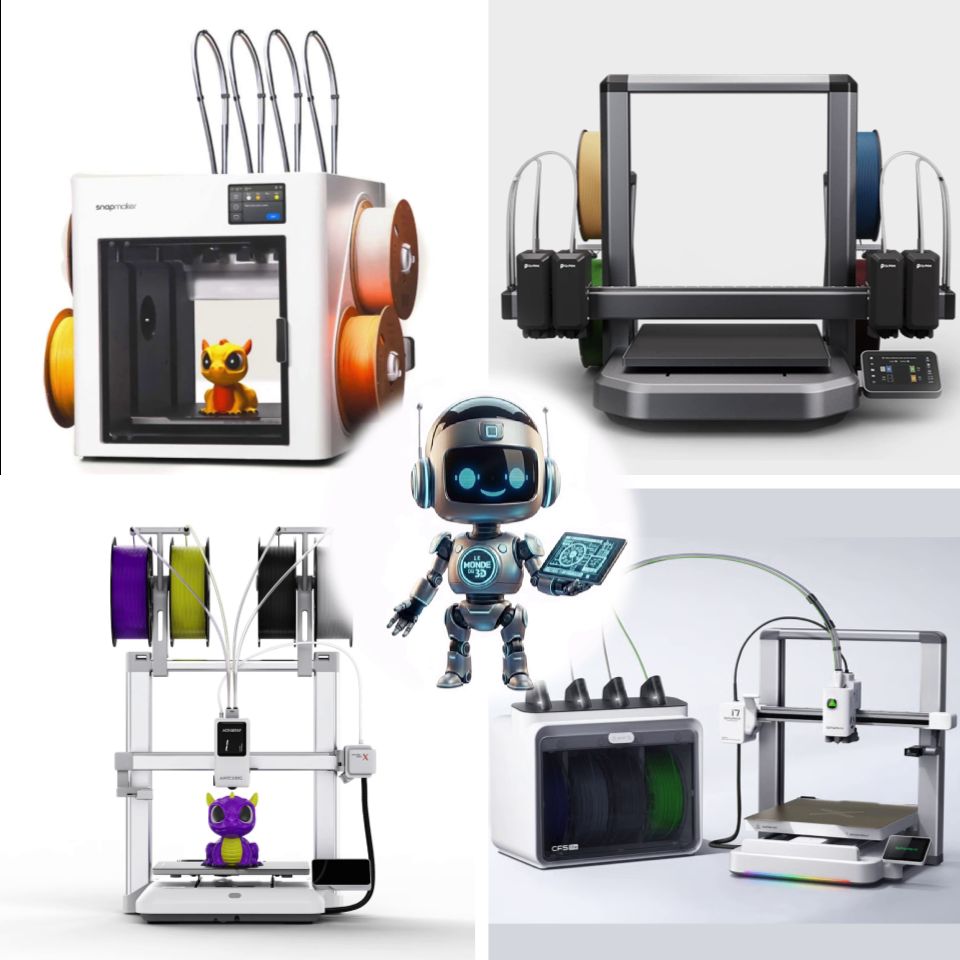
| Model | Multi-Color System | Max Speed | Build Volume | Main Advantage |
| Anycubic Kobra X | ACE 2 (External/Combo) | 600 mm/s | 260 x 260 x 260 mm | Filament savings (-81%) |
| Co Print Quadro | 4 Independent Heads | 500 mm/s | ~260 x 260 x 260 mm | Zero waste (no purge) |
| Creality Sparkx i7 | CFS (Combo) | 500 mm/s | 260 x 260 x 255 mm | AI and ease of use |
| Snapmaker U1 | 4 Interchangeable Heads | 500 mm/s | 270 x 270 x 270 mm | Pro precision and CoreXY |
✅ Why can't they be swapped?
It is impossible to use 2.85 mm filament in a machine designed for 1.75 mm (the filament simply won't fit). Conversely, putting 1.75 mm filament in a 2.85 mm head will cause massive leakage and complete loss of pressure control, as the filament will "float" inside the nozzle.
The choice between 1.75 mm and 2.85 mm is no longer really a matter of debate, but a question of application and equipment.
For the vast majority of users, the 1.75 mm standard is the sensible choice. Its dominance in the market guarantees you an almost limitless choice of materials, competitive prices, and compatibility with the latest technological innovations, like automatic color-change systems. It's the diameter of versatility and domestic precision.
2.85 mm, on the other hand, remains a specialized choice. It retains full relevance for professionals equipped with specific machine parks (like Ultimaker) or for those who exclusively print highly flexible technical materials at high speed. It's the diameter of industrial reliability and consistent flow.
Strength, heat, flexibility: check your needs in our interactive selector.