Prusa Launches Turnkey 3D Print Farms: Complete Racks Combining FDM and SLA
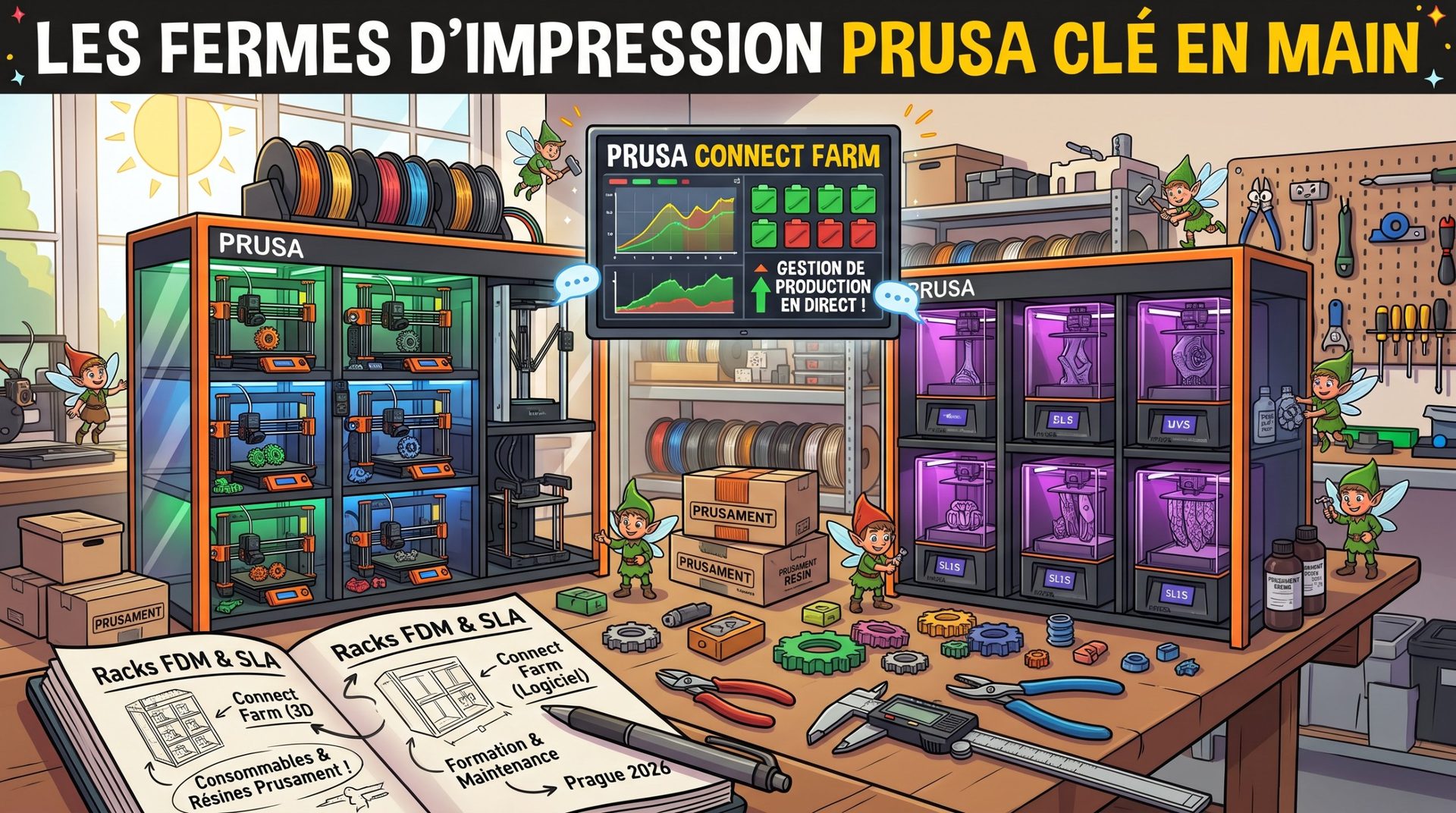
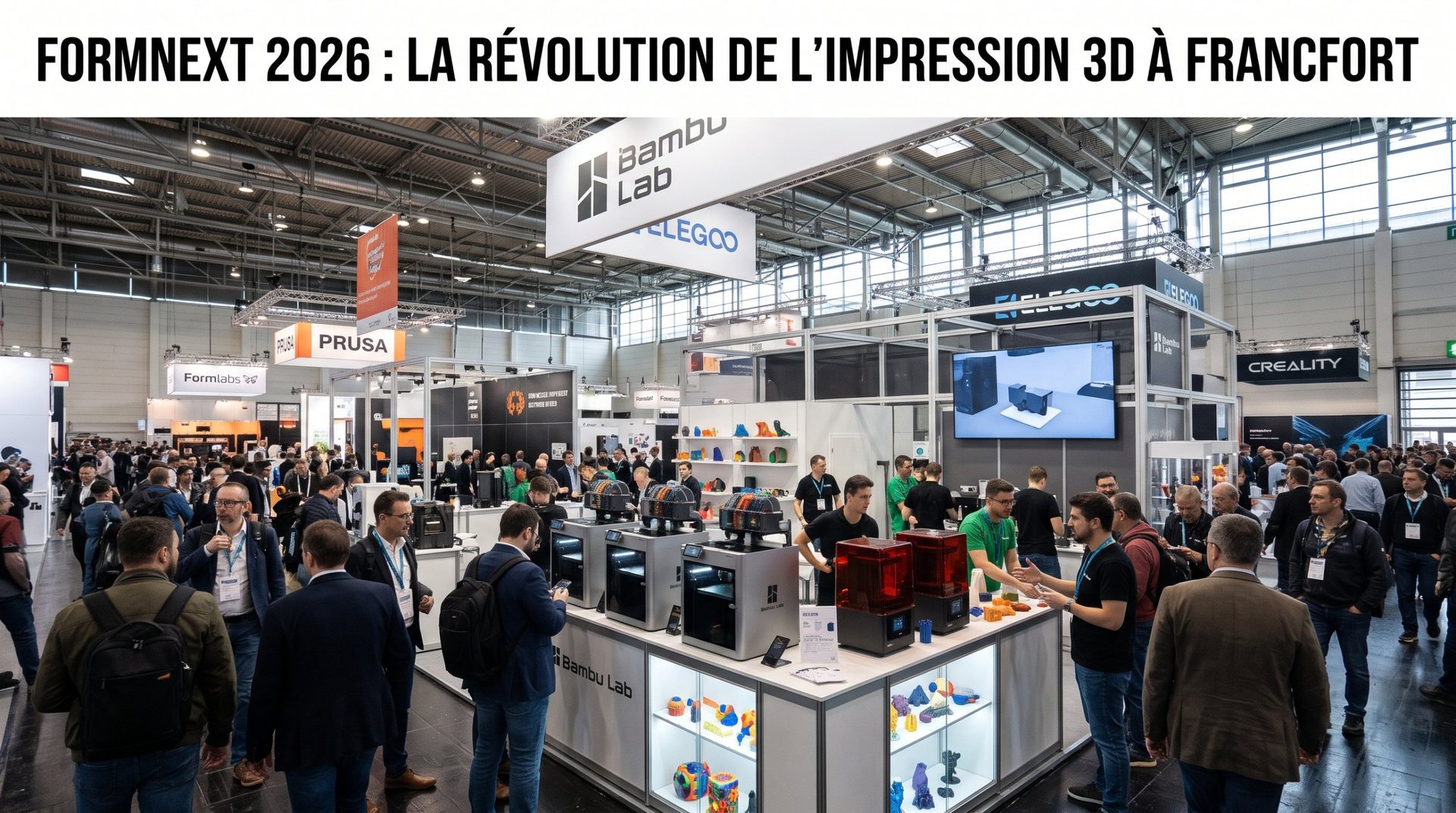
Long associated with desktop printers that makers assemble themselves, Prusa Research is taking a big step towards decentralised industrial production. At Formnext 2026 in Frankfurt, the Czech manufacturer unveiled turnkey 3D print farms, designed to let companies, design offices and subcontractors quickly set up series production capacity.
The package: printer racks installed directly at the customer’s site, mixing FDM (filament) and SLA (resin) technologies, all driven by the Prusa Connect Farm software, with consumables, training and maintenance.
1. A “ready to produce” approach for professionals
Until now, setting up a 3D print farm took months of integration: buying machines, designing shelving, ventilation, network cabling, operator training and spare-parts stock. With this offer, Prusa delivers a complete infrastructure:
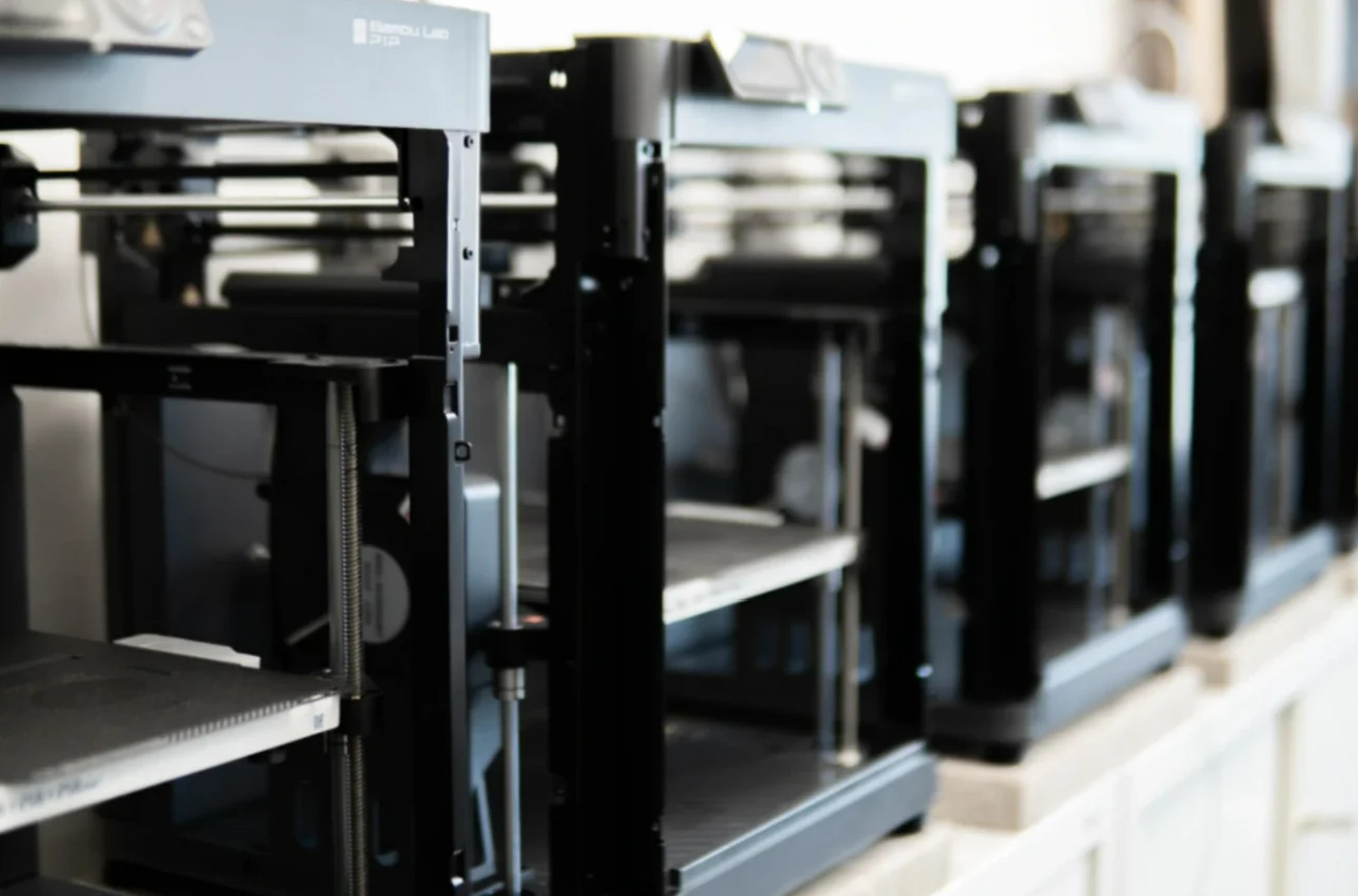
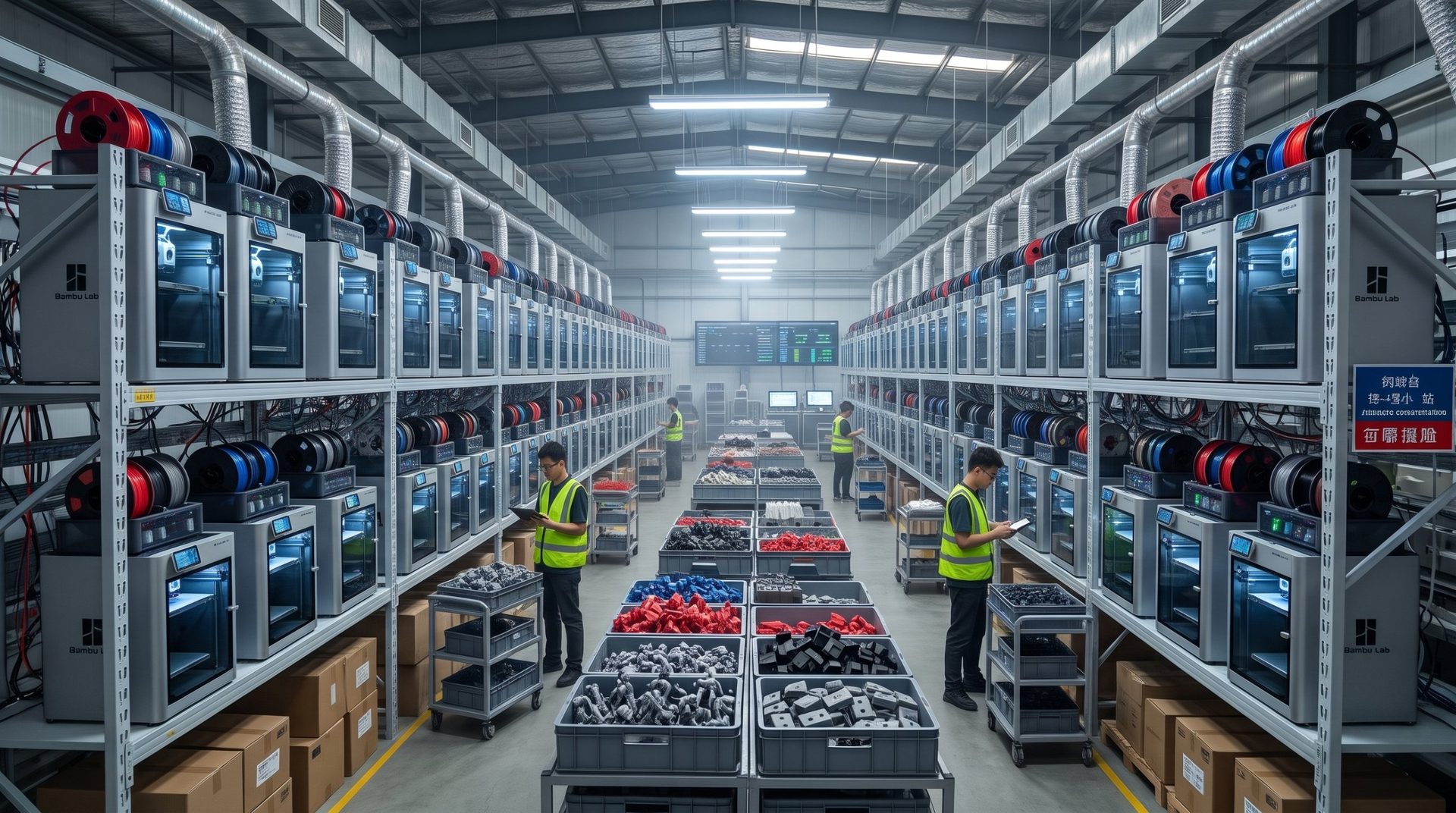
- Custom racks: each bay holds several printers for a minimal footprint. The customer prepares the room (floor space, power, network, ventilation) following Prusa’s documentation, and Prusa then handles the whole installation.
- FDM and resin in the same farm: racks can combine the brand’s filament printers (MK4S, CORE One, CORE One L and XL for large parts), the HT90 for engineering materials and the SLX resin printer for high-precision parts.
- A farm that grows with your needs: you can start with around ten printers, then add machines or Prusa Pro AFS blocks: nine CoreXY printers with a robotic arm that removes finished parts and loads fresh build plates, with no operator.
- Assisted commissioning: a Prusa specialist installs the farm, sets up the print processes and tests the customer’s parts on the machines.
2. Prusa Connect Farm: the brain of production
To orchestrate dozens of machines without an army of operators, the racks rely on Prusa Connect Farm, the professional version of the brand’s software:
- Automatic job distribution: the operator enters the part and quantity, and the software sends the jobs to printers loaded with the right material.
- Tracking and traceability: orders, scheduling, reports and material tracking. Zebra scanners match each part to its label, and a part rejected at inspection is automatically sent back for reprinting.
- Cloud or on-site: the software runs on Prusa’s servers, or entirely at the customer’s site with the On-Prem version, with no internet connection. An important point for companies that protect their files.
3. Full support: consumables, training and maintenance
The other big novelty is the support model. Rather than just selling hardware, Prusa offers a complete service designed to reassure production managers:
| Pillar of the offer | What’s included |
|---|---|
| Consumables | Prusament filaments and resins made by Prusa, in quantities matched to production, plus build plates and nozzles (including hardened nozzles for abrasive materials). |
| Training | On-site operator training, from model preparation through to shipping parts. |
| Maintenance | A contract with warranty, spare parts and preventive maintenance, provided directly by Prusa technicians. |
Prusa doesn’t publish prices: each farm is quoted after a consultation, during which the manufacturer also helps choose which parts are worth printing (prototypes, jigs, tooling, spare parts, small series).
4. Why is this shift strategic for Prusa?
Facing fierce competition from Asian manufacturers in the consumer market, Prusa is betting on its two biggest strengths:
- Experience from its own farm: in Prague, more than 700 printers run 24/7 and produce over a million parts a month, using the same machines, materials and software offered to customers.
- Sovereignty: European manufacturing and the option to run everything on the company’s local network.
This offer turns the know-how built up in its own workshops into a product customers can replicate on their own premises. It fits into a Formnext 2026 where “desktop” additive manufacturing clearly moved up a scale.
What do you think of these turnkey farms?
Local on-demand manufacturing, a complement to plastic injection lines or scaling up a prototyping workshop: does this all-in-one format combining FDM and resin seem relevant to you for bringing additive manufacturing to more companies?