FDM + UV: When Filament Meets UV Printing, the Future of Colour 3D Printing?
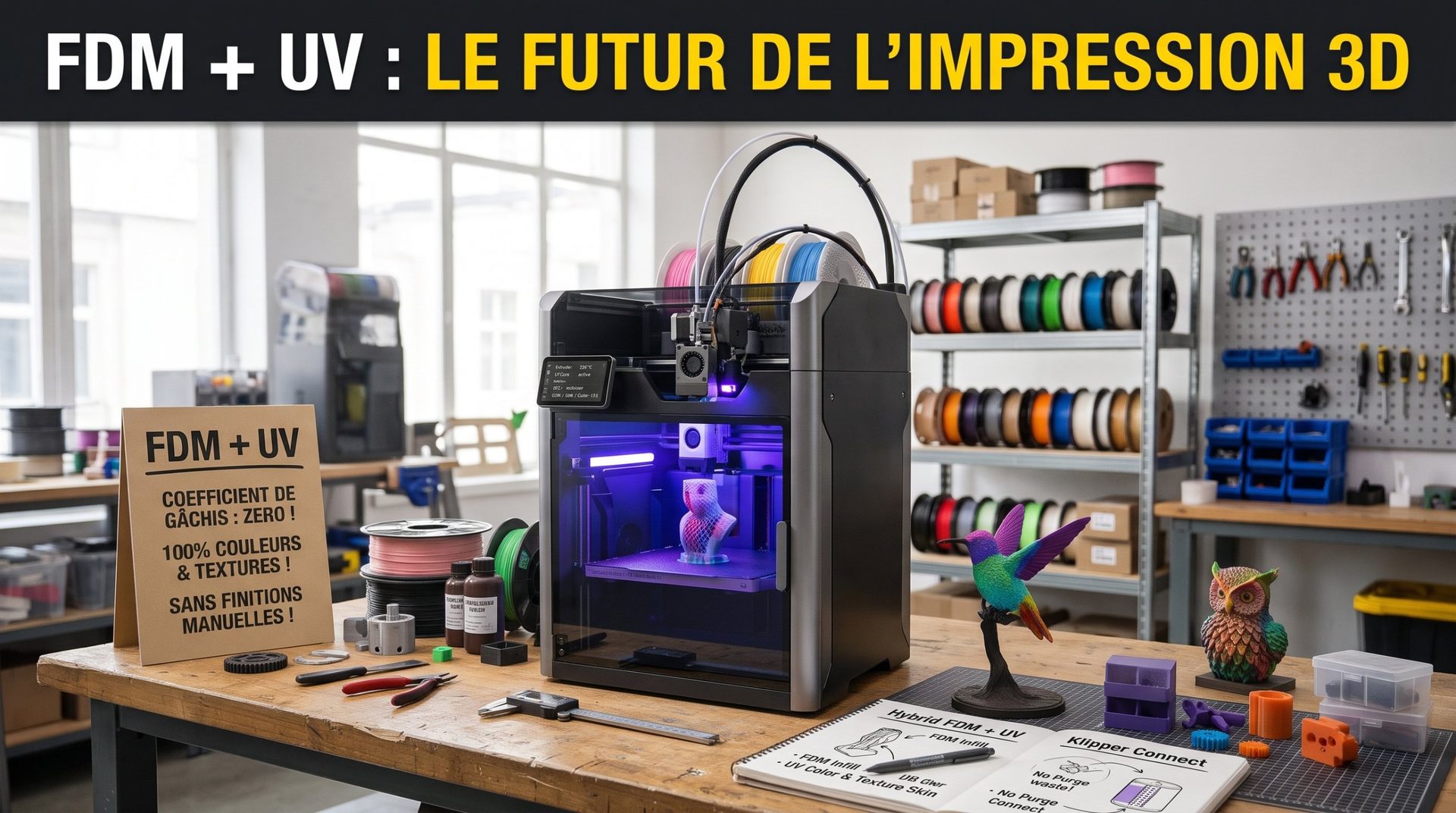
For years, makers and manufacturers have had to choose between two worlds. On one side, FDM printing (fused filament deposition): affordable, fast and ideal for strong mechanical parts. On the other, UV technologies (photosensitive resin or UV-cured inkjet): champions of fine detail, realistic textures and high-definition colour.
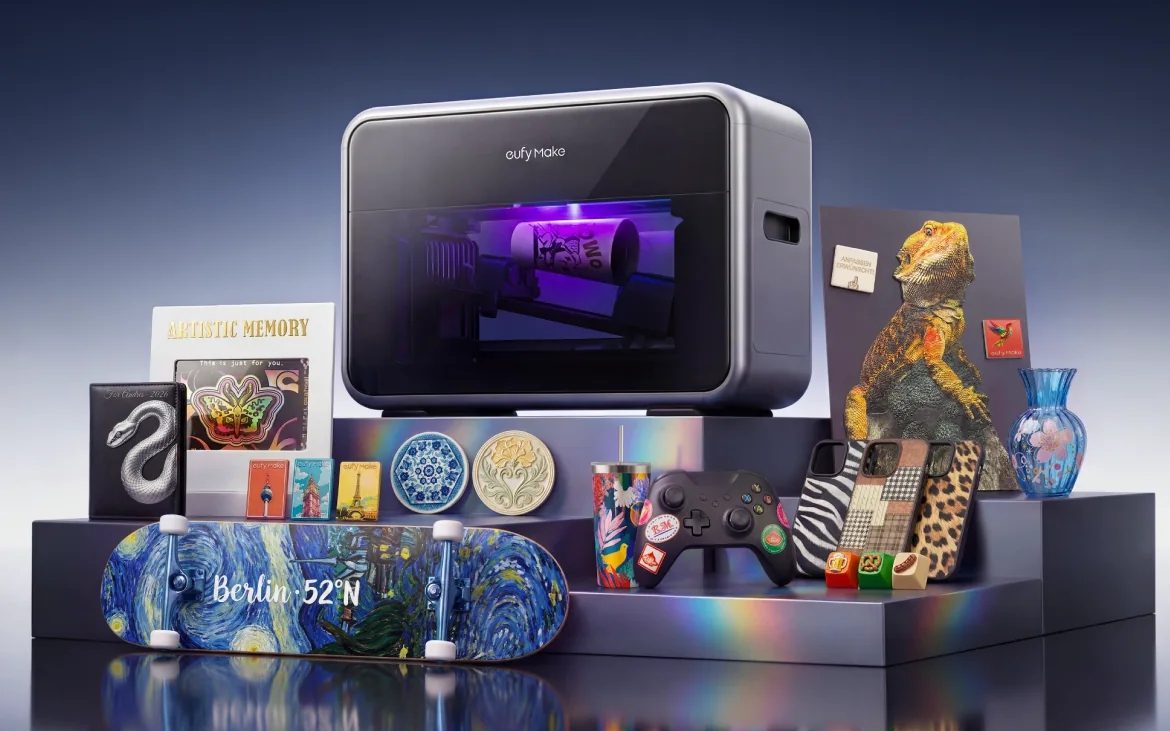
A trend is gaining ground: combining the two. The idea is simple: print the volume in filament, then dress its surface with UV-cured inks. Desktop UV printers such as the eufyMake E1 already make this pairing accessible to makers, and manufacturers are exploring machines that would do it all in one go.
1. Why combine FDM and UV printing?
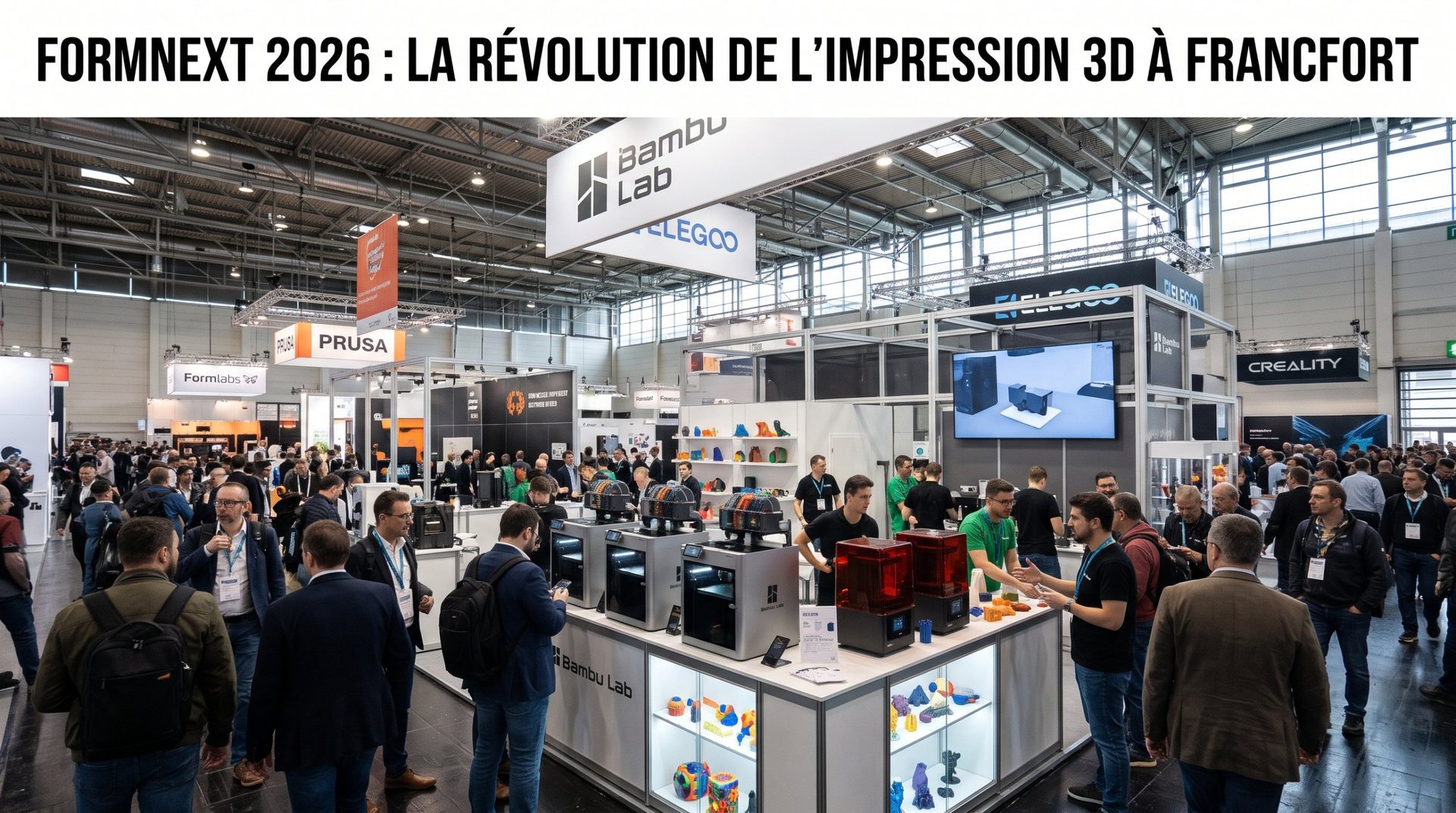
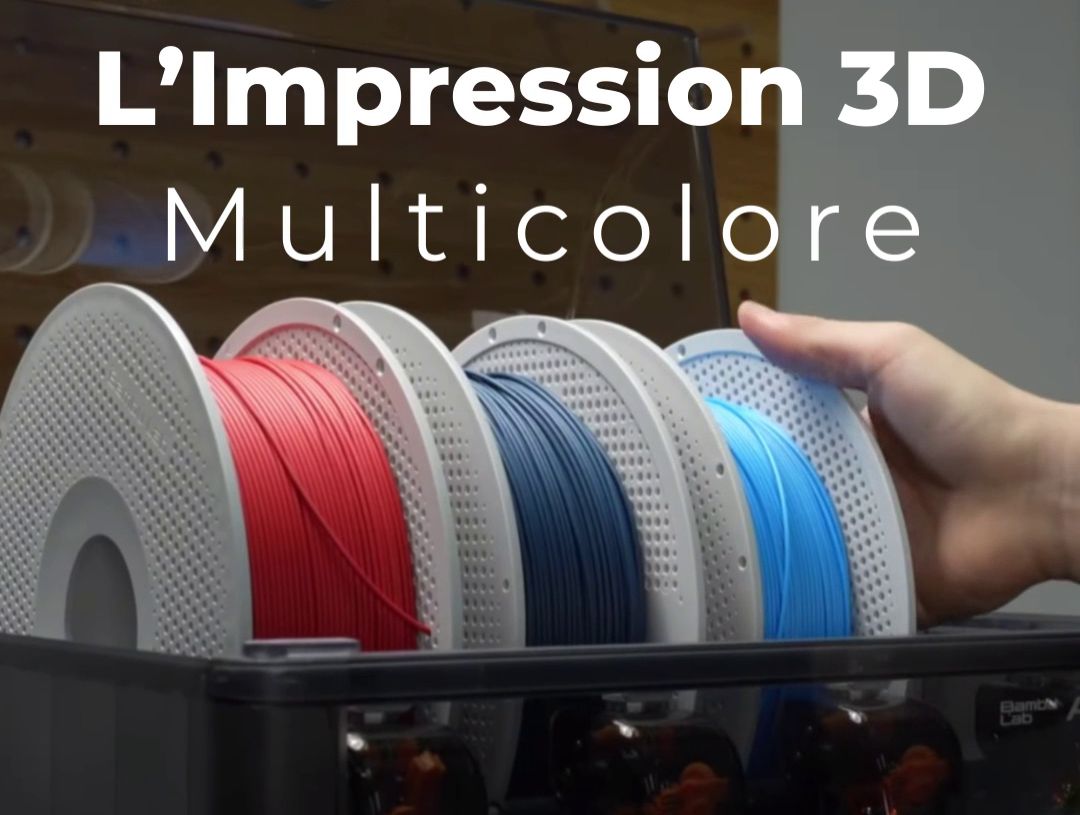
FDM’s long-standing weak spot is surface finish: layer lines show, the colour palette is limited to the number of spools loaded, and every colour change creates waste (the infamous purges). Even the new multi-head machines that stole the show at Formnext 2026 reduce that waste without delivering true photo colour.
By pairing filament with UV ink, you get the strengths of both processes:
- An FDM core: made cheaply, with tough materials (PLA, PETG, ASA, carbon-filled nylon) and optimised infill.
- A UV “skin”: a head jets micro-droplets of ink that a UV lamp cures instantly. You get CMYK + white colour and even raised texture.
- Less purging: no need to swap spools for a logo or a coloured detail. Gradients, photos and complex patterns are printed straight onto the object.
2. Textures and realism that filament alone can’t match
UV printing brings more than colour: by stacking layers of ink, it builds relief and imitates materials.
| What FDM + UV brings | Real-world examples |
|---|---|
| Photorealistic colour (CMYK + white) | Detailed figurines, architectural models, packaging prototypes with built-in labels |
| Raised micro-textures | Leather grain, wood veins, stone, anti-slip grip, built up from ink (a few millimetres at most) |
| Gloss or matte varnish | A selective clear coat to protect the part or make certain areas shine on a matte surface |
| Technical marking | Serial numbers, QR codes, scales or icons on a PETG or ASA enclosure |
3. Two approaches taking shape
A UV printer “next to” the FDM printer. This is what you can do today. Print the part on your usual machine (Bambu Lab, Prusa, Creality…), then put it under a desktop UV printer. The eufyMake E1, for example, measures the object’s height with a laser and a camera to align the print. It works on flat or gently curved faces (about 5 mm of height variation) and, with a rotary attachment, on cylindrical objects. It cannot yet cover every face of a complex part in one pass, though. Reviewers also recommend PETG or ASA rather than thin PLA plates, which can warp.
The all-in-one machine. This is the road ahead: an FDM head and an inkjet head in the same machine, colouring each layer during the print. The concept isn’t new: back in 2017, XYZprinting’s da Vinci Color (around $3,000) coloured each layer of white PLA with an inkjet head. But no consumer FDM + UV machine has taken off yet. Meanwhile, 100% UV inkjet 3D printers, with no filament at all, are improving: Mimaki showed its 3DUJ-553MkII at Formnext 2026 (over 10 million colours, sales planned for spring 2027), and HeyGears is preparing the G1X, a desktop full-colour 3D and UV machine launched on Kickstarter.
4. The end of manual post-processing?
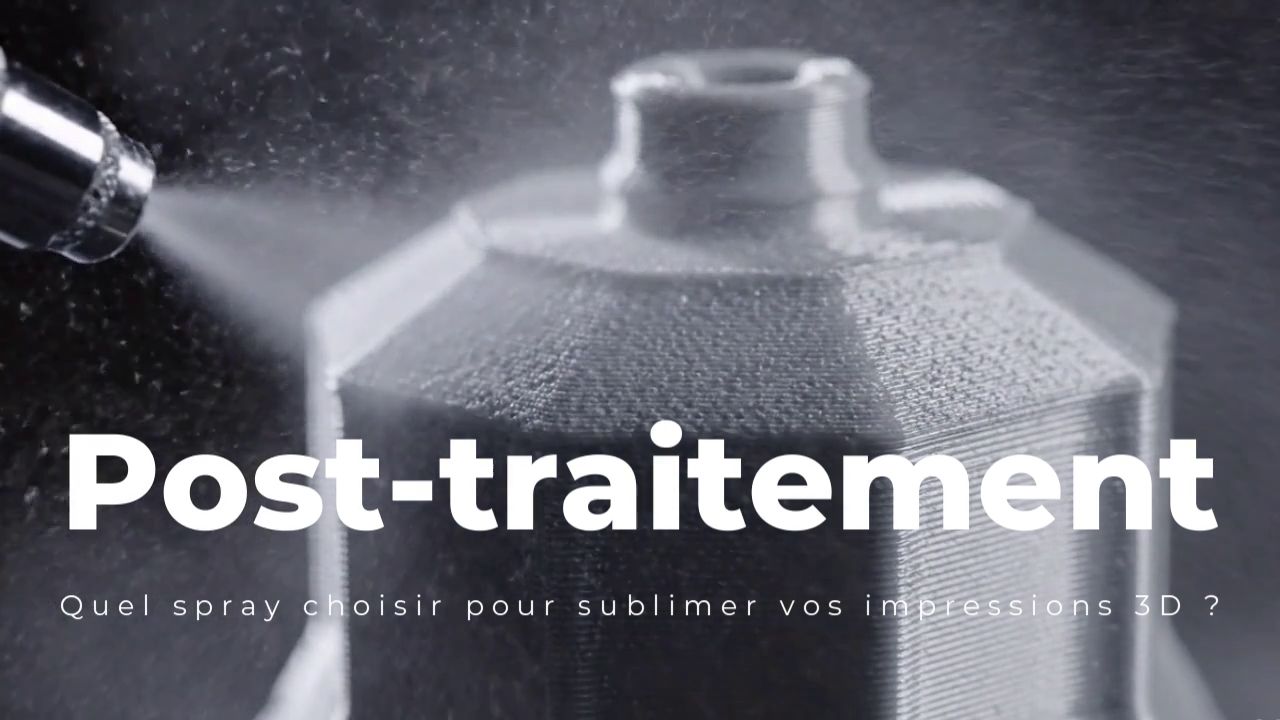
Sanding, primer, airbrushing, decals, varnish: getting a retail-quality object still takes hours of work after printing (see our guide to post-processing sprays).
With FDM + UV, a part can come out almost ready to use or sell: the strength of filament with a professional-looking colour finish. For creators, product designers and short runs, the time saved is huge. There are limits, though: machine prices (around $2,300 for the eufyMake E1 in the US), ink costs, and colour that stays on the surface, so a deep scratch will reveal the filament. To pick the right base technology, read our FDM vs resin comparison.
Ready to put away the brushes and purge towers?
Waste-free colour, raised wood or leather textures, prototypes that look like the real thing: do you think FDM + UV will replace classic multi-filament printing in the coming years? Tell us in the comments!